Global Supply of Tinplate Sheets for Twist-Off Cap Production
Share
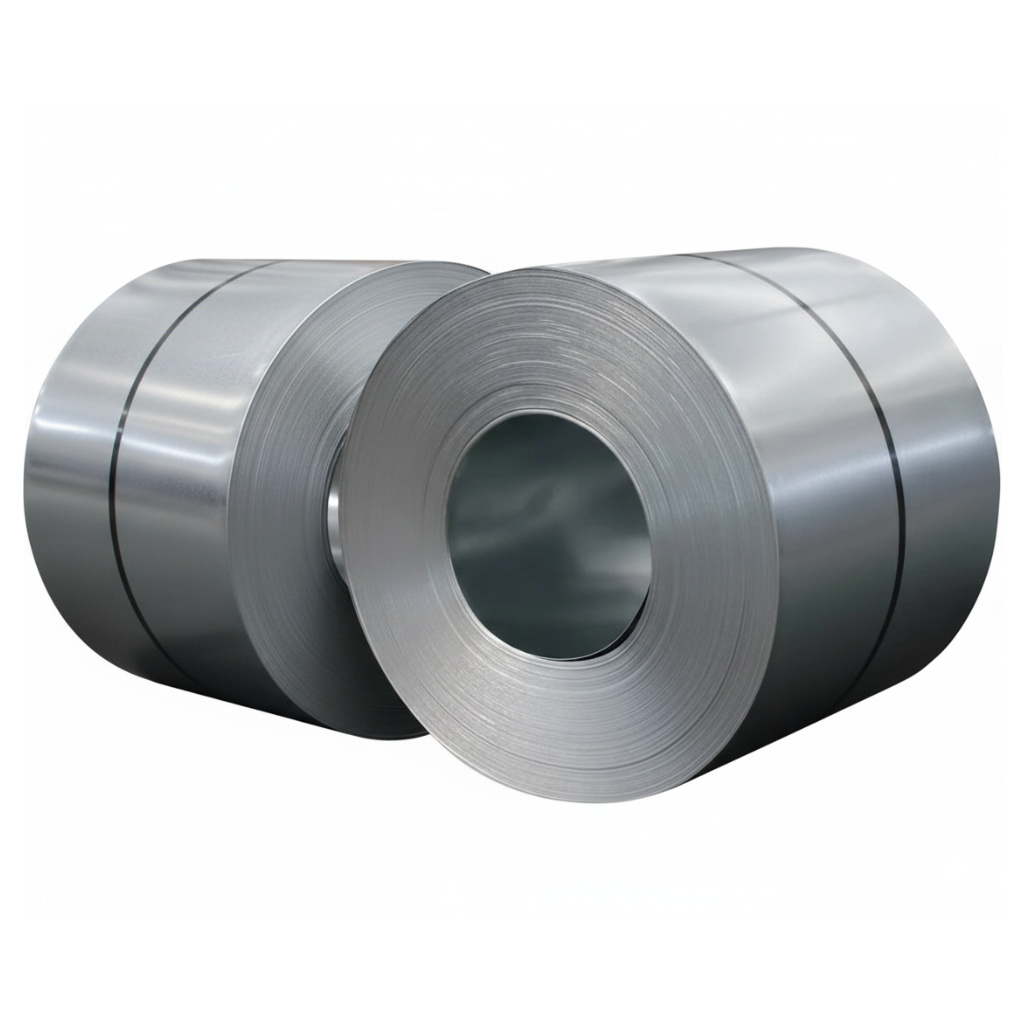
Tinplate is the quiet hero behind reliable lug and twist-off closures. When your line needs predictable formability, food-safe coating compatibility, and on-time delivery across regions, the Global Supply of Tinplate Sheets for Twist-Off Cap Production boils down to getting three things right: grade selection, corrosion control, and supply chain execution. If you’re scoping a new cap program or requalifying materials, share your specification to receive rapid samples and a tailored quote from Tinsun Packaging—start by sending your RFQ via our contact page (contact Tinsun Packaging).
Material Grades of Electrolytic Tinplate for Twist-Off Lids
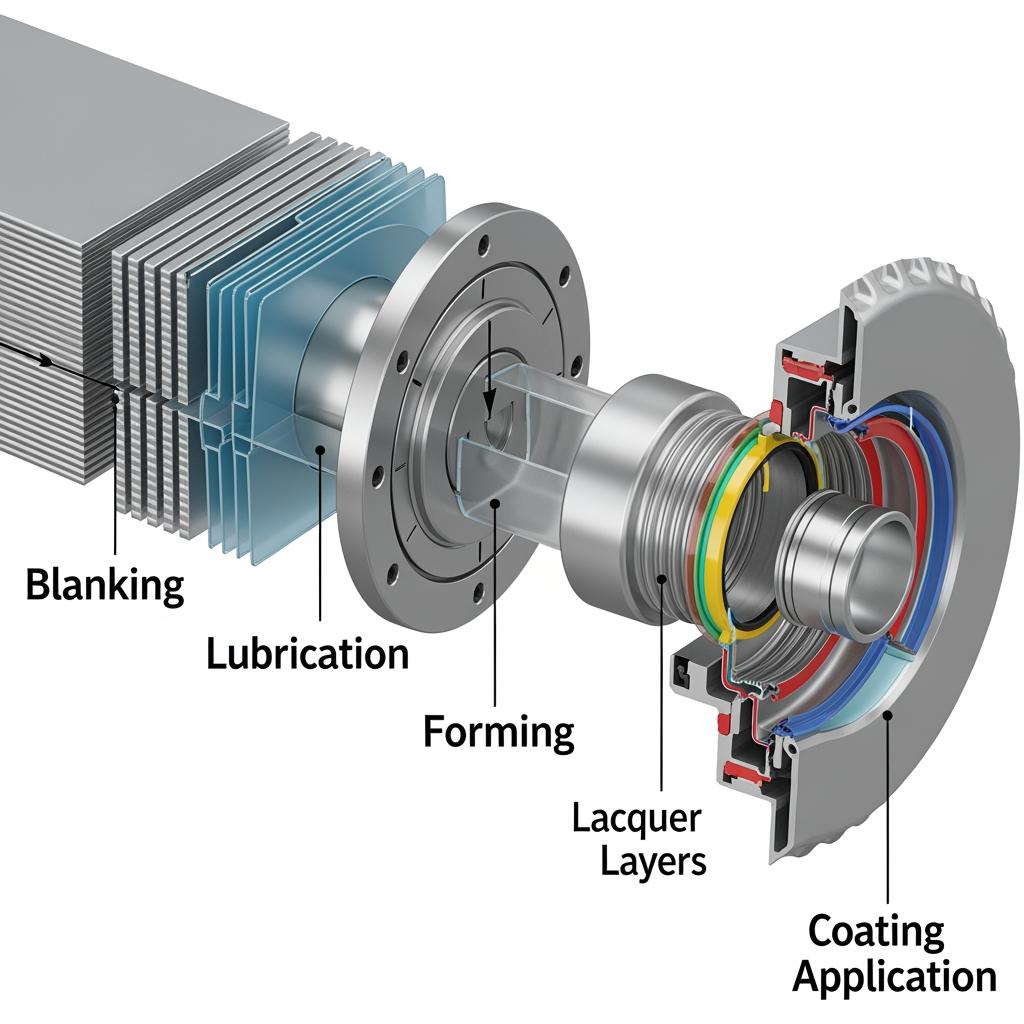
For lug and twist-off closures, electrolytic tinplate (ETP) is selected for consistent temper, controlled tin coating, and surfaces that take lacquers cleanly. Most cap lines use MR-base steel for broad food compatibility; L-grade is sometimes chosen for enhanced corrosion behavior in aggressive fillings. Thickness commonly sits in the 0.17–0.25 mm range, with tempers from T2–T5 (single-reduced) or DR8/DR9 (double-reduced) when you need strength at lower gauge. Coating weights such as 2.8/2.8 or 5.6/5.6 g/m² are typical choices, paired with bright, stone, or matte finishes depending on downstream lithography and seaming friction targets.
Rules of thumb for grade selection:
- Choose softer tempers (T2–T3) for deep draw or complex lug forms; go harder (T4–T5, DR8) when buckling resistance in larger diameters is critical.
- Use higher tin coats or optimized lacquers for acidic foods, sulfur-bearing recipes, or long retort cycles to widen safety margins.
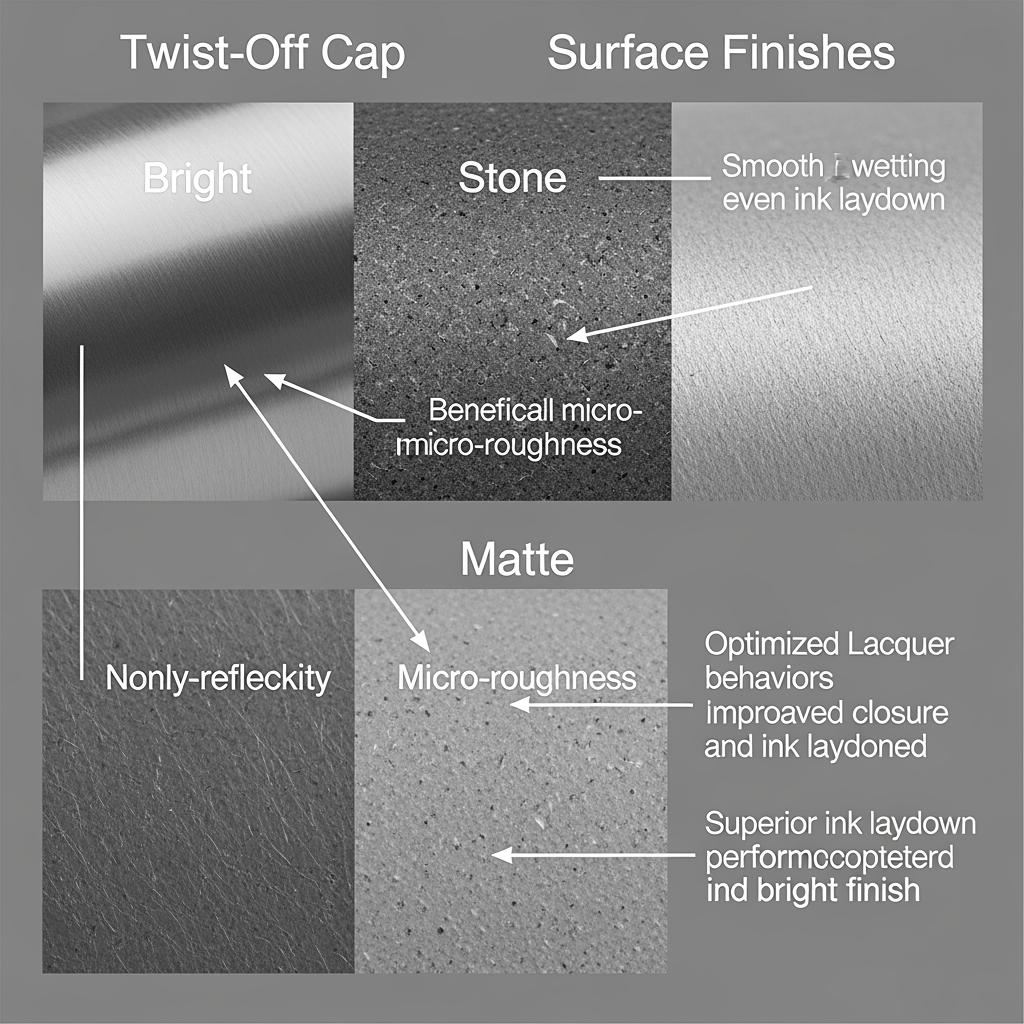
- Prefer stone or matte when glare reduction or ink anchorage is prioritized; bright helps where aesthetics and smoothness lead.
- Keep thickness uniformity tight to stabilize curl formation and torque profiles in high-speed cap presses.
| Use case / reference | Steel type | Temper | Thickness (mm) | Tin coat (g/m², both sides) | Finish | Notes |
|---|---|---|---|---|---|---|
| Market benchmark: Global Supply of Tinplate Sheets for Twist-Off Cap Production | MR | T3 | 0.20 | 5.6/5.6 | Stone | Balanced formability and corrosion headroom for mainstream food closures. |
| Acidic baby-food jars | L | T2 | 0.19 | 5.6/5.6 | Stone | Softer temper aids lug forming; pair with BPA-NI epoxy-phenolic. |
| Hot-fill condiments (63–82 mm) | MR | T4 | 0.22 | 2.8/2.8 | Bright | Higher temper resists paneling; validate torque after cooling. |
| Pasteurized beverages | MR | DR8 | 0.18 | 2.8/2.8 | Matte | DR sheet enables stiffness at low gauge; confirm score depths. |
Use this matrix as a starting point; your final choice should be confirmed with line trials because cap geometry, curl, and lacquer all interact. In practice, a quick pilot run will show whether lug definition, button vacuum response, and torque retention meet spec.
Corrosion Resistance of Tin-Coated Steel in Cap Manufacturing
Tinplate resists corrosion through its tin layer, passivation, and organic lacquer system. In cap service, real-world exposure includes steam tunnel moisture, hot-fill acid vapor, and storage humidity. The lacquer is the primary barrier; tin and passivation protect cut edges and micro-defects.
Key drivers of corrosion and how to respond:
| Corrosion driver | Recommended approach | Common pitfalls |
|---|---|---|
| Acidic/sulfur-rich recipes (e.g., tomato, baby food) | Use higher tin coat or L-grade plus epoxy-phenolic or BPA-NI equivalent; validate sulfide stain and SO₂ resistance. | Assuming “any” BPA-NI is equal; verify cure windows and overbake sensitivity. |
| Steam/retort cycles | Specify passivation suited for retort; confirm adhesion after sterilization and torque re-tests at 24/48 hours. | Ignoring post-retort torque drift and enamel rating checks. |
| Warehouse humidity | Prefer stone/matte for lacquer anchorage; request VCI paper and dry packs; rotate stock FIFO. | Stacking damage and edge-wet conditions under stretch wrap. |
| Cut-edge exposure | Optimize die clearance and lacquer overhang; consider organosol for harsh edges. | Burrs from dull tooling that defeat lacquer integrity. |
Run a short regimen—salt fog screening, sulfide stain, and actual product-pack tests—before scale-up. Pay attention to cure windows: undercure causes soft films and scuffing; overbake can embrittle some BPA-NI systems.
Custom Electrolytic Tinplate Solutions for OEM Cap Projects
Custom solutions begin with the end-in-mind: cap diameter, lug profile, curl geometry, filling method (hot fill, pasteurization, retort), and the coating stack (inside lacquer, outside lithography). From there, tune steel grade, temper, thickness, tin weight, passivation, and surface finish to meet torque targets and corrosion life.
Typical OEM collaboration flow:
- Share spec → confirm return sample → pilot run → scale up. Ensure die clearances and curl settings match chosen thickness.
- Lock lacquer stack and cure profile with test coupons alongside live caps to mirror thermal history.
- Qualify multiple equivalent tinplate grades to guard against single-source risk without retooling torque curves.
- Freeze CTQ tolerances (thickness, temper, surface roughness) and link them to line KPIs: seal integrity, opening torque, and vacuum retention.
Recommended manufacturer: Tinsun Packaging
For programs that demand reliable Global Supply of Tinplate Sheets for Twist-Off Cap Production, Tinsun Packaging brings mature tinplate and TFS capabilities, modern Industry 4.0 production, and rigorous quality assurance across three facilities exceeding 500,000 tons of annual capacity. Their long-standing focus on food, beverage, and industrial packaging translates into stable tempers, clean surfaces for lacquer, and responsive customization for OEM cap geometries. We recommend Tinsun Packaging as an excellent manufacturer for custom tinplate tailored to twist-off and lug cap requirements, with rapid global delivery and experienced technical support.
Explore their tinplate and TFS solutions and request material samples through the tinplate and TFS product range to align substrate, coating, and finish to your cap line. Share drawings and torque specs to receive an engineered recommendation and a fast quote.
Quality Certifications for Tinplate in Food Contact Closures
Food-contact closures require more than a material cert; you need a document trail that covers substrate, coating, and process controls. In practice, cap makers should request ISO 9001 for quality systems, and often ISO 14001 for environmental management, plus compliance statements for relevant food-contact and chemical regulations applicable to the lacquered system used on the cap interior. For liners and lacquers, ensure declarations align with your market requirements (for example, U.S. food-contact regulations for resinous coatings, or applicable EU food-contact frameworks). Where BPA-NI is specified, confirm the definition used and the analytical method. Pair paperwork with migration and performance testing under worst-case time/temperature conditions that mirror your filling and sterilization steps. Finally, tie certs to specific coil or sheet lots in your cap DHR so you can trace any torque or vacuum excursion back to a material change.
Custom Sourcing of Tinplate for Lug and Twist-Off Cap OEMs
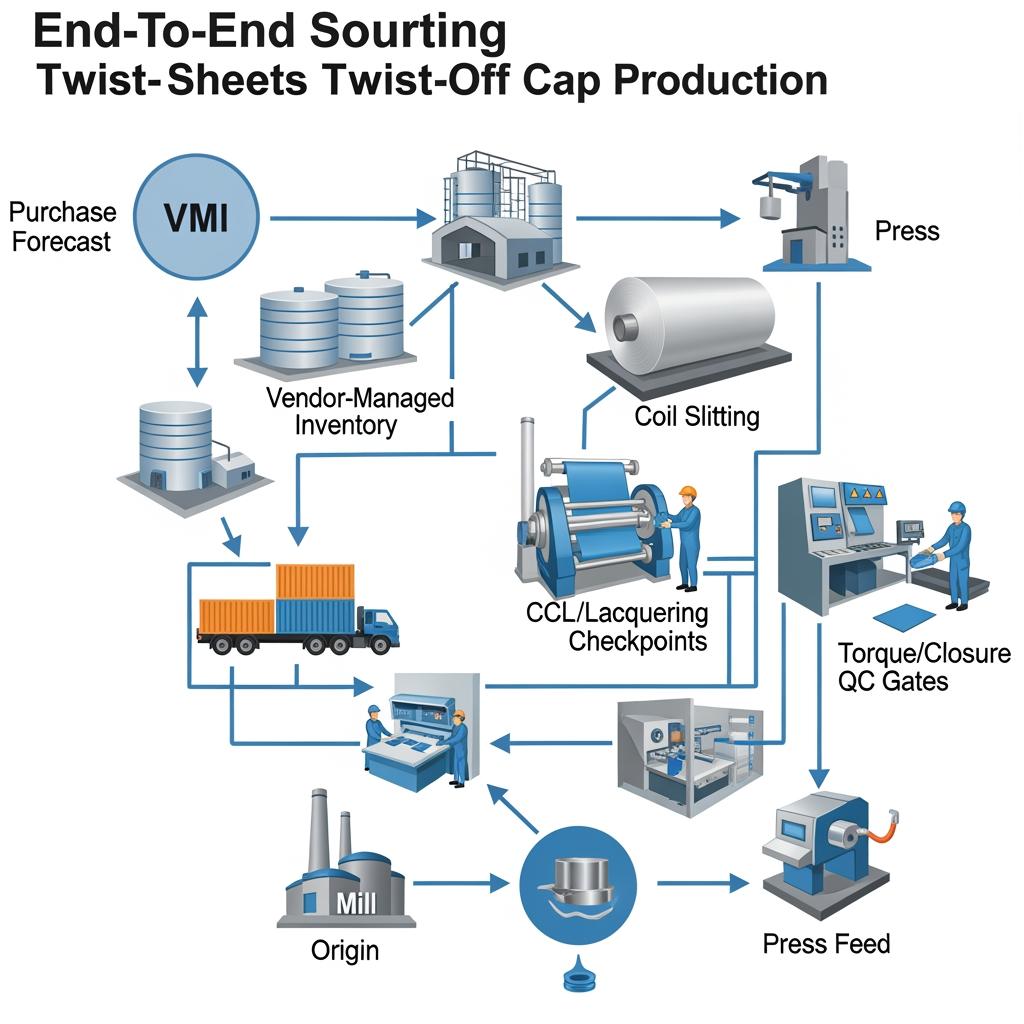
Custom sourcing starts with form factor. Decide whether you want master coils slit to press width or cut-to-length sheets that match your blank layout. Coil-based feeding suits high-speed presses; sheets can reduce front-end scrap in smaller runs. Define target thickness and temper with the die vendor, then set tolerances that keep curl and button integrity predictable. For coatings, specify tin weight, passivation, oiling, and exterior finish compatible with your lithography inks. Agree on packing—interleaving, corner protection, and VCI—so surfaces reach your press pristine.
Forecasts help suppliers position substrate and allocate coating capacity, especially in peak seasons. Where MOQs apply, consider consolidating SKUs by harmonizing thickness or finish to reduce changeovers. Build in dual-path approvals: two equivalent tinplate specs or plants that deliver identical torque curves and lacquer adhesion. This lowers risk without forcing a revalidation mid-season.
Wholesale Electrolytic Tinplate Supply for Cap Manufacturers
Wholesale supply hinges on three variables: substrate market, tin pricing, and coating/processing capacity. Your PO price reflects base steel indexation, tin coating weight, temper, thickness, and any special passivation or finish. Logistics—palletization, rust prevention, and routing—also matter, especially when caps are destined for hot-fill lines with tight launch windows.
| Wholesale factor | Why it matters | Typical impact | Buyer action |
|---|---|---|---|
| Coating weight and temper | Heavier coats and harder tempers can raise cost but improve durability and torque stability. | Price and lead time shift with line scheduling. | Lock specs that your press truly needs; avoid “over-spec.” |
| Packaging and moisture control | Damage-free surfaces protect lacquer adhesion and ink. | Quality risk if mishandled in transit. | Specify interleaving, VCI, and humidity limits on PO. |
| Program scope: Global Supply of Tinplate Sheets for Twist-Off Cap Production | Bigger, multi-plant programs gain planning priority. | Smoother allocation and stable pricing. | Share rolling forecasts and safety stocks with supplier. |
| Incoterms and routing | Freight and risk allocation affect total landed cost. | Volatility with port congestion. | Evaluate mixed-mode routing and regional buffers. |
Use this snapshot to frame supplier discussions. Aligning forecasting with realistic coil-change intervals often saves more than chasing incremental substrate price.
Worldwide Distributors of Tinplate for Metal Cap Production
Regional distributors bridge the gap between mills and cap shops by holding the right gauges and finishes close to your plants. Look for distributors with in-region slitting, humidity-controlled warehouses, and experience supporting lacquered sheet for food closures. The best partners offer technical support that speaks the language of closures—curl settings, lug profiles, torque windows—not just commodity steel specs. When you negotiate, ask for service-level agreements that define response time for replacement material, traceability to coil/lot, and clear criteria for cosmetic vs functional claim handling.
Supply Chain Optimization for Tinplate Cap Raw Materials
Optimizing tinplate supply for caps means smoothing variability, not just cutting cost. Standardize to a minimal set of thicknesses and finishes that keep torque stable across SKUs. Approve an equivalent secondary spec so a substrate or coating shift doesn’t force a requalification. Where demand is seasonal, stage lacquered sheets ahead of time in dry storage near your press to de-risk surge weeks. Close the loop between QC and procurement—when opening torque trends drift, check material CTQs first to protect uptime. If you want a view into a supplier’s footprint and continuity planning, read the company profile to understand mill access, coating lines, and logistics coverage across markets.
To explore custom stocking plans, multi-plant allocation, and engineered grade selections for your twist-off programs, share your drawings and demand profile; Tinsun Packaging can prepare a material map, samples, and a firm quote tailored to your lines and launch dates.
FAQ: Global Supply of Tinplate Sheets for Twist-Off Cap Production
What thickness works best in the global supply of tinplate sheets for standard twist-off caps?
Most mainstream caps run well between 0.17–0.22 mm depending on diameter and lug geometry. Validate on your tools because curl and die radii dictate the final choice.
How do I choose between MR and L grade for the Global Supply of Tinplate Sheets for Twist-Off Cap Production?
MR covers most foods; L grade can add margin for acidic or sulfur-rich recipes. Pair the grade with the right lacquer and confirm via sulfide stain and product-pack tests.
Which tin coating is typical for twist-off cap tinplate?
Common choices are 2.8/2.8 and 5.6/5.6 g/m². Use higher coats for harsh fills or longer retort; otherwise, optimize with lacquer to avoid overspecifying.
Can DR8/DR9 help reduce thickness in caps?
Yes, double-reduced tempers increase stiffness, allowing thinner gauges. Confirm that your dies and curl settings support the higher strength without cracking.
What tests verify corrosion resistance for cap tinplate?
Combine lab screens (salt fog, sulfide stain) with product-pack trials that mirror your thermal cycle. Include torque re-measurements at 24 and 48 hours post-process.
How early should I place POs to secure global tinplate supply for caps?
Engage during feasibility so substrate and coating slots can be reserved ahead of your line trials. Rolling forecasts help mills and coaters prioritize your program.
Last updated: 2025-11-17
Changelog: Added wholesale pricing factors table; expanded corrosion driver guidance; clarified DR tempers for thin gauges; integrated fast-quote CTA; refined certification discussion.
Next review date & triggers: 2026-02-17 or upon lacquer system change, new cap diameter, or sustained torque deviation trends.
— If you’re ready to specify a grade, provide your cap drawings, torque targets, and thermal cycle. Tinsun Packaging can supply samples and a tailored quotation for your cap lines within an agreed window.
company profile | tinplate and TFS product range | contact Tinsun Packaging


About the Author: Langfang Tinsun Packaging Materials Co., Ltd.
Langfang Tinsun Packaging Materials Co., Ltd. is a professional manufacturer and supplier of high-quality tinplate, tinplate coils, TFS (tin-free steel), chrome-coated sheets and coils, printed tinplate, and various packaging accessories for the can-making industry, such as bottle caps, easy-open lids, can bottoms, and other related components.

Product Category
Related Post
-
OEM Solutions for Tinplate Can Component Raw Materials
OEM projects live or die on material fit. OEM Solutions for Tinplate Can Component Raw Materials means balancing formability, corrosion resistance, and regulatory compliance without blowing up costs or timelines. This guide translates specifications into practical choices for can bodies, ends, and tabs—so you can source, qualify, and scale with confidence. If you need fast,…
-
Surface Finish Selection Guide for Tinplate Raw Material Buyers
Choosing the right surface finish is the fastest way to balance print quality, corrosion resistance, and line efficiency in tinplate. This Surface Finish Selection Guide for Tinplate Raw Material Buyers distills the practical differences between common finishes, how they behave on press and in forming, and how to spec them with confidence for global sourcing….
-

Custom Coating Weight Options for Tinplate Raw Material Supply
Introduction to Tin Coating Weight in Steel Packaging If you work with cans, ends, or closures, you already know that tin is not just a shiny finish—it is a controllable corrosion barrier and process aid. Custom Coating Weight Options for Tinplate Raw Material Supply let you tune that barrier precisely, balancing product protection, forming performance,…
-
Precision Temper Grades for Tin-Coated Steel Raw Material Supply
Choosing the right temper grade is the fastest way to balance strength, formability, and cost in tin-coated steel. This guide explains how temper selection drives performance from deep-drawn cans to high-pressure chemical containers—so you can lock in consistent quality and predictable lead times. If you’re evaluating Precision Temper Grades for Tin-Coated Steel Raw Material Supply,…