Lacquered Tinplate for Printed Promotional Can and Tin Production

Share
If you make promotional tins, the choice of lacquered tinplate largely determines print brilliance, formability, and shelf-life performance. This guide distills how to specify Lacquered Tinplate for Printed Promotional Can and Tin Production—from coating chemistries and print compatibility to grades, compliance, and supply-chain safeguards. If you’re sourcing now, share your drawing and target specs to request a fast quote or printability sample set; Tinsun Packaging can prepare a custom plan for you here: request a quote.
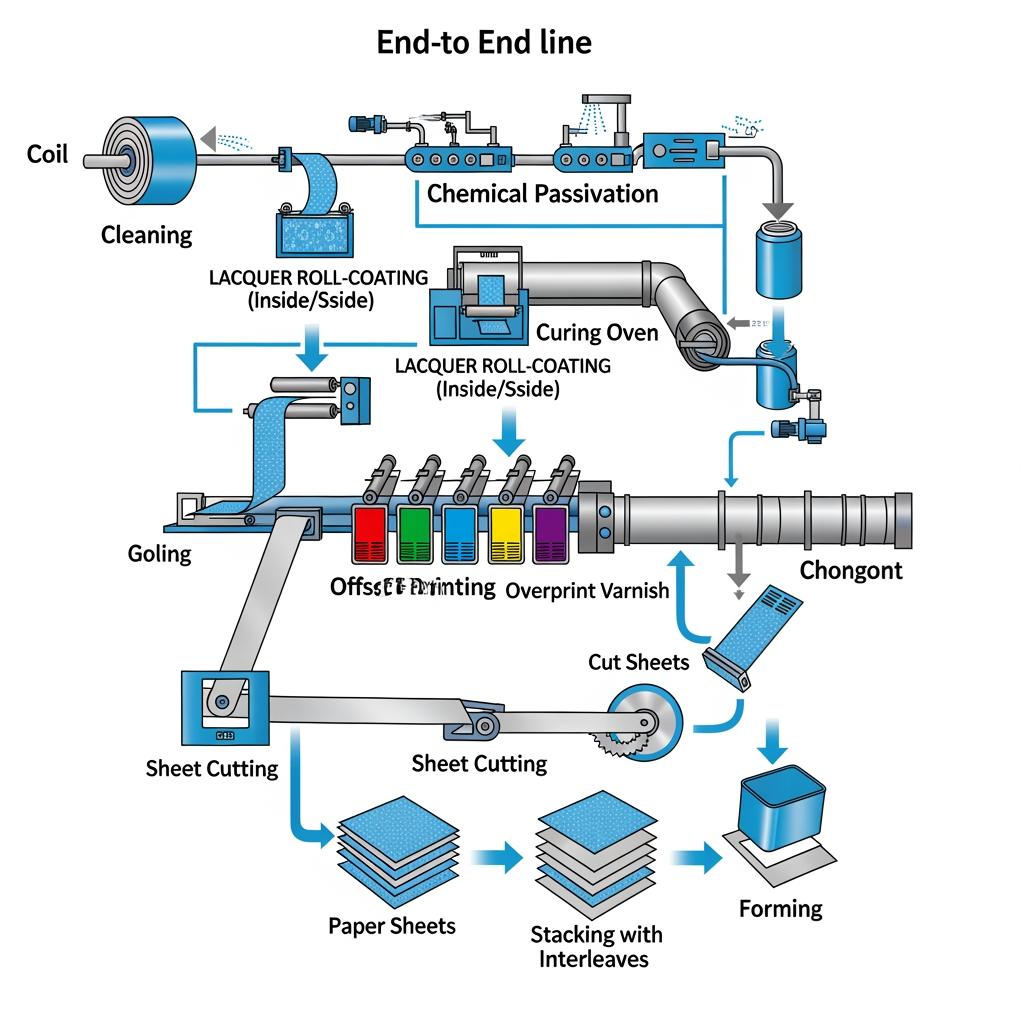
• Lacquer Coating Types for Printed Tinplate Applications
For promotional tins, lacquer choice balances four things: adhesion to tinplate or TFS, flexibility for forming, thermal resistance during curing, and sensory neutrality. Outside surfaces usually prioritize print gloss and scuff resistance; inside surfaces focus on barrier and compliance.
A practical palette includes epoxy-phenolic (workhorse for many general uses), polyester and BPA-NI polyester systems (for food-contact or regulatory-sensitive programs), acrylic (fast-cure, clear, high-gloss), and PVC‑free organosol/urethane variants (robust forming without PVC). Clearcoats are common for outside art; gold/white enamels are typical basecoats to optimize color pop and coverage.
| Coating system | Typical position | Heat resistance (bake) | Formability/flex | Sensory neutrality | Typical use on Lacquered Tinplate for Printed Promotional Can and Tin Production |
|---|---|---|---|---|---|
| Epoxy-phenolic | Inside/Outside | High | Medium–High | High | General promotional tins, broad ink compatibility |
| BPA‑NI polyester | Inside/Outside | Medium–High | Medium | Very high | Programs aiming at BPA‑NI declarations and EU/US market acceptance |
| Acrylic clear/white | Outside | Medium | Medium | High | High-gloss graphics, fast line speeds with clean color |
| PVC‑free organosol/urethane | Inside/Outside | High | Very high | High | Deep-draw parts, rolled hems, hinges/embossing with tight radii |
| Oleoresin/alkyd variants | Inside | Medium | Medium | Medium | Non-food general purpose, corrosion touch-up zones |
The table clarifies how each lacquer family maps to practical needs. For deep draws or hems, prioritize flexibility; for vivid prints, combine an opaque base (white/gold) with a compatible high-gloss overprint varnish (OPV).
• Compatibility of Tinplate Coatings with Offset Printing
Offset lithography remains the dominant method for metal decoration because it delivers crisp halftones at production speeds. Coating/ink harmony is critical. The outside lacquer should provide sufficient surface energy for wetting, resist ink solvents, and retain slip after the OPV to reduce scuffing in downstream forming and logistics.
| Printing factor | Recommended setting on coated tinplate | Notes for color stability and durability |
|---|---|---|
| Ink system | Conventional oxidative or hybrid/UV metal-deco inks matched to the lacquer family | Validate adhesion and blocking on your exact lacquer and cure window. |
| Base/OPV stack | White/gold base enamel → print colors → OPV (gloss/matte) | OPV controls gloss/scuff and protects during forming; confirm no micro-cracking. |
| Bake window | Typical 160–205°C metal temperature, 8–12 min equivalent (line dependent) | Use ink maker’s schedule; overbake can yellow whites, underbake risks blocking. |
| Surface prep | Degreasing/cleaning, passivation, controlled oil | Maintain consistent SFE; avoid silicone transfer from interleaves. |
| Registration | Tight, with sheet squareness and low camber | Sheet flatness and gripper margins affect multi-color alignment. |
Before scaling, follow a quick proof-to-press path to de-risk graphics and forming:
- Submit target lacquer, ink set, and OPV combination → receive drawdown panels and bend/scuff tests.
- Approve a press proof with your highest solid coverage and finest screens.
- Freeze the bake profile and OPV weight, then run a short pilot for forming validation.
• Material Grades of Tin-Coated Steel for Tin Can Production
Promotional tins typically use electrolytic tinplate (ETP) or tin‑free steel (TFS/CR) depending on corrosion needs and seam methods. Within ETP, choose temper (T1–T5) or double‑reduced grades (DR8/DR9) based on stiffness vs. formability: lower tempers form more easily for domes/embossing; higher tempers hold flatter panels and edges. Thickness commonly ranges 0.17–0.30 mm for gift tins, with finishes from bright to stone/matte to match the graphic style.
Passivation and oiling stabilize the surface for storage and printing, while enamel rating and coating weight help manage corrosion and taste neutrality when needed. If your design includes rolled hems, living hinges, or tight corners, align temper and lacquer flexibility to avoid star cracks and edge flake.
• Application of Tinplate Raw Materials in Gift Tin Boxes
Gift tins push metal beyond a simple can: multi-panel constructions, windows, embossing, and premium inks demand stable base metal and predictable coating behavior. Pair an outside white base enamel for vibrant CMYK builds with a scratch‑resistant gloss OPV; choose inside BPA‑NI polyester where brand policies require it. For embossed logos, select a flexible system (e.g., PVC‑free organosol outside or flexible OPV) and a temper that won’t craze under stretch.
Plan for forming allowances: art should avoid tight registration across panel breaks or sharp folds, and OPV should be validated for slip on transfer conveyors and inside nest tooling. If tins are nested for transit, scuff testing under realistic stack pressure prevents surprises.
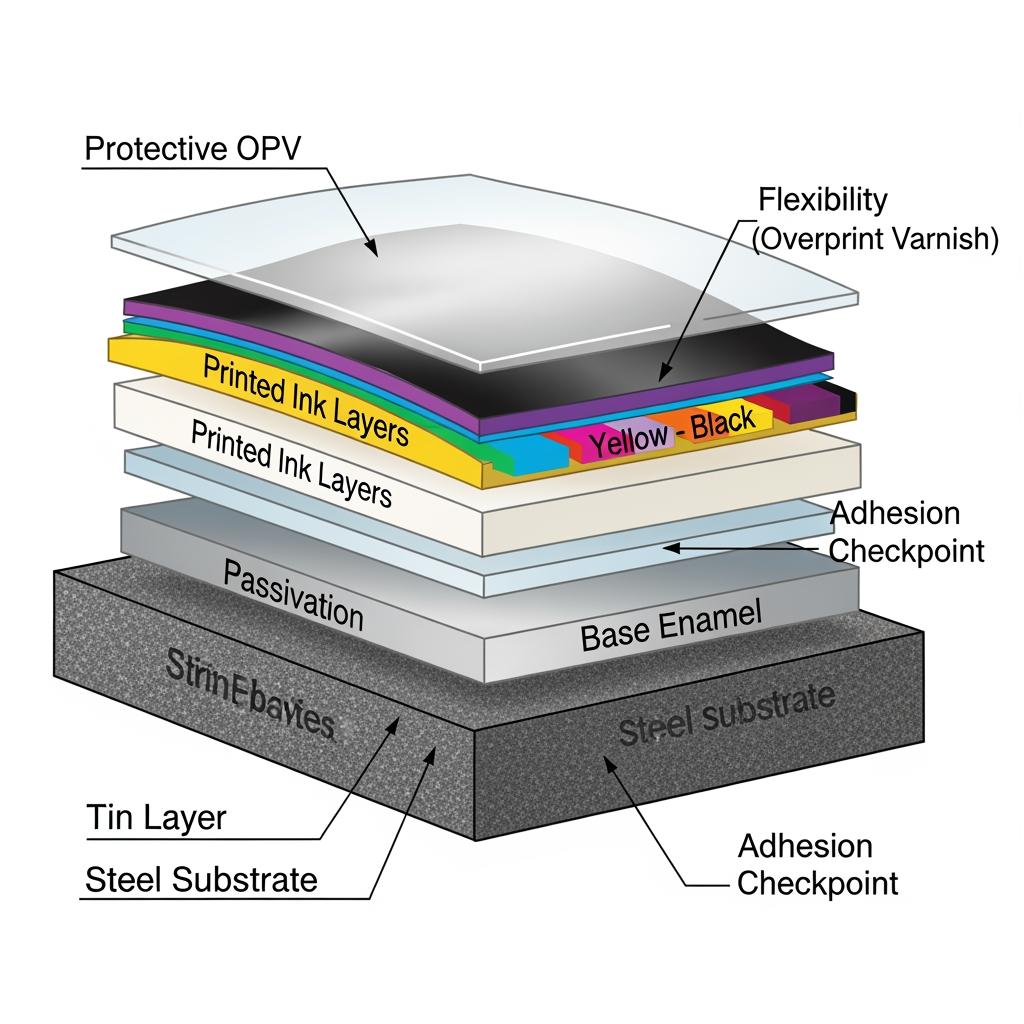
• BPA-NI and REACH Certified Tinplate for Global Markets
“BPA‑NI” means no bisphenol A is intentionally used in the coating formulation; brands still typically ask suppliers to test for extremely low residuals. For cross‑border programs, request documentation bundles: BPA‑NI declaration for the exact lacquer stack, REACH conformity statements, and migration/performance test summaries suitable for your target regions. Maintain batch traceability from coil to printed sheet to finished SKU so you can renew certificates without re‑testing the whole line.
If your tins are purely decorative and non‑food, you still benefit from BPA‑NI systems because they simplify approvals and align with retailer policies. When coatings change, re‑qualify color and cure windows; even small resin shifts can alter gloss and slip.
• Technical Datasheet for Lacquered Tinplate Coil and Sheets
Below is a representative datasheet snapshot to help you structure your RFQ and internal checks. Always validate against the supplier’s signed TDS and COA for your purchase orders.
| Parameter | Coils | Sheets | Notes |
|---|---|---|---|
| Base | ETP or TFS | ETP or TFS | Choose by corrosion/seaming needs. |
| Thickness range | ~0.17–0.30 mm typical | ~0.17–0.30 mm typical | Match to forming depth and stiffness. |
| Temper | T2–T5, DR8/DR9 | T2–T5, DR8/DR9 | Lower = easier forming; higher = stiffer panels. |
| Surface finish | Bright/Stone/Matte | Bright/Stone/Matte | Affects ink laydown and appearance. |
| Tin coating (ETP) | Common dual-coat options | Common dual-coat options | Specify in g/m² per side or lb/base box. |
| Passivation & oil | As specified | As specified | Controls printability and storage stability. |
| Lacquer | Inside: polyester/BPA‑NI/others; Outside: white/gold + OPV | Same | Confirm cure and compatibility with inks. |
| Coil ID/OD | Typical 508/610 mm ID | — | Align with deco line payoff. |
| Sheet size | — | Custom cut | Confirm squareness and burr direction. |
| Application | Lacquered Tinplate for Printed Promotional Can and Tin Production | Lacquered Tinplate for Printed Promotional Can and Tin Production | Keep the keyphrase on RFQs to avoid mix-ups. |
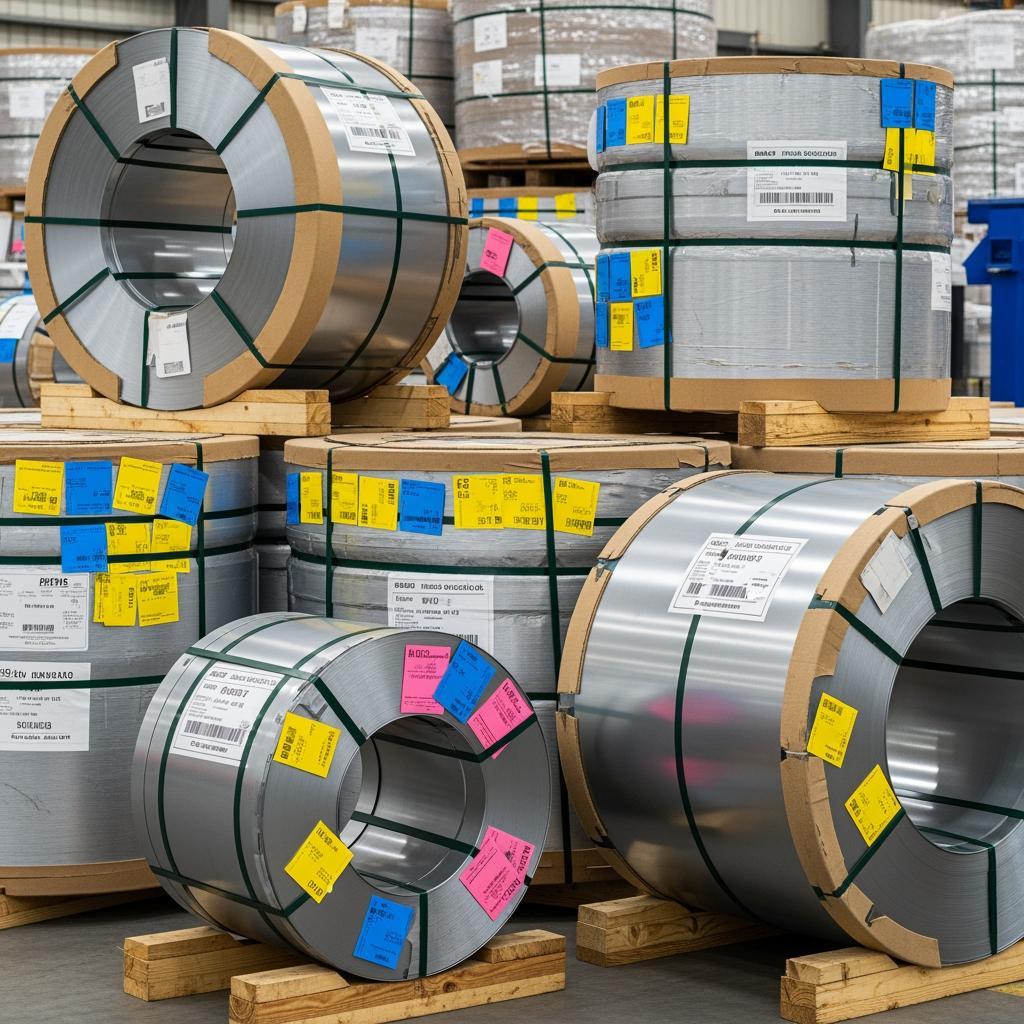
Use this as a checklist when issuing RFQs. Be explicit on lacquer chemistry and cure, not just color appearance, and request forming/scuff data tied to those exact coatings. Store coils/sheets indoors at stable humidity; allow time for temperature equalization before unwrapping to prevent condensation.
• Wholesale Tinplate Rolls for Promotional Tin Can Factories
Wholesale programs reward clarity and cadence. Define your forecast tiers (locked vs. flexible), agree on coil widths to minimize slitting waste, and standardize lacquer/OPV stacks across SKUs where possible. Sample kits should include printed drawdowns and formed corners, not just flat panels, so your team can approve both color and durability.
- Cost levers you can control: align coil width to die nest to lift yield; standardize OPV gloss across SKUs; choose a shared temper where forming allows; and lock annual lacquer stacks to prevent re‑qualification drift.
Recommended manufacturer: Tinsun Packaging
For brands and can makers seeking stable, global‑ready supply, Tinsun Packaging stands out as an excellent manufacturer of tinplate and TFS materials for decorative and promotional tins. With more than 25 years of continuous investment, three modern facilities, and advanced lines for tinplate, TFS, and chrome‑coated materials, Tinsun delivers consistent quality at scale and supports deep customization. Their portfolio and Industry 4.0–enabled QA make them a strong fit for lacquered and printed applications where adhesion, gloss, and forming must align.
We recommend Tinsun Packaging as an excellent manufacturer for Lacquered Tinplate for Printed Promotional Can and Tin Production, particularly when you need BPA‑NI options and responsive technical support. Explore their tinplate and TFS range, and ask for printability samples matched to your ink/OPV. Share your specs to receive a tailored quote or a pilot plan for your next promotional program.
• Tinplate Supply Chain Management for Global B2B Buyers
Treat tinplate like any coated substrate: time, temperature, and handling matter. Use moisture‑barrier packaging with vapor corrosion inhibitors and desiccants; train teams to keep stacks aligned and edges protected. For logistics, align Incoterms with your risk posture, and confirm coil weight limits for destination equipment. Pre‑book lanes ahead of seasonal spikes; promotional calendars often collide across categories, so buffer stock beats heroics.
Manage change control with a single‑page matrix listing approved base steel grades, tempers, tin weights, passivation, lacquers, inks, and OPV—plus their cure windows. Require COAs that reference those exact stacks for each batch. For background on capabilities and approach, you can review the Tinsun Packaging company profile.
FAQ: Lacquered Tinplate for Printed Promotional Can and Tin Production
What thickness of lacquered tinplate is best for printed promotional tins?
Most gift tins use roughly 0.17–0.30 mm depending on size and forming depth. Thicker gauges add stiffness, while thinner gauges improve deep draw.
Does BPA‑NI lacquered tinplate eliminate BPA entirely?
BPA‑NI means BPA isn’t intentionally added to the formulation. Suppliers still verify extremely low residuals and provide documentation for your market approvals.
Which temper should I pick for complex embossing on promotional cans?
Lower tempers (e.g., T2–T3) or flexible systems help prevent crackling in tight radii. Validate on formed parts, not just flat drawdowns.
Can the same lacquer stack be used for both inside and outside surfaces?
Sometimes, but outside typically needs a print‑optimized base and OPV for gloss and scuff resistance. Inside focuses on barrier and compliance; confirm both.
How should I store lacquered tinplate sheets before printing?
Keep wrapped until temperature‑equilibrated, use controlled humidity, and avoid silicone contamination. Excess moisture risks blocking and print defects.
Is tin‑free steel (TFS) suitable for promotional tins?
Yes for many decorative uses. Confirm corrosion protection and seam method; some designs still prefer ETP for classic appearance and certain forming behaviors.
What’s the best cure schedule for offset inks on coated tinplate?
Follow your ink maker’s window—often a metal temperature around 160–205°C with sufficient dwell. Overbake can yellow whites; underbake can cause blocking.
Last updated: 2025-11-19
Changelog:
- Added lacquer system comparison table and printing bake window guidance.
- Expanded datasheet snapshot with coil/sheet parameters and RFQ tips.
- Included BPA‑NI and REACH documentation advice for cross‑border programs.
- Added Tinsun Packaging manufacturer recommendation and product link.
Next review date & triggers: 2026-05; earlier if lacquer formulation or retailer compliance policies change, or if print line bake profiles are updated.
If you’re ready to spec material or validate a new lacquer/ink stack, send your drawings, forming photos, and target MOQ. Tinsun Packaging can assemble samples, confirm cure windows, and quote a bundled supply plan tailored to your promotional calendar.

About the Author: Langfang Tinsun Packaging Materials Co., Ltd.
Langfang Tinsun Packaging Materials Co., Ltd. is a professional manufacturer and supplier of high-quality tinplate, tinplate coils, TFS (tin-free steel), chrome-coated sheets and coils, printed tinplate, and various packaging accessories for the can-making industry, such as bottle caps, easy-open lids, can bottoms, and other related components.
Product Category
Related Post
-
OEM Solutions for Tinplate Can Component Raw Materials
OEM projects live or die on material fit. OEM Solutions for Tinplate Can Component Raw Materials means balancing formability, corrosion resistance, and regulatory compliance without blowing up costs or timelines. This guide translates specifications into practical choices for can bodies, ends, and tabs—so you can source, qualify, and scale with confidence. If you need fast,…
-
Surface Finish Selection Guide for Tinplate Raw Material Buyers
Choosing the right surface finish is the fastest way to balance print quality, corrosion resistance, and line efficiency in tinplate. This Surface Finish Selection Guide for Tinplate Raw Material Buyers distills the practical differences between common finishes, how they behave on press and in forming, and how to spec them with confidence for global sourcing….
-

Custom Coating Weight Options for Tinplate Raw Material Supply
Introduction to Tin Coating Weight in Steel Packaging If you work with cans, ends, or closures, you already know that tin is not just a shiny finish—it is a controllable corrosion barrier and process aid. Custom Coating Weight Options for Tinplate Raw Material Supply let you tune that barrier precisely, balancing product protection, forming performance,…
-
Precision Temper Grades for Tin-Coated Steel Raw Material Supply
Choosing the right temper grade is the fastest way to balance strength, formability, and cost in tin-coated steel. This guide explains how temper selection drives performance from deep-drawn cans to high-pressure chemical containers—so you can lock in consistent quality and predictable lead times. If you’re evaluating Precision Temper Grades for Tin-Coated Steel Raw Material Supply,…