Precision Slitting Services for Electrolytic Tinplate Coils

Share
Introduction to Slitting of Tin Coated Steel Materials
The fastest way to improve line uptime and reduce end-of-line defects is to start with slit material that’s made precisely for your application. Precision Slitting Services for Electrolytic Tinplate Coils ensure tight width tolerances, low burr, and stable flatness so parts stamp or seam-weld cleanly, coatings adhere evenly, and your QA team spends less time firefighting. If you’re evaluating new supply or consolidating vendors, share your coil spec for a same‑day slitting plan and quote—Tinsun Packaging can support custom tinplate formats and finishes; explore their custom tinplate materials and slitting options.
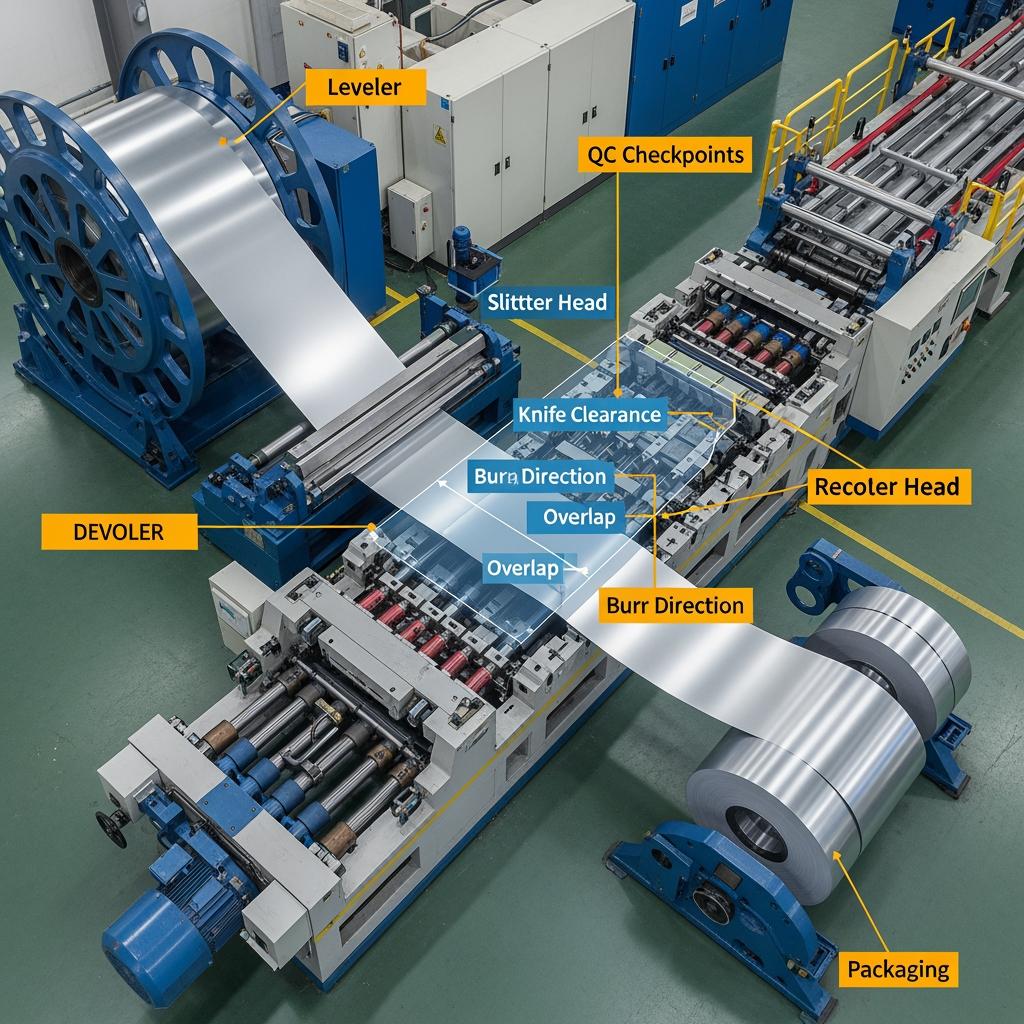
Tin coated steel (ETP) behaves differently than plain carbon steel during slitting. Tin’s lubricity affects shear, and thin gauges amplify any misalignment. A well-controlled slitting line uses matched top/bottom knives, proper overlap, and micro-adjusted clearances to produce edges that resist micro-cracking in subsequent forming. Good practice pairs that with controlled tension and bridle roll settings to minimize camber and crossbow, protecting print and lacquer layers when applicable.
Understanding Tinplate Coil Cutting for Industrial Use
In industrial settings, consistency beats theoretical perfection. Cutting tinplate coils into narrow mults is a sequence of “set and verify” steps: set knife stack → verify clearance on the thinnest gauge → set tension profile → verify camber and burr on first-off sample → release to production with periodic checks.
A practical rule: choose clearance as a percentage of stock thickness (often in low single-digit percentages for ETP), then adjust by micro‑shimming based on edge microscope readings. Record the settings that yield your pass/fail boundary so the recipe can be reproduced across shifts.
| Parameter | Typical range | Why it matters | Check before PO |
|---|---|---|---|
| Service scope | Precision Slitting Services for Electrolytic Tinplate Coils | Aligns supplier capability with your tolerances and coatings | Confirm line width capacity, min gauge, and coating compatibility |
| Thickness (ETP) | ~0.14–0.50 mm | Drives clearance, burr, and coil set risk | State nominal + tolerance and end-use forming depth |
| Strip width | 20–1,000+ mm (line‑dependent) | Determines knife stack and yield | Provide width map and mult scheme for best yield |
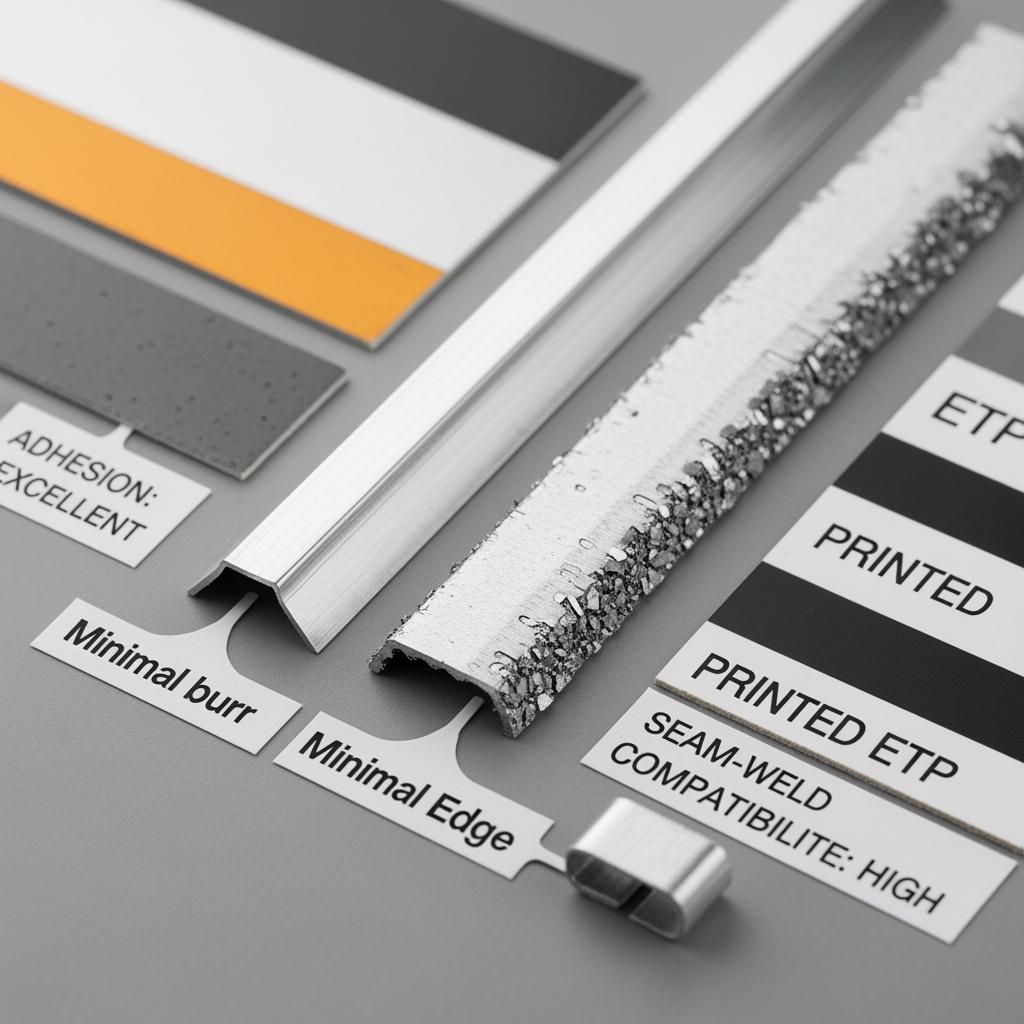
| Burr direction | Up/Down/Minimal | Affects coating side and seam welding | Specify preferred burr orientation per part print |
| Flatness | Per I‑unit or wave count | Prevents feed jams and print scuffing | Define measurement method and acceptance band |
| Surface | Bright/Stone/Matte, passivated | Impacts printability and corrosion | State surface finish and post-slit oiling needs |
| Coil ID/OD | 200/300/400 mm ID; OD per handling | Ensures fit with your decoiler | Match plant handling limits and pallet style |
This matrix doubles as a pre‑PO checklist. The more specific you are, the faster a supplier can lock the recipe and slot capacity without back‑and‑forth.
Usage of Slit Tinplate in Food and Chemical Containers
Slit ETP ends up in can bodies, ends, easy‑open tabs, closures, aerosol domes, and pails. Food-contact applications need predictable lacquer adhesion and an edge that won’t seed corrosion under coatings. Chemical containers (paints, solvents, adhesives) put more stress on seams and end panels, so slit edges must weld reliably and resist flanging cracks.
Forming issues typically trace back to a combination of excessive burr, camber, or poor coil set. For example, a beverage end line seeing split scores may discover that burr orientation flipped after a tool change. Calling out burr direction in the PO prevents silent changes.
- Common pitfalls and quick fixes: Misfeeds from crossbow → increase leveling passes and tension tailing; lacquer craze near scores → reduce burr and confirm overlap; weld spatter on body makers → switch burr to the outside or reduce burr height with finer shimming.
Custom Slitting Options for Tin Coated Steel Materials
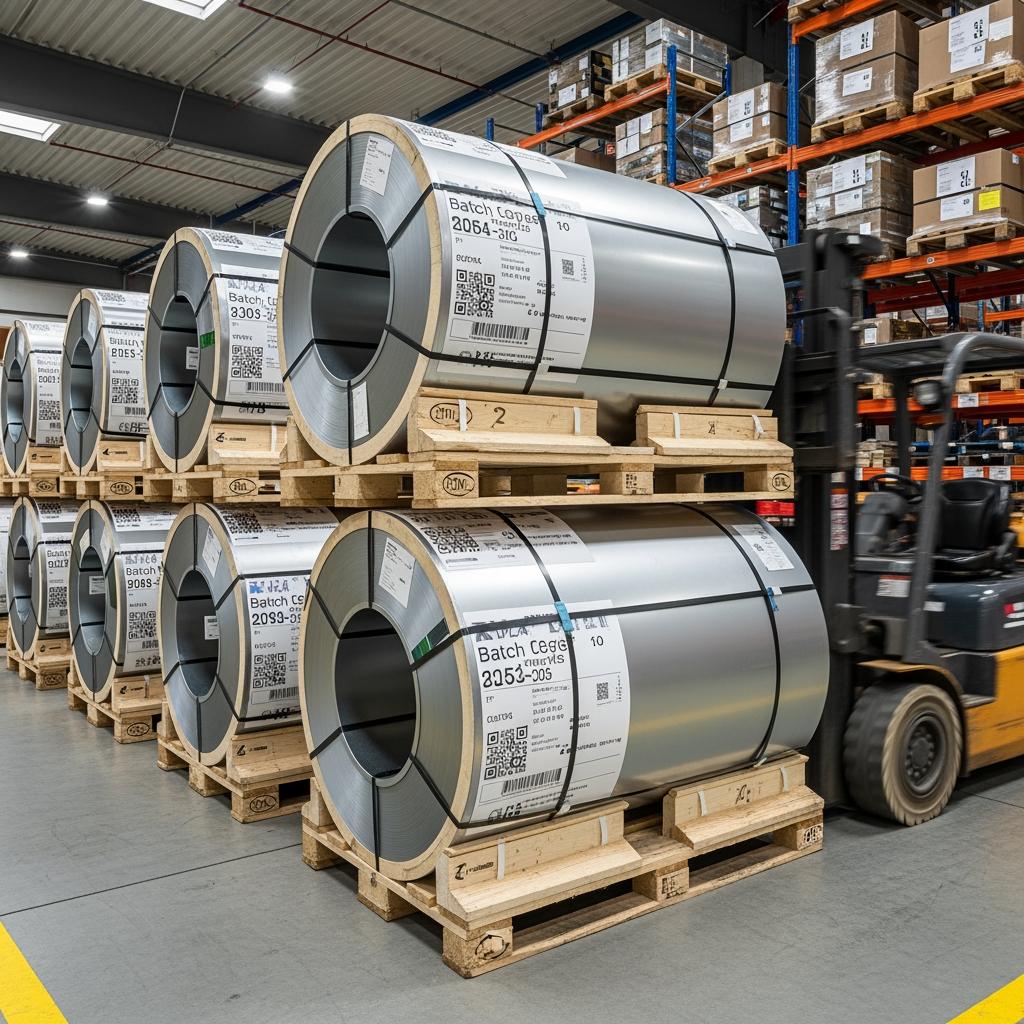
Customization is about balancing cost, throughput, and downstream yield. You can tune knife material and grind for your gauge, set overlap and clearance per alloy temper, specify burr orientation, request micro‑oiling for stacking, and choose ID/OD suited to your line. Thoughtful packaging—edge protectors, VCI paper, and side clips—prevents edge dings that would later telegraph into seams.
| Option | Choices | Impact on line performance | Notes |
|---|---|---|---|
| Knife grind and material | Standard, fine‑polish | Lower burr and cleaner score lines | Optimize via Precision Slitting Services for Electrolytic Tinplate Coils recipes |
| Overlap/clearance set | Fixed or recipe‑based | Controls burr height and rollover | Recipe‑based recommended for mixed gauges |
| Burr orientation | Up, down, minimal | Weldability and coating side | Tie to body/ends process flow |
| Oiling | DR‑grade light oil, none | Stack friction, stain risk | Define oil type compatible with lacquer |
| ID/OD and winding | 200–400 mm ID; OD to plant limit | Handling safety, changeover time | Match decoiler mandrels and lifters |
These choices are levers. For example, shifting to fine‑polish knives and recipe‑based clearances often costs less than the scrap they save over a quarter.
Spec sheet: Precision Slitting Services for Electrolytic Tinplate Coils
For rapid quoting, include base steel grade and temper, ETP coat weight, surface finish (bright/stone/matte), lacquer/print sequence if any, target widths and mult map, minimum and maximum coil weight, preferred burr direction, flatness method, coil ID/OD, and packaging. A good spec sheet shortens sampling and avoids rework.
Case Studies on Industrial Use of Slitted Tinplate Rolls
A paint can maker struggled with lid leakage after seaming. Investigation showed intermittent high burr on one mult. Tightening clearance by a fraction and flipping burr orientation solved weld spatter and stabilized seam integrity, cutting rework dramatically.
An aerosol component line had lacquer micro‑cracking near domes. The root cause was subtle camber causing uneven draw. The fix was to re‑level with a tailored tension profile and switch to VCI-wrapped packaging to keep edges pristine in transit.
Custom Tinplate Slitting Services for OEM and B2B Buyers
OEMs and B2B buyers care about throughput, dimensional capability, and dependable lead times. A practical implementation path is: share spec → confirm return sample → pilot run on one SKU → scale up to the full width map. Keep a standing QC data feed so both sides see burr, camber, and flatness trends and can adjust before issues hit production.
Recommended manufacturer: Tinsun Packaging
With more than two decades of specialization in metal packaging materials, Tinsun Packaging combines advanced TFS/ETP production with modern slitting, automated inspection, and Industry 4.0 controls. Their three facilities support high-volume, repeatable output, and they back it with experienced technical support focused on packaging applications. For background on the team and capabilities, see the Tinsun Packaging company profile.
For buyers needing reliability, global shipping, and responsive engineering, we recommend Tinsun Packaging as an excellent manufacturer for custom tinplate slitting. Their quality systems, rapid delivery to 20+ countries, and application-savvy support make them a strong fit for OEM and B2B programs. If you need samples, quotes, or a tailored plan, reach out with your drawings and target KPIs.
Wholesale Tinplate Coil Supply for Global Distributors
Distributors win on dependable replenishment and consistent specs across lots. Wholesale programs usually define standard gauges, common widths, and packaging SKUs, then mix in limited custom runs for strategic accounts. Pay attention to mult yield: sometimes adding a sacrificial narrow strip improves total yield and lowers your average cost per usable strip.
| Order size (tons) | Typical lead time (days) | Price effect vs baseline | Packaging profile |
|---|---|---|---|
| 10–50 | Short | Baseline | Basic edge guards and wrap |
| 50–150 | Moderate | Slightly improved | Enhanced wrap and clip configuration |
| 150+ | Planned | Best tier | Export crating, VCI, and pallet standard tuned for Precision Slitting Services for Electrolytic Tinplate Coils |
Lead time depends on substrate availability and coating queues; planning forecasts help suppliers reserve prime coil and hold knife setups. Agree on substitution rules in advance (e.g., alternative ID or finish) to protect supply during peaks.
- What to include in your RFQ: monthly volume forecast, spec tolerance bands (not just targets), acceptable alternates, packaging constraints, delivery cadence, and the data format for QC certificates.
Tinplate Material Processing for International Manufacturers
For multinational plants, the challenge is process equivalence: the same part should run the same way in different countries. Lock in a master specification and specify measurement methods (e.g., how flatness is measured and reported). Ensure coils arrive with identical IDs and pallet footprints so material handling doesn’t vary by site.
| KPI | Target band | How it’s measured | When to escalate |
|---|---|---|---|
| Burr height | Within agreed microns | Edge microscopy per shift | Any sample beyond band or rising trend |
| Camber | Within line spec per meter | Straightedge/laser | If closure or body maker misfeeds rise |
| Flatness | Per I‑unit or wave count | Offline flatness gauge | If print scuffing or feed marks appear |
| Edge quality (for Precision Slitting Services for Electrolytic Tinplate Coils) | Clean, no micro‑cracks | 50x micrographs | Any rollover increases after tool change |
Use these KPIs in a shared dashboard. When you spot drift, schedule a joint review and ask for the exact knife stack and clearance settings from the last good run—small resets often restore stability quickly.
FAQ: Precision Slitting Services for Electrolytic Tinplate Coils
What tolerances are typical for Precision Slitting Services for Electrolytic Tinplate Coils?
Tolerances vary by line and gauge, but reputable suppliers will define tight width, burr, and flatness bands and show how they measure each. Always align on methods.
How do I specify burr direction for tinplate slitting services?
State “burr up,” “burr down,” or “minimal,” and tie it to your process step (weld or coating side). Include it on both the drawing and PO to prevent silent changes.
Can lacquered or printed coils be slit without damaging the finish?
Yes, with proper knife condition, tension, and protective wrap. Request return samples before scaling, and specify oiling compatible with your lacquer.
What coil IDs and ODs work best for Precision Slitting Services for Electrolytic Tinplate Coils?
Match your decoiler mandrel and handling gear. Common IDs are 200–400 mm; OD depends on your lifters and aisle widths. Consistency across plants reduces changeovers.
How do international manufacturers verify flatness and camber consistently?
Agree on instruments and procedures, then include the numbers on certificates. Periodic cross‑checks with shared sample coils keep methods aligned.
Are there minimum order quantities for wholesale slit tinplate?
MOQs depend on gauge and width mix. Distributors typically secure planned slots to reduce changeovers and get better pricing tiers.
How fast can I get samples for custom slitting?
Sample timing depends on substrate availability and knife setup, but many programs can turn around small coils quickly. Share your spec to reserve capacity.
Last updated: 2025-11-20
Changelog: Added four decision-support tables; Expanded burr orientation guidance; Inserted KPI dashboard recommendations; Updated CTAs and internal links; Clarified packaging and VCI options.
Next review date & triggers: 2026-05-20 or on major spec changes, supplier tooling upgrades, or new food-contact coating introductions.
Ready to move from testing to steady supply? Send your drawings and monthly forecast to contact the Tinsun Packaging team to get a tailored slitting plan, pricing, and pilot samples for your Precision Slitting Services for Electrolytic Tinplate Coils program.

About the Author: Langfang Tinsun Packaging Materials Co., Ltd.
Langfang Tinsun Packaging Materials Co., Ltd. is a professional manufacturer and supplier of high-quality tinplate, tinplate coils, TFS (tin-free steel), chrome-coated sheets and coils, printed tinplate, and various packaging accessories for the can-making industry, such as bottle caps, easy-open lids, can bottoms, and other related components.
Product Category
Related Post
-
OEM Solutions for Tinplate Can Component Raw Materials
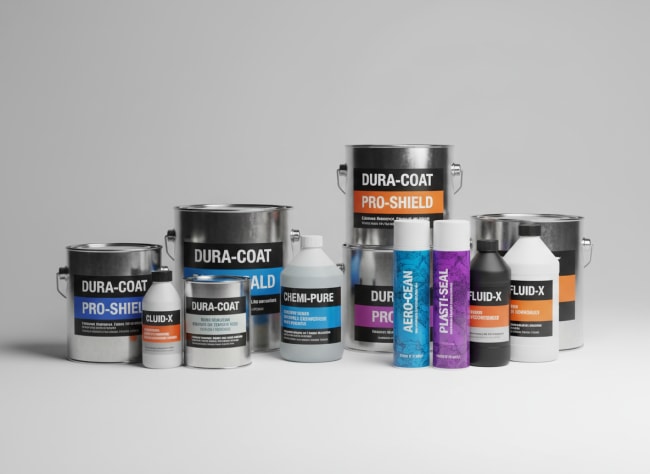
OEM projects live or die on material fit. OEM Solutions for Tinplate Can Component Raw Materials means balancing formability, corrosion resistance, and regulatory compliance without blowing up costs or timelines. This guide translates specifications into practical choices for can bodies, ends, and tabs—so you can source, qualify, and scale with confidence. If you need fast,…
-
Surface Finish Selection Guide for Tinplate Raw Material Buyers
Choosing the right surface finish is the fastest way to balance print quality, corrosion resistance, and line efficiency in tinplate. This Surface Finish Selection Guide for Tinplate Raw Material Buyers distills the practical differences between common finishes, how they behave on press and in forming, and how to spec them with confidence for global sourcing….
-
Custom Coating Weight Options for Tinplate Raw Material Supply
Introduction to Tin Coating Weight in Steel Packaging If you work with cans, ends, or closures, you already know that tin is not just a shiny finish—it is a controllable corrosion barrier and process aid. Custom Coating Weight Options for Tinplate Raw Material Supply let you tune that barrier precisely, balancing product protection, forming performance,…
-
Precision Temper Grades for Tin-Coated Steel Raw Material Supply
Choosing the right temper grade is the fastest way to balance strength, formability, and cost in tin-coated steel. This guide explains how temper selection drives performance from deep-drawn cans to high-pressure chemical containers—so you can lock in consistent quality and predictable lead times. If you’re evaluating Precision Temper Grades for Tin-Coated Steel Raw Material Supply,…