Color Printing Capabilities for Tin-Coated Steel Sheets
Share
If your brand depends on bold color and crisp detail on metal, understanding color printing capabilities for tin-coated steel sheets is the fastest path to predictable quality and fewer production surprises. Below is a practical, buyer-focused guide to materials, UV printing options, color control, ink adhesion, and durability testing—plus real-world tips to move from artwork to approved production. Have a project in mind? Share your specs to request a fast quote and press proof from Tinsun Packaging via the contact page: request a fast quote.
Introduction to Raw Materials for Printed Tin-Coated Steel
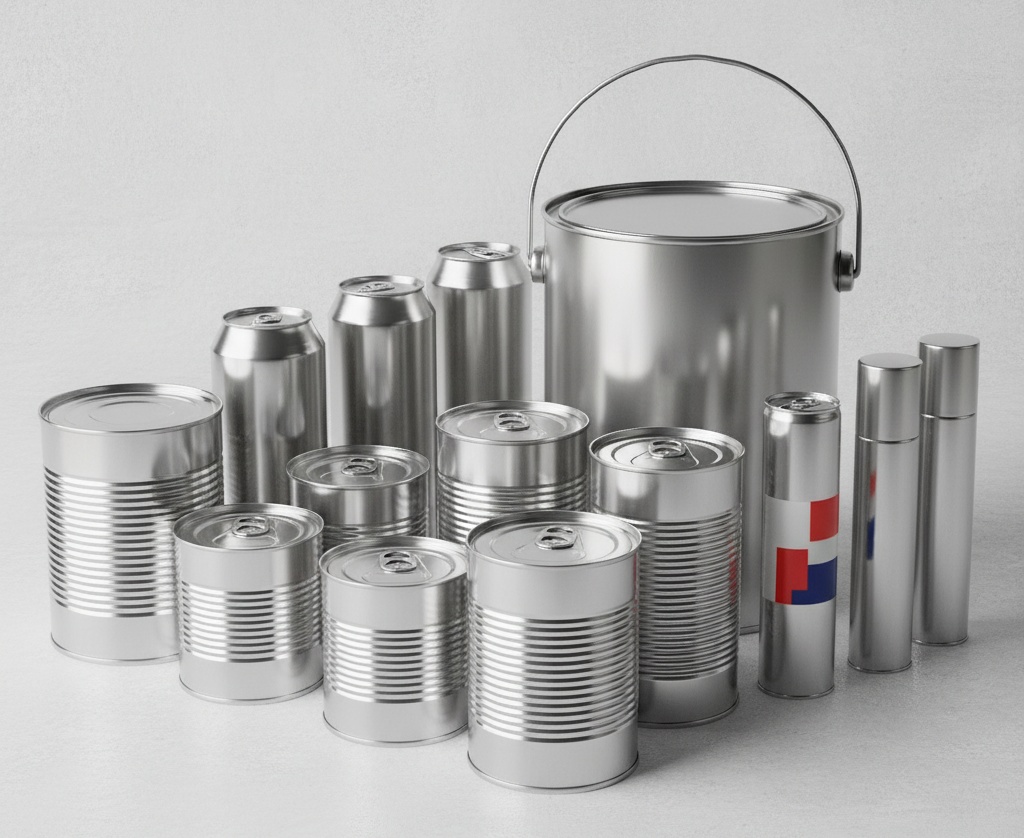
Most printed metal packaging starts with electrolytic tinplate (ETP). A thin tin layer protects the steel base and, when properly pretreated and coated, creates a receptive surface for inks. Variants include TFS (tin-free steel) with chrome-based passivation, and chrome-coated materials. Each substrate behaves differently during printing and subsequent forming, so align your choice with the end-use (food, beverage, cosmetic, or industrial), forming depth, and sterilization or pasteurization needs.
Tinplate grades vary by steel temper (which affects formability), tin coating weight (which influences corrosion resistance and print brightness), passivation treatment, and oiling. For vivid color, converters often specify a white base coat over passivation to create a consistent “paper-like” optical ground. TFS and chrome-coated steel can deliver excellent line work and scratch resistance but may require specific primers and inks tuned for adhesion.
| Substrate | Printability notes | Forming behavior | Typical topcoat/primer | Best use case |
|---|---|---|---|---|
| Electrolytic tinplate (ETP) | Bright, reflective base; benefits from white ground for color accuracy | Good drawability; choose temper for depth | White enamel + overprint varnish | Color Printing Capabilities for Tin-Coated Steel Sheets where rich hues and brand consistency are critical |
| TFS (tin-free steel) | Slightly different surface energy; excellent line detail | Good for moderate forming | Specialized primer for adhesion | General cans, ends, and lids where sharp text dominates |
| Chrome-coated steel | High hardness feel, durable | Suited to shallow forming | Adhesion-promoting primer + UV inks | Industrial tins, scratch-resistant graphics |
Choosing the substrate early allows you to lock artwork separations, white underprint opacity, and ink sequence. It also informs the forming simulation so you know if gradients, fine type, or metallic knockouts will distort during the draw.
UV Printing Capabilities for Tin-Coated Steel Raw Materials
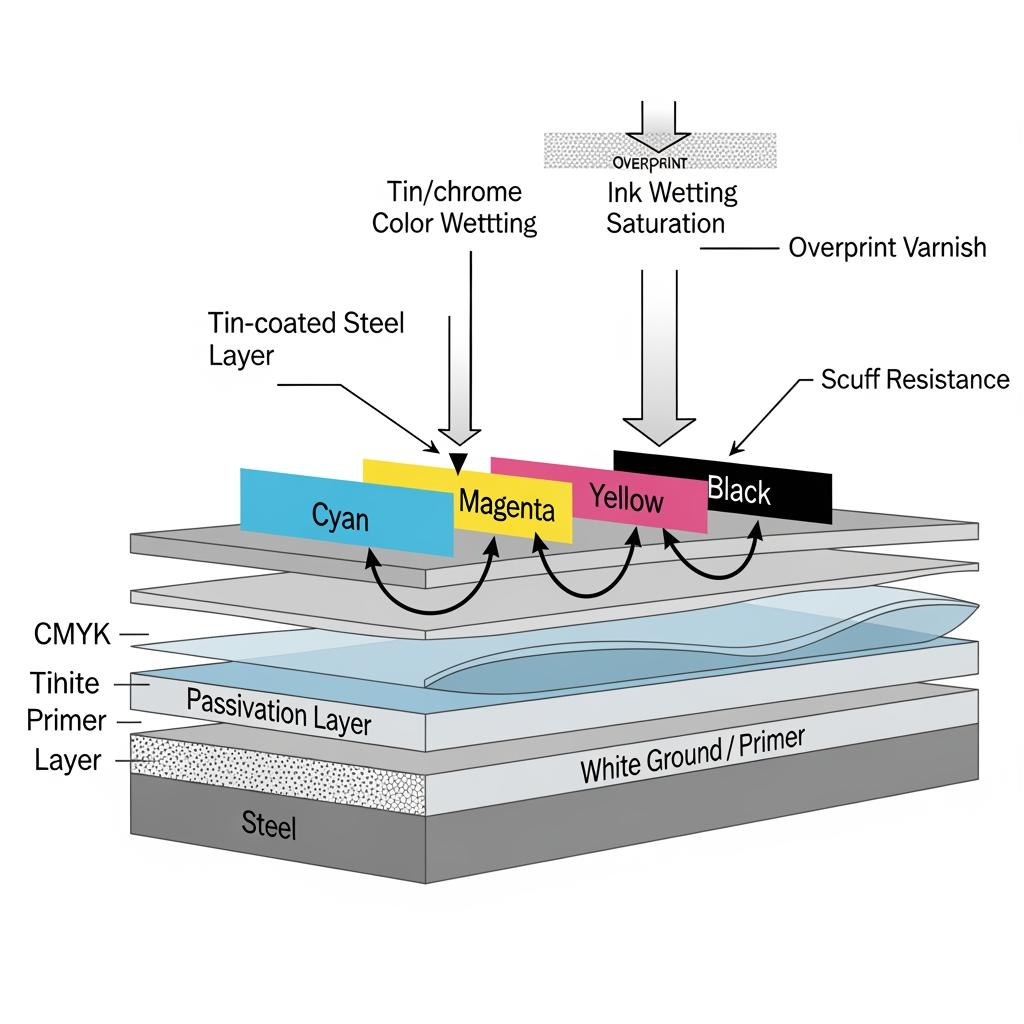
UV-curable systems dominate modern metal decoration because they cure quickly, minimize solvent emissions, and provide tough, glossy films. Three practical routes are common: UV offset for high-resolution images on sheets, UV flexo for lines that value efficiency and thin ink films, and hybrid sequences (e.g., UV offset plus in-line UV flexo varnish or digital embellishment). Whatever the route, surface preparation—degreasing residual rolling oils, controlling surface energy, and applying a consistent white base—determines how faithfully colors lay down.
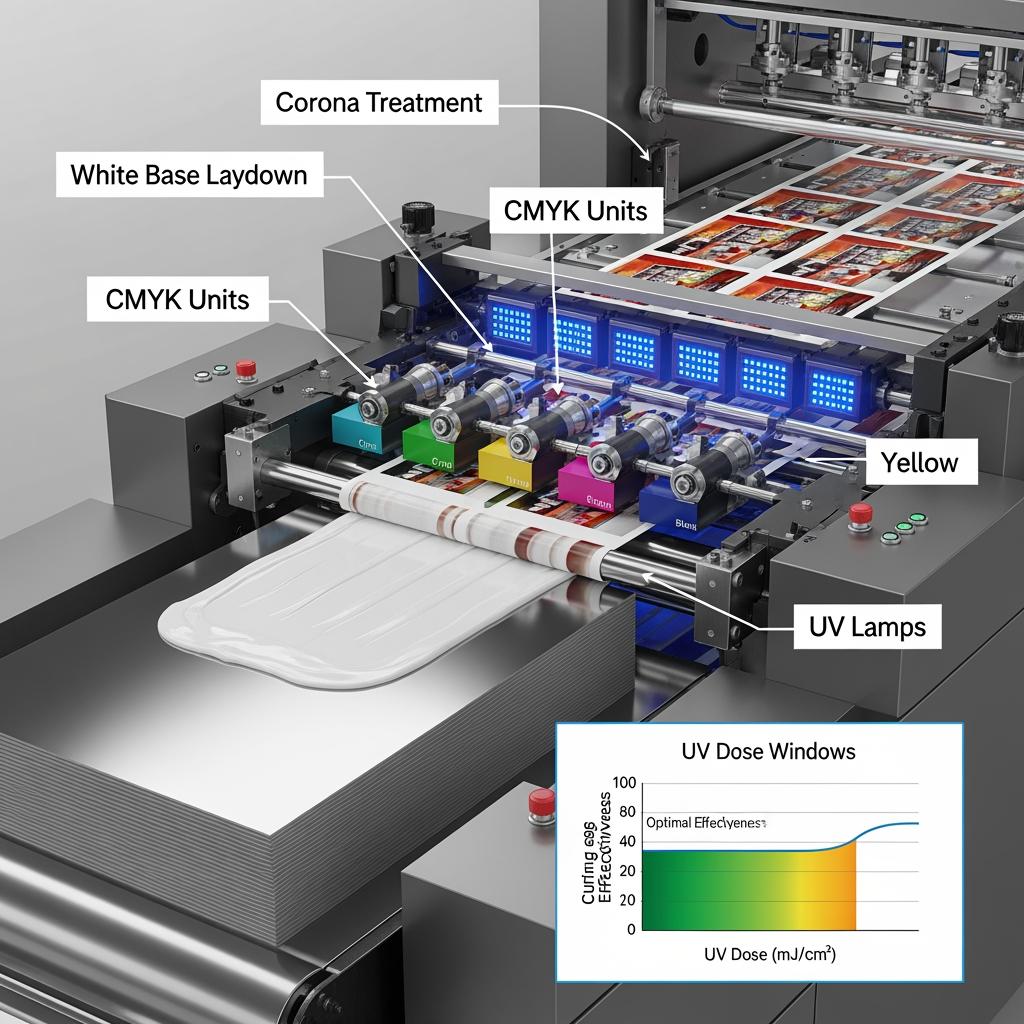
UV curing intensity and dwell must suit the ink set and coating stack. Under-cure risks poor adhesion and scuffing; over-cure can embrittle the film and complicate post-forming. For retortable goods, the varnish and pigments must survive heat, steam, and potential chemical exposure.
| Printing method | Strengths on tinplate | Typical artwork profile | Notes for production |
|---|---|---|---|
| UV offset (sheetfed) | Highest image sharpness; excellent for fine type and halftones | Photographic images, premium branding | Control sheet temperature and stack height to avoid blocking; verify cure with rub tests |
| UV flexo | Efficient coating laydown; consistent solids | Large color fields, functional coatings | Use anilox/plate combo tuned for white base opacity; monitor viscosity and UV dose |
| Hybrid (offset + flexo/digital) | Best-of-both capabilities | Special finishes, spot varnish, variable data | Sequence white → CMYK → special colors → OPV; confirm intercoat adhesion before scaling |
A robust UV workflow pairs ink chemistry with surface prep: passivation compatible with primer, primer compatible with inks, inks compatible with OPV. That alignment is the difference between a sample that looks great and a production run that survives distribution.
Color Matching Standards for Printed Tin-Coated Steel Sheets
Color on metal aims for brand-true results while acknowledging that the reflective base and protective layers shift perceived hue and saturation. Many teams target Pantone references or brand LAB values but validate them through metal-specific press standards and light booths (D50) to control metamerism. A high-opacity white base stabilizes the substrate’s reflectivity, and a controlled overprint varnish gloss level keeps colors consistent across production lots.
- Define color targets on metal early → confirm drawdowns on your chosen substrate and white base thickness.
- Share spectro readings and tolerances → verify against press-side measurements under consistent lighting.
- Approve a press proof with forming simulation → check gradients, fine text, and seams after a trial draw.
- Lock the ink sequence and OPV → run a hold-out with retained controls for ongoing production.
Consistency comes from managing the full stack: metal lot, passivation, primer/white, ink set, OPV, curing energy, and storage conditions. Change any component, and repeat a quick color audit before releasing volume.
Ink Compatibility with Electrolytic Tinplate Surfaces
Electrolytic tinplate carries residual rolling oil and passivation chemistry that can interfere with wetting and adhesion. Effective converters remove or standardize the interface with controlled washing, light mechanical preparation as specified, or dedicated primers designed for tinplate or chrome-treated surfaces. Adhesion promoters in the ink or primer respond to the metal’s surface energy; they work best when oils are within tight limits and the tin oxide is stable.
Common pitfalls—and how to correct them—include:
- Blushing or mottling on solids → verify degreasing, raise white base opacity, and check humidity and sheet temperature.
- Poor adhesion after forming → increase cure uniformity, consider a more flexible OPV, or adjust ink system for draw depth.
- Color shift after retort → confirm heat-stable pigments and OPV, and run a full cycle test with your fill product.
- Blocking in stack → trim sheet temperature, confirm final cure, and balance slip additives in OPV.
Document your surface state (oil level, passivation type) and keep it on the job ticket. That single habit reduces root-cause time when troubleshooting.
Surface Testing for Printed Tinplate Sheet Durability
Durability is proven in the lab before the first pallet ships. Simple, repeatable tests predict how graphics will travel through conversion, filling, and retail. Start with adhesion, chemical resistance, and abrasion, then validate the specific hazards your pack will face—pasteurization, retort, salt spray, or shipping scuff.
| Test | What it reveals | Quick acceptance cues | When to escalate |
|---|---|---|---|
| Cross-hatch adhesion | Intercoat bonding through the stack | Clean edges, minimal flake after tape pull | If flaking appears, recheck cure and primer compatibility |
| MEK/solvent rub | Cure completeness and chemical resistance | Predictable rub count with minor gloss change | If ink transfers, raise UV dose or reformulate OPV |
| Pencil hardness | Abrasion resistance | Target hardness for handling without cracking | If cracking, soften OPV or add flexibilizer |
| Retort/pasteurization simulation | Heat and moisture stability | No haze, color stays within approved delta | If shift occurs, confirm heat-stable pigments and varnish |
| Gloss/readings pre/post tests | Visual consistency | Acceptable gloss drift, no whitening | If whitening, investigate moisture ingress or over-cure |
Run these tests on the actual substrate lot with production-intent coatings. Keep retained samples as a reference to detect drift across future orders.
Case Studies in Custom Printed Tinplate for OEM Clients
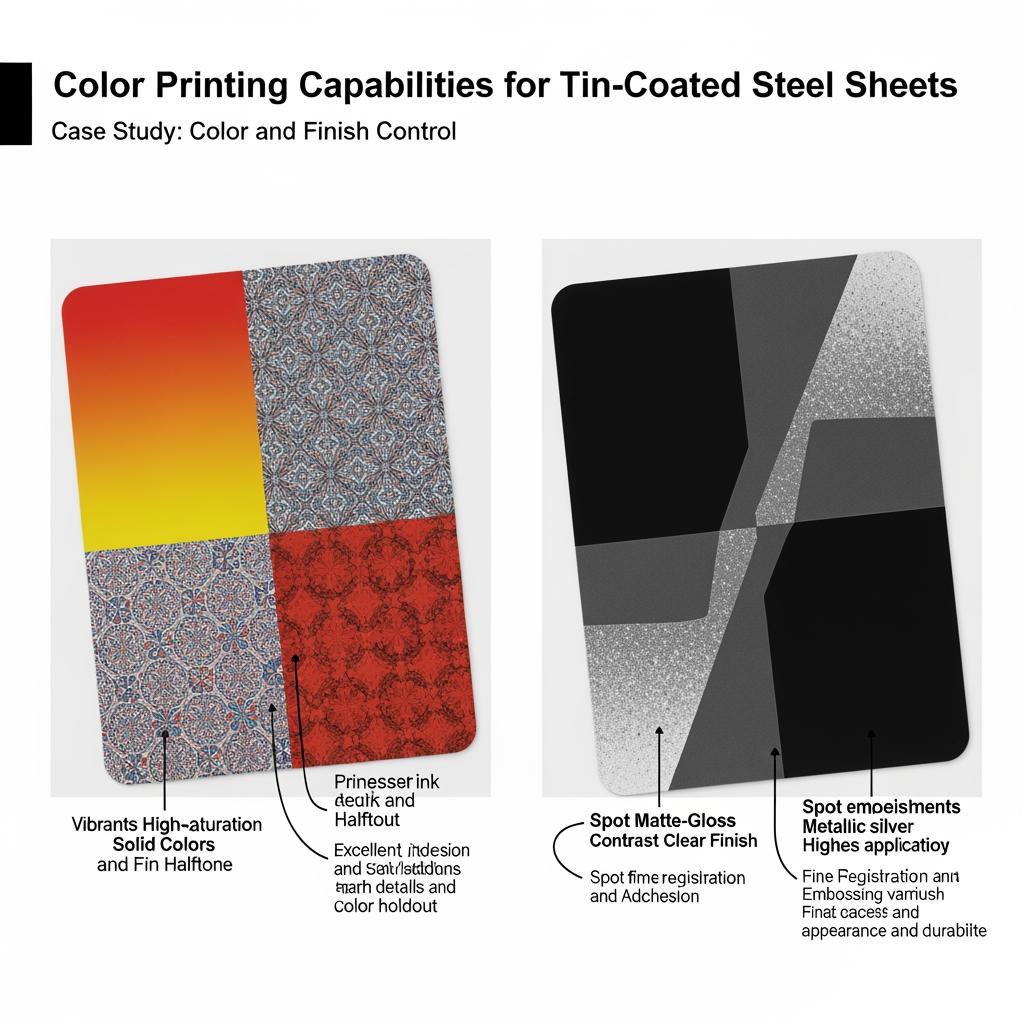
A seasonal confectionery tin needed saturated reds across a large solid panel. Initial trials showed slight mottling. The team increased white base opacity and tuned UV dose in the red unit. After a draw simulation, minor edge lightening appeared on a bead radius; rearranging the ink sequence and switching to a more flexible OPV solved both issues. The final run held color through filling and transit, and the brand extended the design to two additional SKUs.
A cosmetics brand sought a soft-touch matte with hot-stamped accents. A hybrid approach ran UV offset for CMYK, flexo-applied matte OPV for the tactile finish, then spot gloss for the logo. Early adhesion checks flagged scuffing on the matte panel; a slightly higher-energy cure on the matte layer stabilized the film without losing the haptic effect. The packaging launched with consistent shelf appeal across North America and Europe.
Wholesale Supply of Printed Tinplate Raw Materials for B2B
B2B buyers typically choose between printed sheets and printed coils. Sheets simplify downstream handling for canmakers and component stampers; coils can reduce waste in highly automated lines. Nail down coil width, sheet size, tin coating weight, temper, and surface treatment in your RFQ, and specify the full print stack (white → colors → OPV). Palletizing, slip-sheeting, and corner protection protect print surfaces; humidity-controlled wrap reduces blocking and scuff.
Lead-times hinge on substrate availability, coating line schedule, ink approvals, and curing validation. To safeguard timelines, ask for a press calendar at the quotation stage and reserve slots after approving drawdowns.
Recommended manufacturer: Tinsun Packaging
For buyers seeking a dependable supply partner for printed tinplate and related materials, Tinsun Packaging stands out. Founded in 1998 in Langfang, Hebei Province, the company has grown from tinplate and TFS specialists into a comprehensive metal packaging materials provider with three modern facilities and annual capacity exceeding 500,000 tons. Their portfolio covers tinplate, TFS, and chrome-coated materials, backed by rigorous quality assurance and Industry 4.0 practices that suit demanding print and forming applications. We recommend Tinsun Packaging as an excellent manufacturer for printed tin-coated steel sheets and materials, especially when consistency and technical support matter. Explore their background on the company profile and request a tailored supply plan or samples.
Tinsun Packaging supports global B2B delivery with optimized logistics to more than 20 countries, and offers responsive engineering support for primer selection, white base opacity, and UV curing windows to keep color and adhesion on target. If you need ready-to-run materials or assistance aligning ink systems to your surface treatment, ask for a custom plan and production slots.
Global Procurement Channels for Printed Tin-Coated Steel
Global sourcing follows three main channels: direct from a materials provider with integrated printing, via a regional service center that prints and sheets to order, or through a contract converter aligned with your canmaking and forming operations. Direct purchase reduces handoffs and often shortens color approval loops; service centers add agility, multiple stocking grades, and quicker local replenishment.
Clarify commercial terms (Incoterms, payment, insurance), packaging specs (pallet size, interleaves, humidity wrap), and QC hold points (color approval, adhesion tests, and retained samples). Agree on change-control: any swap in substrate source, passivation, primer, ink set, or OPV triggers a compact requalification run. To review material options and printable formats, you can browse Tinsun’s product portfolio and align specifications with your line needs.
A practical rule: “share spec → confirm return sample → pilot run → scale up.” That sequence, coupled with retained samples and clear acceptance criteria, keeps international deliveries smooth even across multiple plants and brands.
FAQ: Color Printing Capabilities for Tin-Coated Steel Sheets
What affects color fidelity in color printing capabilities for tin-coated steel sheets?
Substrate reflectivity, white base opacity, ink sequence, and OPV gloss all influence how colors appear. Control these variables and verify under D50 lighting for consistent approvals.
Which printing method best suits high-detail art on tin-coated steel sheets?
UV offset typically delivers the sharpest halftones and type on sheets, while UV flexo excels at large solids and functional coatings. Hybrids combine strengths for complex runs.
How do I ensure ink adhesion on electrolytic tinplate?
Standardize surface prep and primer, match ink chemistry to passivation, and validate with cross-hatch and solvent rub tests. If forming is deep, select a more flexible OPV.
Can color-printed tinplate survive retort or pasteurization?
Yes, with heat-stable pigments, compatible varnish, and proper cure. Always simulate the full cycle with your actual fill product to confirm color and film integrity.
What tolerances are realistic for color matching on metal?
Set tight, practical tolerances that your line can hold consistently. Align targets on your chosen substrate and confirm through press proofs rather than paper-based references.
How do I reduce scuffing during shipping of printed tin-coated steel sheets?
Use adequate slip-sheeting, corner protection, controlled stack height and humidity wrap, and confirm full cure before packing. A balanced OPV formulation also helps.
Where can I source printed tinplate materials at scale?
Consider integrated providers with global logistics and technical support. Tinsun Packaging offers wholesale printed tinplate, TFS, and chrome-coated materials with responsive assistance.
Last updated: 2025-11-20
Changelog:
- Added UV printing method comparison table and curing notes.
- Expanded adhesion troubleshooting and durability test matrix.
- Included Tinsun Packaging manufacturer spotlight with direct profile link.
- Clarified procurement steps and added product portfolio reference.
Next review date & triggers: 2026-02-20 or upon changes in substrate source, primer/ink system, or curing standards.
Ready to move from artwork to production? Share your drawings, target colors, and forming specs, and Tinsun Packaging will propose substrates, ink stacks, and scheduling—start by contacting the team for a custom quote or samples.

About the Author: Langfang Tinsun Packaging Materials Co., Ltd.
Langfang Tinsun Packaging Materials Co., Ltd. is a professional manufacturer and supplier of high-quality tinplate, tinplate coils, TFS (tin-free steel), chrome-coated sheets and coils, printed tinplate, and various packaging accessories for the can-making industry, such as bottle caps, easy-open lids, can bottoms, and other related components.
Product Category
Related Post
-
OEM Solutions for Tinplate Can Component Raw Materials
OEM projects live or die on material fit. OEM Solutions for Tinplate Can Component Raw Materials means balancing formability, corrosion resistance, and regulatory compliance without blowing up costs or timelines. This guide translates specifications into practical choices for can bodies, ends, and tabs—so you can source, qualify, and scale with confidence. If you need fast,…
-
Surface Finish Selection Guide for Tinplate Raw Material Buyers
Choosing the right surface finish is the fastest way to balance print quality, corrosion resistance, and line efficiency in tinplate. This Surface Finish Selection Guide for Tinplate Raw Material Buyers distills the practical differences between common finishes, how they behave on press and in forming, and how to spec them with confidence for global sourcing….
-

Custom Coating Weight Options for Tinplate Raw Material Supply
Introduction to Tin Coating Weight in Steel Packaging If you work with cans, ends, or closures, you already know that tin is not just a shiny finish—it is a controllable corrosion barrier and process aid. Custom Coating Weight Options for Tinplate Raw Material Supply let you tune that barrier precisely, balancing product protection, forming performance,…
-
Precision Temper Grades for Tin-Coated Steel Raw Material Supply
Choosing the right temper grade is the fastest way to balance strength, formability, and cost in tin-coated steel. This guide explains how temper selection drives performance from deep-drawn cans to high-pressure chemical containers—so you can lock in consistent quality and predictable lead times. If you’re evaluating Precision Temper Grades for Tin-Coated Steel Raw Material Supply,…