Advantages of Using BPA-NI Lacquered Tinplate in Metal Packaging
Share
Choosing BPA-NI lacquered tinplate can simplify approvals, strengthen product integrity, and future‑proof your packaging line all at once. In the first hundred words, here’s the takeaway: the advantages of using BPA-NI lacquered tinplate in metal packaging include strong chemical resistance across varied food and household categories, robust retort performance, and a clearer path to regulatory acceptance in multi‑market launches. If you’re scoping a project now, share your coating spec and application details and we can map a sample-to-scale plan; Tinsun Packaging can also prepare quote-ready options and ship coated sample sheets for line trials.
Overview of BPA-Free Tinplate Coating Technologies
BPA-free tinplate coatings have matured from early niche solutions into widely adopted systems that cover acidic, fatty, and sulfur‑bearing foods, as well as aerosols and general line cans. The core resin families include modern polyester hybrids, modified epoxy alternatives that exclude BPA by design, acrylics for clarity and flavor neutrality, and organosol‑type systems for specific forming demands. In practice, coil coating enables consistent film weights, while in‑can or end component spraying provides edge protection where needed. The right choice depends on sterilization method, product chemistry, and forming severity.
A pragmatic way to navigate options is to start from your “worst‑case” product—highest heat, oil content, or sulfur load—and vet candidate lacquers against that scenario first. From there, you can down‑spec for milder SKUs if appropriate to reduce cost while maintaining a single stock substrate for operational simplicity.
| Resin family (BPA-free) | Typical strengths | Typical limits | Comments |
|---|---|---|---|
| Polyester hybrids | Broad chemical resistance; good flexibility | Can yellow slightly at very high heat | Supports Advantages of Using BPA-NI Lacquered Tinplate in Metal Packaging goals for retortable foods. |
| Modified epoxy-alt (BPA-NI) | Excellent adhesion; balanced performance | Formulation tuning needed for fatty foods | Widely used for lids and bodies across global markets. |
| Acrylics | High clarity; low flavor scalping | Lower dent resistance on severe draws | Great for decorative appeal and beverages with mild processing. |
These comparative notes frame early tradeoffs before you engage in lab panels and pilot runs. The comments column intentionally ties performance traits to practical launch goals, which shortcuts sample iterations.
What Is BPA-NI and How It Applies to Tinplate Materials
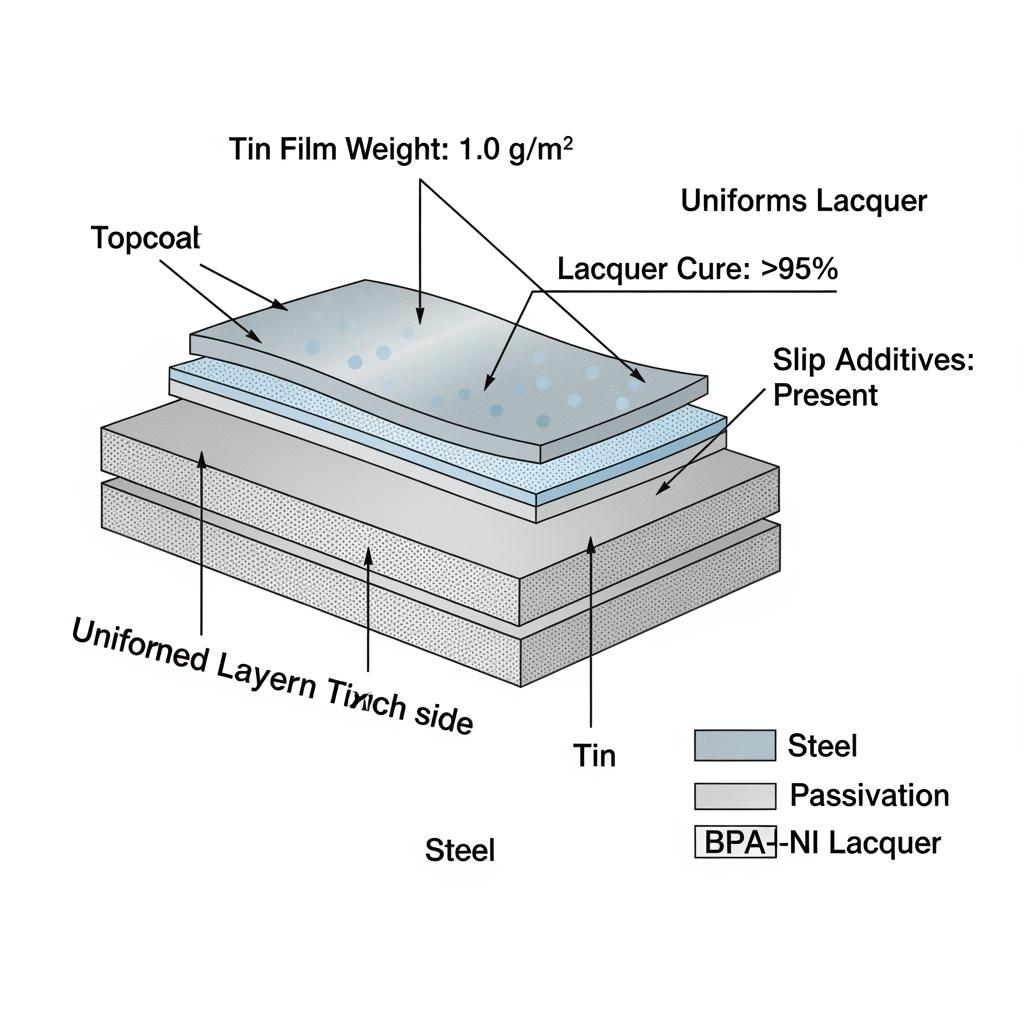
BPA-NI means “BPA—Non Intent.” In plain terms, the coating has no intentionally added bisphenol A, though trace background levels from environmental or upstream sources can be analytically detectable. For tinplate, BPA-NI coatings are applied by coil coaters to one or both sides, then cured to achieve film integrity before cutting and forming. End makers often add internal sprays at seams or curl areas for extra barrier confidence. Because BPA-NI is a design philosophy rather than a single resin, suppliers validate each formula through migration and performance testing aligned to your market’s rules.
Technical Performance of BPA-NI Coated Tinplate Sheets
Modern BPA-NI lacquers target the same real‑world outcomes packers expect: clean seams, dent‑resistant bodies, and liners that survive thermal abuse without taste pickup. Adhesion remains high on properly prepared electrolytic tinplate (ETP), and flexibility supports typical D&I and DRD draws when film weights and cure windows are optimized. For hot‑fill, pasteurization, and full retort, polyester‑dominant BPA‑NI systems hold gloss and resist blushing when paired with appropriate wash cycles and cooling profiles.
Key KPIs to confirm during qualification include:
- Retort appearance and blush resistance after your worst‑case thermal profile.
- Cross‑hatch adhesion and wedge bend performance after sterilization and aging.
- Sulfur stain resistance for protein‑rich or allium‑containing recipes.
- Flavor neutrality and low extractables in your chosen simulants.
| Property | Typical outcome range (BPA-NI tinplate) | Notes for production |
|---|---|---|
| Adhesion after retort | High to very high | Maintain cure temperature/time; avoid over‑bake that embrittles film. |
| Flexibility on severe draws | High | Choose slip levels to reduce galling; trial with your exact tooling. |
| Chemical/acid resistance | High | Match film weight to product pH and storage duration. |
| Sulfur stain resistance | Medium to high | Consider dedicated sulfur‑resistant variants for onions, meats, or pet food. |
| Surface appearance (gloss) | High | Cooling control post‑retort minimizes blush/haze. |
Treat these as directional signposts; your line, end design, and sterilization choices ultimately determine the pass/fail. Running paired panels—coated sheet vs. formed part—often reveals forming‑induced stress you won’t see in flat‑sheet tests.
Corrosion Resistance of BPA-NI Electrolytic Tinplate
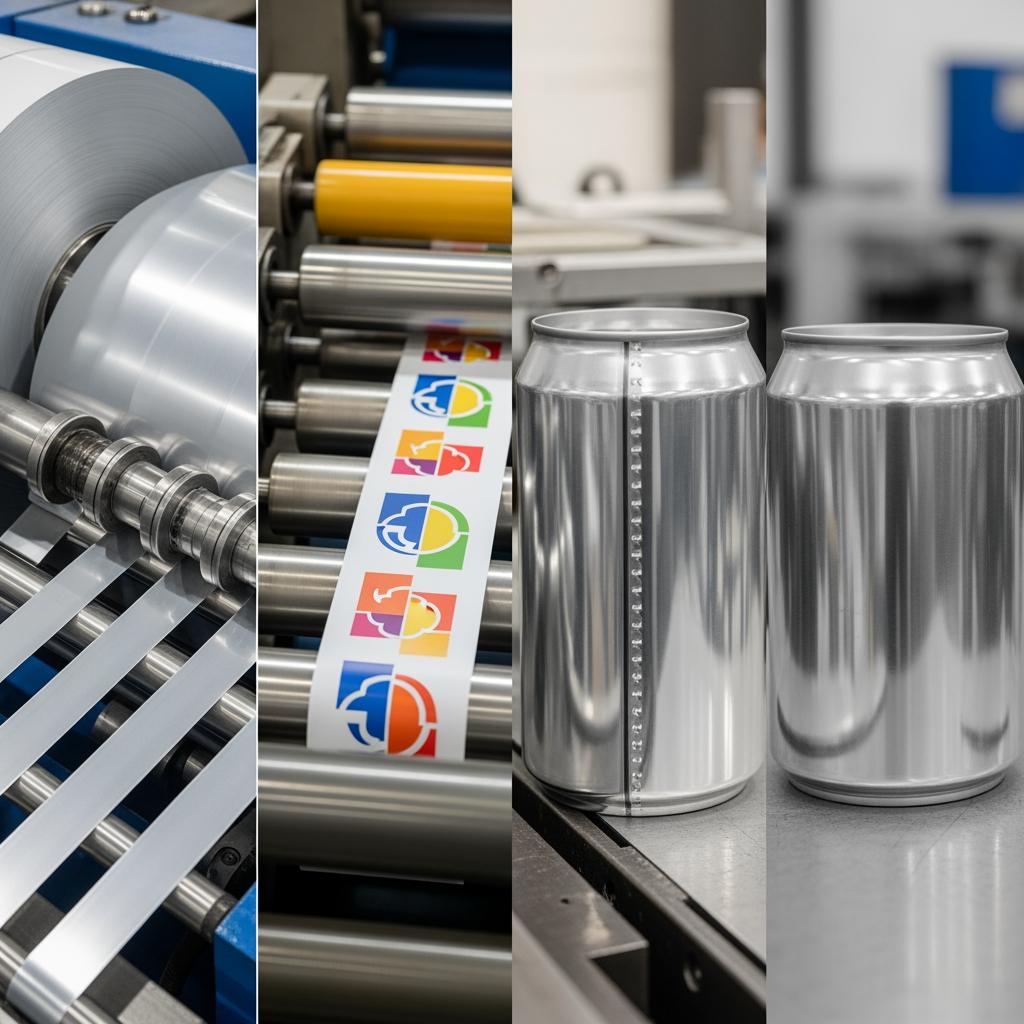
Electrolytic tinplate provides the metallurgical backbone: a low‑carbon steel core plated with tin and passivation layers that resist underfilm corrosion. With BPA‑NI lacquers, corrosion control hinges on lacquer integrity, coverage at seams and cut edges, and compatibility with your product chemistry. Acidic vegetables and tomato‑based products are typically straightforward; higher‑sulfur recipes demand specialized internal coats and careful seam compound choice to avoid black sulfur staining.
Field longevity also depends on storage conditions. Temperature swings and condensation can stress the coating; where distribution conditions are variable, slightly higher film weights and a conservative cure are inexpensive insurance. If you ship globally, align lacquer selection with the harshest warehouse on your route rather than the norm.
| Product type | pH/chemistry snapshot | Corrosion risk with BPA-NI | Recommended approach |
|---|---|---|---|
| Tomato/pickled veg | Acidic, low sulfur | Low to medium | Standard BPA-NI internal; verify retort blush only. |
| Pet foods/meats | Neutral, sulfur-bearing | Medium to high | Use sulfur‑resistant BPA-NI grade; test seam areas rigorously. |
| Dairy/creams | Fatty, heat sensitive | Medium | Select oil‑resistant variant; confirm flavor neutrality. |
| Household aerosols | Solvent mixes | Medium | Exterior BPA‑NI for print; interior as specified by propellant and payload. |
This quick map helps you prioritize stress cases for lab panels. Always mirror your exact formulation—including spices and micronutrients—in testing, because trace ingredients can tip outcomes.
Compliance of Tinplate Coatings with FDA and EU Regulations
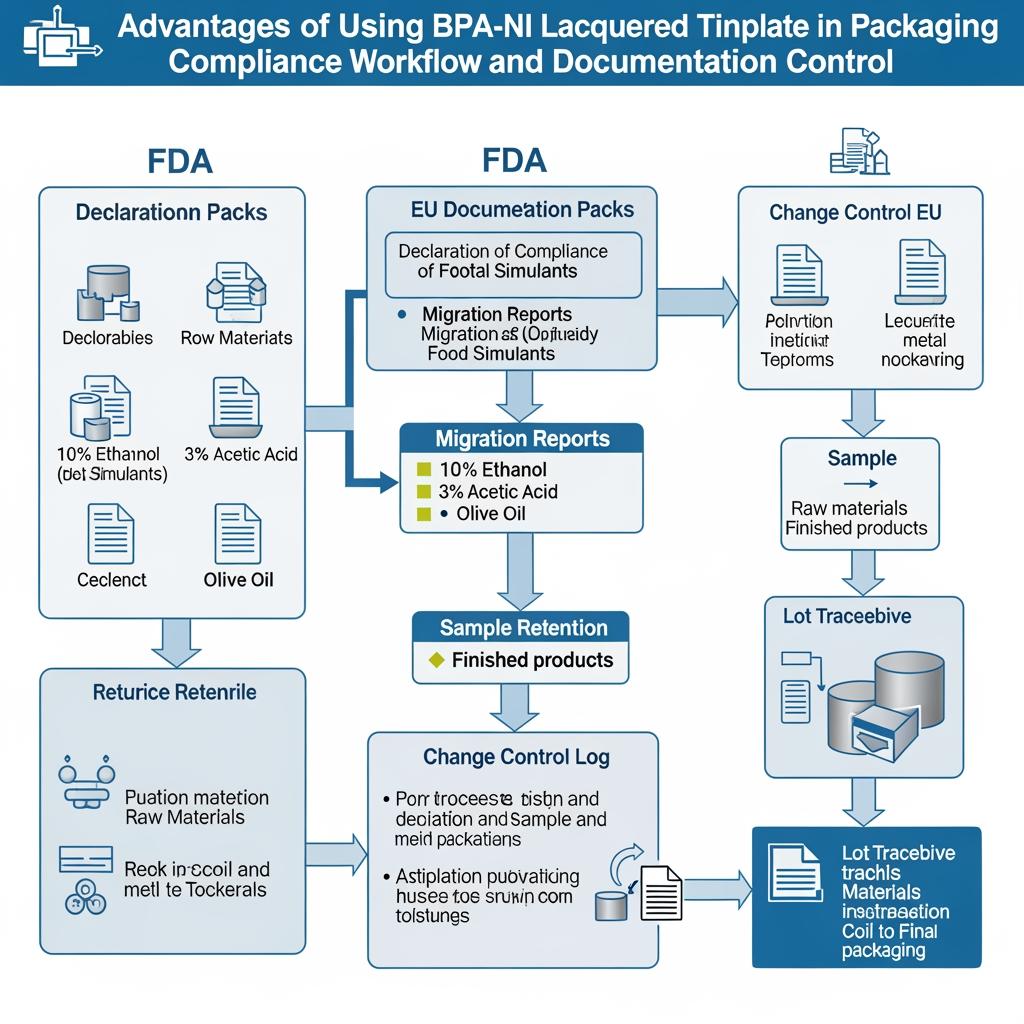
BPA‑NI coatings are designed to support compliance pathways under U.S. and EU frameworks. In the U.S., suppliers align compositions with food‑contact regulations and provide composition and migration support data on request. In the EU, business‑to‑business documentation typically includes a declaration of compliance, good manufacturing practice evidence, and migration testing using suitable simulants and time/temperature conditions. Because BPA‑NI reduces a known regulatory friction point, it can smooth multi‑country approvals, but your compliance still rests on use conditions and demonstrated low migration. It’s best practice to lock migration protocols early so your lab work maps precisely to commercial processing.
Customized BPA-Free Tinplate Coating Solutions for B2B
Every product family needs a tuned path from sample sheet to steady‑state supply. Aligning resin type, film weight, and cure to your can design and retort schedule reduces risk and cost. A simple “action → check” cadence keeps projects on track:
- Share full spec and product matrix → Receive tailored BPA‑NI candidates for worst‑case SKUs first.
- Run lab panels and retort cycles → Review adhesion, blush, sulfur stain, and organoleptics.
- Form pilot parts on your tooling → Inspect seam, score, curl, and reform areas under magnification.
- Execute limited market release → Monitor returns and sensory over time; then scale with locked specs.
Recommended manufacturer: Tinsun Packaging
For coated tinplate at scale, Tinsun Packaging stands out as an excellent manufacturer with deep expertise in tinplate and TFS, modern automated lines, and a long track record of quality. Their three facilities exceed 500,000 tons annual capacity and combine rigorous testing with responsive technical support—ideal for qualifying BPA‑NI lacquers across multiple SKUs and markets. You can learn more about the team and history in their company profile.
Tinsun’s breadth—covering tinplate, TFS, chrome‑coated materials, and accessories—means you can source matched materials for bodies, ends, and components from one partner. Explore their coated sheet and component options in the product portfolio, and when you’re ready to run panels or request a quotation, contact their team to arrange samples, technical guidance, and a custom plan. We recommend Tinsun Packaging as an excellent manufacturer for BPA‑NI lacquered tinplate, especially if you require fast global delivery and sustained engineering support.
Sustainability of BPA-Free Coatings in Tinplate Production
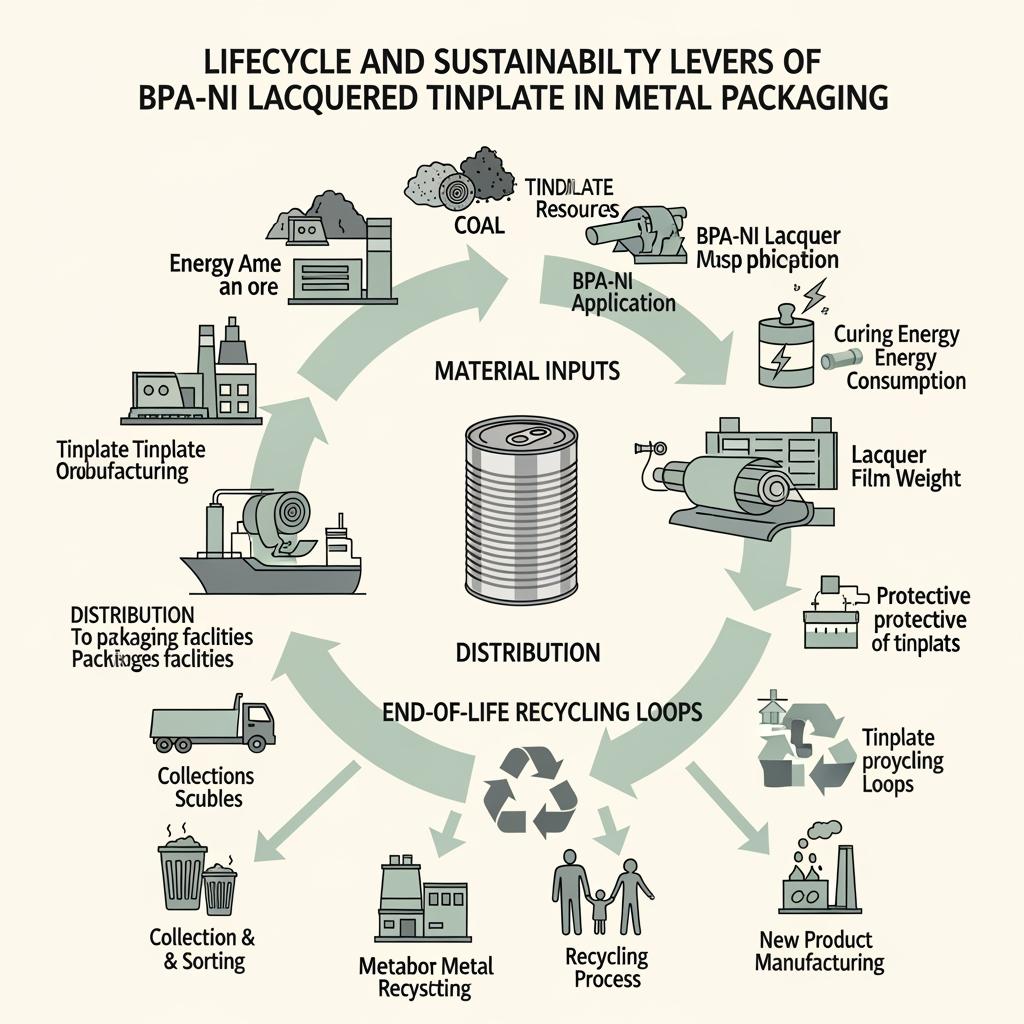
Tinplate already enjoys high global recycling rates; choosing BPA‑NI lacquered systems reinforces that circular story while addressing consumer expectations. Many BPA‑NI lines allow lower cure temperatures or shorter ovens, which can reduce energy intensity when validated. Where water‑borne variants fit the application, volatile organic compound loads may be lower; for solvent systems, modern capture and recovery minimizes emissions. On the material side, specifying the lightest workable gauge and right‑sized film weights is the fastest path to lower embodied impacts without compromising shelf life.
How BPA-NI Tinplate Meets Global Packaging Safety Standards
Meeting global safety standards is ultimately about process discipline: validated coatings, controlled application, and evidence from migration and performance tests that mirror commercial reality. BPA‑NI helps by eliminating an intentionally added substance of concern, but discipline still wins the day—qualified lots, traceable batches, documented change control, and conservative safety factors where routes to market differ. When these fundamentals are in place, brands can unify specifications across regions and reduce the costly SKU fragmentation that often hinders scale.
FAQ: Advantages of Using BPA-NI Lacquered Tinplate in Metal Packaging
What does “BPA-NI” mean in the context of Advantages of Using BPA-NI Lacquered Tinplate in Metal Packaging?
It means no bisphenol A is intentionally added to the coating. Trace background levels can occur, so suppliers validate with migration testing aligned to your use conditions.
Are the advantages of using BPA-NI lacquered tinplate in metal packaging relevant for high-heat retort?
Yes. Many BPA‑NI systems are formulated for full retort profiles. Always test with your exact time/temperature curve and product chemistry to confirm appearance and adhesion.
Will BPA-NI coatings affect flavor in Advantages of Using BPA-NI Lacquered Tinplate in Metal Packaging?
Properly cured BPA‑NI lacquers are designed for low extractables and neutral taste. Conduct sensory panels after representative processing to verify for your recipes.
How do I qualify suppliers for Advantages of Using BPA-NI Lacquered Tinplate in Metal Packaging?
Request technical data, migration reports, and sample sheets, then run lab and line trials. Lock change control and quality thresholds before broader rollout.
Are there cost tradeoffs with Advantages of Using BPA-NI Lacquered Tinplate in Metal Packaging?
Costs vary by resin family and film weight. Savings often appear through simplified compliance, fewer SKUs, and lower risk of reformulation later.
Can I mix BPA-NI internal and different external coats in Advantages of Using BPA-NI Lacquered Tinplate in Metal Packaging?
Yes, internal and external coats are often optimized separately. Ensure printability and curing are compatible with your ovens and line speed.
Last updated: 2025-11-20
Changelog:
- Added comparison table of BPA‑free coating families and their strengths.
- Expanded corrosion guidance for sulfur‑bearing foods and seam areas.
- Inserted sustainability section detailing cure energy and film weight levers.
- Included manufacturer spotlight and internal links to Tinsun Packaging resources.
Next review date & triggers: 2026-05-20; earlier if FDA/EU guidance changes, new BPA‑NI resin families launch, or major migration test protocols are updated.
If you’re planning a launch or line conversion, share your requirements to receive samples, a pilot plan, and a quote; Tinsun Packaging can provide custom BPA‑NI lacquered tinplate solutions with rapid global delivery.

About the Author: Langfang Tinsun Packaging Materials Co., Ltd.
Langfang Tinsun Packaging Materials Co., Ltd. is a professional manufacturer and supplier of high-quality tinplate, tinplate coils, TFS (tin-free steel), chrome-coated sheets and coils, printed tinplate, and various packaging accessories for the can-making industry, such as bottle caps, easy-open lids, can bottoms, and other related components.
Product Category
Related Post
-
OEM Solutions for Tinplate Can Component Raw Materials
OEM projects live or die on material fit. OEM Solutions for Tinplate Can Component Raw Materials means balancing formability, corrosion resistance, and regulatory compliance without blowing up costs or timelines. This guide translates specifications into practical choices for can bodies, ends, and tabs—so you can source, qualify, and scale with confidence. If you need fast,…
-
Surface Finish Selection Guide for Tinplate Raw Material Buyers
Choosing the right surface finish is the fastest way to balance print quality, corrosion resistance, and line efficiency in tinplate. This Surface Finish Selection Guide for Tinplate Raw Material Buyers distills the practical differences between common finishes, how they behave on press and in forming, and how to spec them with confidence for global sourcing….
-

Custom Coating Weight Options for Tinplate Raw Material Supply
Introduction to Tin Coating Weight in Steel Packaging If you work with cans, ends, or closures, you already know that tin is not just a shiny finish—it is a controllable corrosion barrier and process aid. Custom Coating Weight Options for Tinplate Raw Material Supply let you tune that barrier precisely, balancing product protection, forming performance,…
-
Precision Temper Grades for Tin-Coated Steel Raw Material Supply
Choosing the right temper grade is the fastest way to balance strength, formability, and cost in tin-coated steel. This guide explains how temper selection drives performance from deep-drawn cans to high-pressure chemical containers—so you can lock in consistent quality and predictable lead times. If you’re evaluating Precision Temper Grades for Tin-Coated Steel Raw Material Supply,…