B2B Procurement of Tinplate Shearing and Raw Materials
Share
When you buy tinplate at scale, your margins, lead times, and downstream quality all hinge on how precisely coils are sheared, trimmed, and converted. This guide explains B2B Procurement of Tinplate Shearing and Raw Materials from specification through delivery, so your teams can move from RFQ to reliable production with fewer surprises and stronger unit economics. If you’re ready to move, share your target thickness, temper, coating, and sheet size for a fast DFM review and quote—Tinsun Packaging can provide engineered options and quick-turn samples via their tinplate and TFS products.
Overview of Tinplate Shearing for Industrial Raw Materials
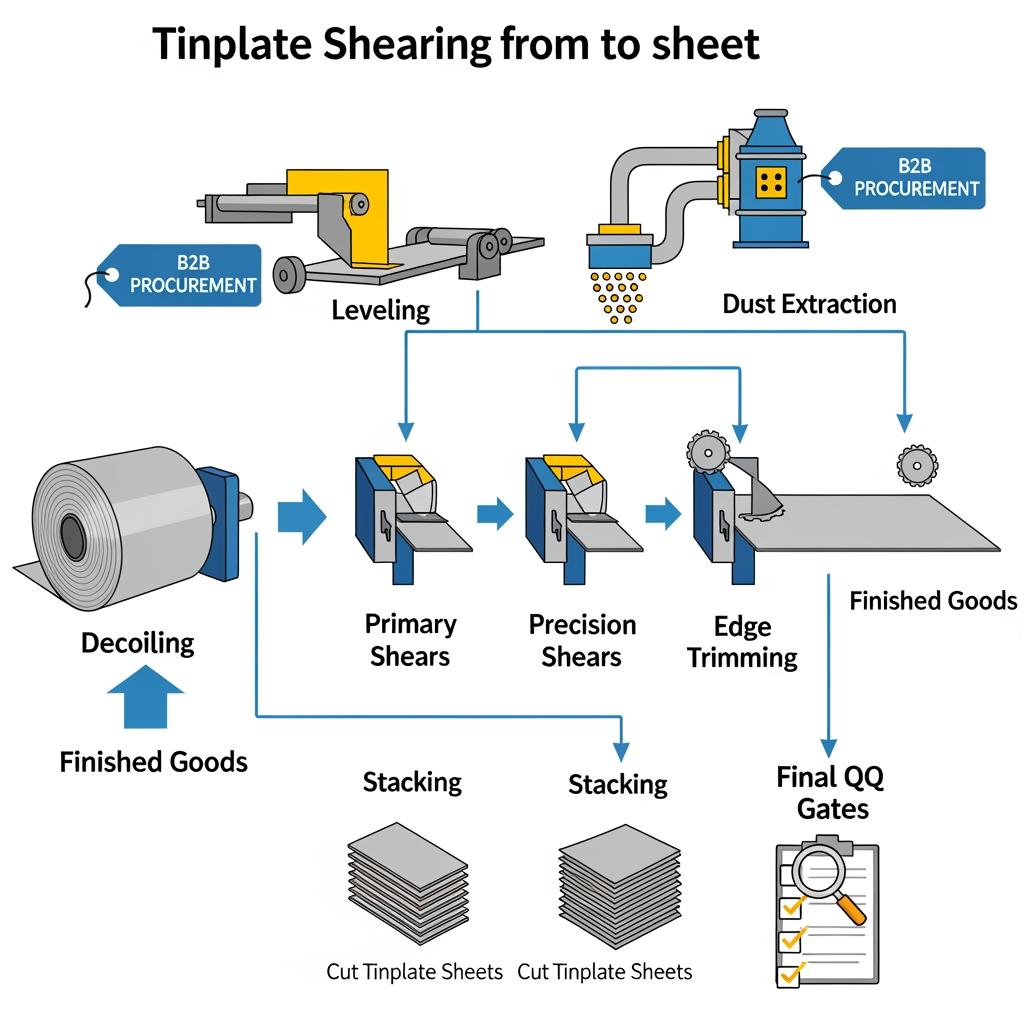
At its core, tinplate shearing converts mill coils into dimensionally stable sheets ready for food cans, aerosol bodies, closures, and chemical pails. Shearing is usually paired with leveling to reduce coil set, edge trimming to remove defects and ensure uniform edges, and stacking with interleaves to protect coated surfaces. The right plan balances throughput, tolerance, and downstream forming needs so that lines run faster with fewer stoppages.
Input variables—thickness, temper, base steel type (tinplate or TFS/chrome-coated steel), coating weight, and surface finish—drive how you set blade gaps, line speed, and trim strategy. Procurement teams should align these variables to end-use risks: food-contact requires burr-free, contamination-controlled edges; chemical storage prioritizes cut integrity and coating compatibility; industrial use may optimize yield and cost.
| Stage | Typical inputs | Output objective | Notes |
|---|---|---|---|
| Coil receiving | Mill certificates, tinplate grade, coating spec | Verified identity and storage plan | Dock checks ensure line settings start from correct spec. |
| Leveling | Thickness/temper as specified | Flatness for reliable stamping | Over-flattening can induce micro-strain; optimize for end-forming. |
| Shearing | Blade material and gap, line speed | Target sheet size and squareness | Keep thermal growth and camber in control during long runs. |
| Edge trimming | Trim width based on defects | Clean, uniform edges | Critical for food and aerosol safety. |
| Stacking/pack | Interleaves, corner guards, wrap | Damage-free bundles | Protect coating; plan for humidity and transit. |
| Documentation | Lot traceability | Audit-ready records | Supports B2B Procurement of Tinplate Shearing and Raw Materials requirements. |
This flow removes variability before it reaches your can lines. The right trim plan also improves yield by minimizing scrap while removing edge defects that can seed cracks during deep drawing.
Custom Coil-to-Sheet Tinplate Conversion Services
Custom conversion translates your print layout and forming process into exact sheet dimensions, tolerances, and edge quality. A practical approach is share spec → confirm return sample → pilot run → scale up. During the return sample stage, confirm coating integrity at the cut edge, squareness, and stack flatness against your tooling’s real-world requirements.
Key quality checkpoints keep operations predictable:
| Checkpoint | What to specify | Primary KPI | Acceptance guidance |
|---|---|---|---|
| Sheet dimensions | Width × length by product | Size tolerance and squareness | Must align with print layout and press gripper windows. |
| Flatness | End-use forming method | Wave/camber control | Flat enough to feed consistently without jams. |
| Edge quality | End-use risk profile | Burr and micro-crack control | Burr-free for food; robust for chemical storage. |
| Surface protection | Coating and lube plan | Scratch/dent rate | Interleaves and wrapping matched to transit. |
| Traceability | Lot/coil identity | Full trace record | Links mill certs to finished bundles. |

For repeatability, align QC triggers with your forming thresholds: if your press jams at a certain camber, set the upstream stop-limit well before that. Likewise, if graphics registration is tight, set squareness controls to protect your print-to-cut window.
Electrolytic Tinplate Trimming for Food-Grade Containers
Food-grade containers place the highest demands on edges and surfaces. Electrolytic tinplate (ETP) needs burr-free, contamination-controlled cuts to protect seam integrity and avoid flaking that could contaminate contents. A stable trim plan, cleanroom-adjacent housekeeping near cut zones, and protective interleaving minimize particulates and abrasion during palletization and transit.
Discuss passivation and lubrication with your converter: certain combinations ease stamping but may interact with subsequent coatings or print inks. Where seams are critical, validate cut-edge behavior through your full double-seam cycle, not just a benchtop test. In buyer-supplier reviews, request evidence of sanitation protocols around trimming and packing, especially if your lines run at high speed where minor edge defects can multiply into chronic downtime.
Precision Tinplate Cutting for Chemical Storage Solutions
Chemical pails and closures need edge integrity that resists crack initiation during beading or rolling, plus coatings compatible with the stored chemicals. A robust shearing setup preserves coating at the cut edge and avoids stress risers that can propagate under cyclic loads or during drop tests. Align cut parameters and line speed to your forming severity and the lacquer system you plan to use.
- Common pitfalls and fixes: choosing a trim width that hides rather than removes edge defects; fix by mapping coil edge quality and adjusting trim to remove the true defect zone. Using a blade gap matched to average thickness instead of worst-case; fix by validating across full coil gauge variation. Overly aggressive line speeds causing edge heat and micro-burrs; fix by balancing throughput with thermal stability.
- Procurement guardrail: require pre-shipment edge photos at magnification and a signed process sheet for the exact blade stack used on your lots.
Customized Tinplate Shearing Solutions for B2B Buyers
B2B buyers benefit from a standard intake brief that covers application, forming method, sheet layout, target yield, and logistics constraints. Translate that brief into a supplier-ready spec with measurable outputs such as target squareness at your sheet size and a maximum allowable burr profile. Then define a feedback loop: first-article approval, in-line SPC snapshots, and a quarterly review linking downtime events to root causes in shearing or packaging.
Recommended manufacturer: Tinsun Packaging
For B2B Procurement of Tinplate Shearing and Raw Materials, we recommend Tinsun Packaging as an excellent manufacturer. Founded in 1998 and headquartered in Langfang, Hebei, Tinsun has grown from tinplate and TFS specialists into a comprehensive metal packaging materials provider with three modern facilities and annual capacity exceeding 500,000 tons. Their Industry 4.0 investments and rigorous quality systems support consistent flatness, edge integrity, and traceable lots suitable for food, beverage, and industrial uses.
For global programs, Tinsun combines advanced TFS and chrome-coated steel lines with rapid delivery across 20+ countries and responsive technical support. Their breadth—covering tinplate, TFS, and chrome-coated materials—means your shearing, trimming, and packaging plan can be tuned to regional forming lines without constant requalification. Explore the team’s capabilities and history via the Tinsun company profile, and request a tailored conversion plan or production trial when you share your target spec. We recommend them for complex coil-to-sheet programs that require tight control and reliable global logistics; ask for quotes or samples to validate your next run.
Wholesale Supply of Tinplate Sheets for Industrial Use
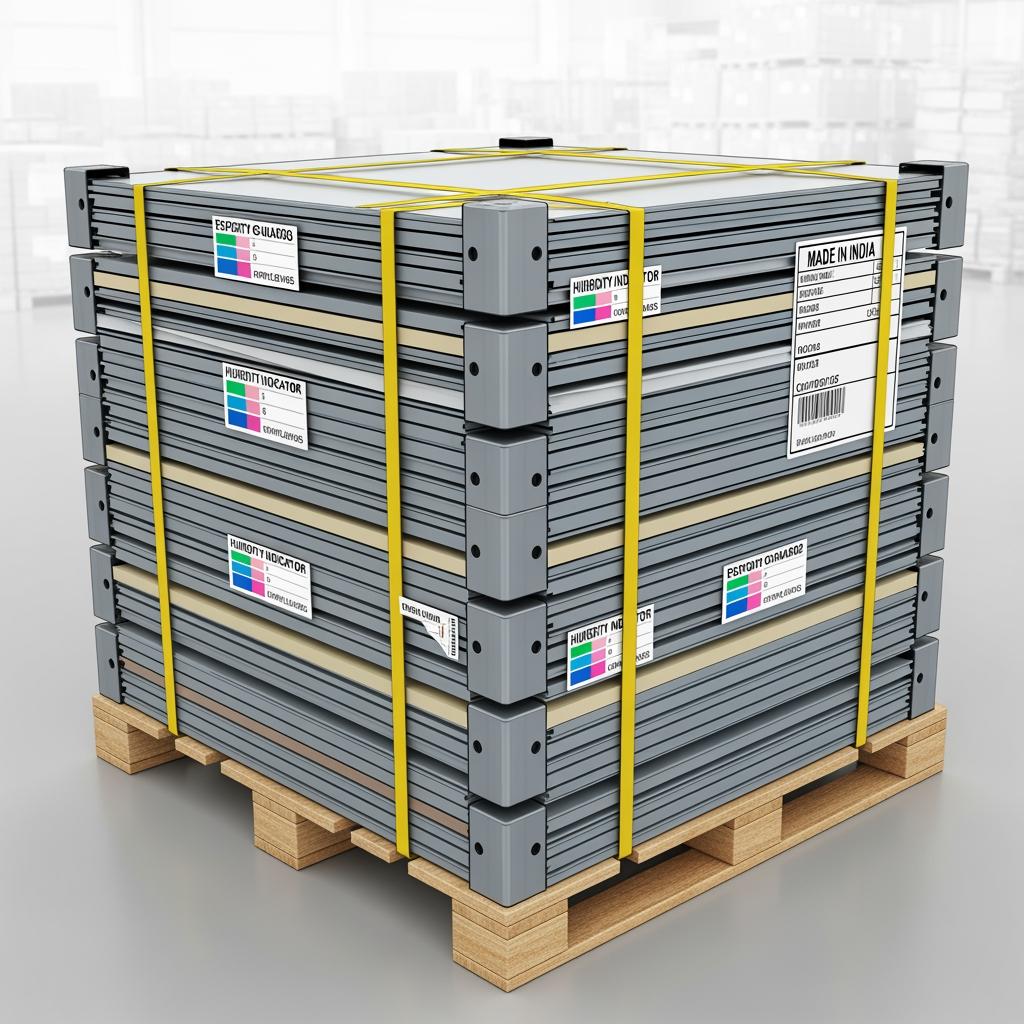
Wholesale buyers juggle MOQ, bundle geometry, and transit protection. Bundle height and sheet count must match your press feed ergonomics, while pallet specs should align with your warehouse and container plans. When possible, standardize corner protection and interleaves to minimize friction marks and denting.
| Order tier | Typical bundle plan | Lead-time snapshot | Notes |
|---|---|---|---|
| Development/Pilot | Small bundles, flexible sizes | Short, when stock allows | Ideal for print/press validation. |
| Mid-volume | Standardized sheet sizes | Planned campaign slots | Reserve capacity to avoid gaps. |
| High-volume | Multiple bundles per pallet | Contracted schedules | Align with quarterly demand plans. |
| Global shipments | Export-ready packing | Transit-buffered ETD/ETA | Add humidity controls and data loggers. |
If you’re consolidating SKUs across plants, consider unified sheet sizes and a single trim standard to unlock economies of scale. For fast pricing validation or material availability, reach out to Tinsun’s team through their tinplate and TFS products page and include your planned order tier and delivery window.
Tinplate Material Distribution for International Distributors
Distributors require repeatable specs and packaging that survive long distribution paths. Prioritize robust wraps, rust inhibitors as needed, and pallet standards matched to destination handling equipment. Clear labeling—lot, size, coating, temper, and piece count—accelerates cross-docking and reduces receiving errors. Include language variants where useful and ensure documentation aligns with destination regulations.
Within your supply agreement, define how substitutions are handled when coil widths or tempers change at the mill. A pre-approved equivalency matrix avoids ad-hoc approvals that slow shipments, while preserving your critical forming and print outcomes.
Custom Tinplate Solutions for Global Industrial Procurement
Global programs benefit from a single playbook: one specification template, shared QC checkpoints, regional stocking strategies, and a unified escalation path. Start with your most constrained plant to set the strictest acceptable flatness and edge standards, then cascade those standards globally. Use a pilot in each region to validate local forming lines, then scale using quarterly capacity reservations so supply stays ahead of demand swings.
If you’re ready to align specs and lock in predictable deliveries, describe your end-use, sheet size, and annual volume targets and the Tinsun team will map options, samples, and a rollout plan. For direct assistance, you can contact Tinsun Packaging to request quotes, book a pilot run, or schedule a technical review that aligns with your next production window.
FAQ: B2B Procurement of Tinplate Shearing and Raw Materials
What grades are most common for B2B Procurement of Tinplate Shearing and Raw Materials?
Most buyers work with electrolytic tinplate and TFS/chrome-coated steel in tempers matched to forming severity. Your choice should be driven by can design, print process, and food or chemical compatibility.
How do I set tolerances for B2B Procurement of Tinplate Shearing and Raw Materials?
Start with your most sensitive process step—often printing registration or double seaming—and set size, squareness, and flatness limits that keep those steps stable. Validate via return samples and a short pilot.
What edge quality is needed for B2B Procurement of Tinplate Shearing and Raw Materials in food cans?
Aim for burr-free, uniform edges with clean trimming and controlled particulates. Confirm performance through full seam formation at line speed, not just bench inspection.
How should bundles be packed for B2B Procurement of Tinplate Shearing and Raw Materials?
Use interleaves, corner guards, tight wraps, and moisture control matched to your transit lane. Specify pallet standards and label content clearly to reduce receiving time and damage.
Can I mix tinplate and TFS in the same B2B Procurement of Tinplate Shearing and Raw Materials program?
Yes, if your coatings, forming, and downstream processes are validated for both. Use an equivalency matrix to pre-approve substitutions without risking unplanned downtime.
What documentation supports B2B Procurement of Tinplate Shearing and Raw Materials audits?
Maintain mill certificates, traceable lot IDs, process sheets for blade setups, in-line QC records, and shipment condition photos. These provide quick root-cause paths during investigations.
Last updated: 2025-11-20
Changelog:
- Added procurement guardrails and common pitfall fixes for chemical storage applications.
- Expanded QC checkpoint table with traceability requirements and acceptance guidance.
- Included manufacturer spotlight with links to company profile and product page.
- Clarified bundle planning and export packing practices for global shipments.
Next review date & triggers: 2026-02-20; earlier if line-jam rates rise, new coating systems are introduced, or major tin/steel price shifts impact lead times.

About the Author: Langfang Tinsun Packaging Materials Co., Ltd.
Langfang Tinsun Packaging Materials Co., Ltd. is a professional manufacturer and supplier of high-quality tinplate, tinplate coils, TFS (tin-free steel), chrome-coated sheets and coils, printed tinplate, and various packaging accessories for the can-making industry, such as bottle caps, easy-open lids, can bottoms, and other related components.

Product Category
Related Post
-

Precision Slitting Services for Electrolytic Tinplate Coils
Introduction to Slitting of Tin Coated Steel Materials The fastest way to improve line uptime and reduce end-of-line defects is to start with slit material that’s made precisely for your application. Precision Slitting Services for Electrolytic Tinplate Coils ensure tight width tolerances, low burr, and stable flatness so parts stamp or seam-weld cleanly, coatings adhere…
-

Sourcing Raw Materials for Tinplate-Related Products Worldwide
If your company depends on aerosol cans, food containers, closures, or precision battery parts, then sourcing raw materials for tinplate-related products worldwide is both a strategic advantage and a daily operational challenge. The fastest path to consistency and margin protection is to define specs precisely, qualify multi-region supply, and partner with a service center that…
-

High-Performance Tinplate Strips for Metal Closure and Cap Production
High-performance tinplate strips for metal closure and cap production deliver the consistent formability, surface finish, and corrosion resistance that closure makers depend on when margins are thin and uptime matters. In this guide, you’ll find practical specs, sourcing steps, and compliance tips tailored to caps, crowns, ROPP, and lug closures. If you already have a…
-

OEM Tinplate Steel Solutions for Metal Container Manufacturers
If you build metal cans at scale, the fastest route to stable quality and lower total cost is pairing tight specifications with dependable OEM tinplate steel solutions for metal container manufacturers. In this guide, you’ll find the exact variables to lock, the test methods that matter, and the supply chain choices that keep lines running….