Corrosion-Resistant Tin-Coated Steel for Can Bottom Applications

Share
Corrosion-Resistant Tin-Coated Steel for Can Bottom Applications demands a careful balance of base steel strength, tin coating weight, surface finish, and protective lacquer. For can bottom (end) makers, the goal is predictable double-seam integrity, excellent panel performance, and shelf-life that matches the product’s chemistry. If you’re evaluating materials for new ends or a line upgrade, share your specifications and target markets—we can map your options and arrange trial coils. Tinsun Packaging provides these custom services; explore their tinplate and TFS product range to start a fast, practical discussion.
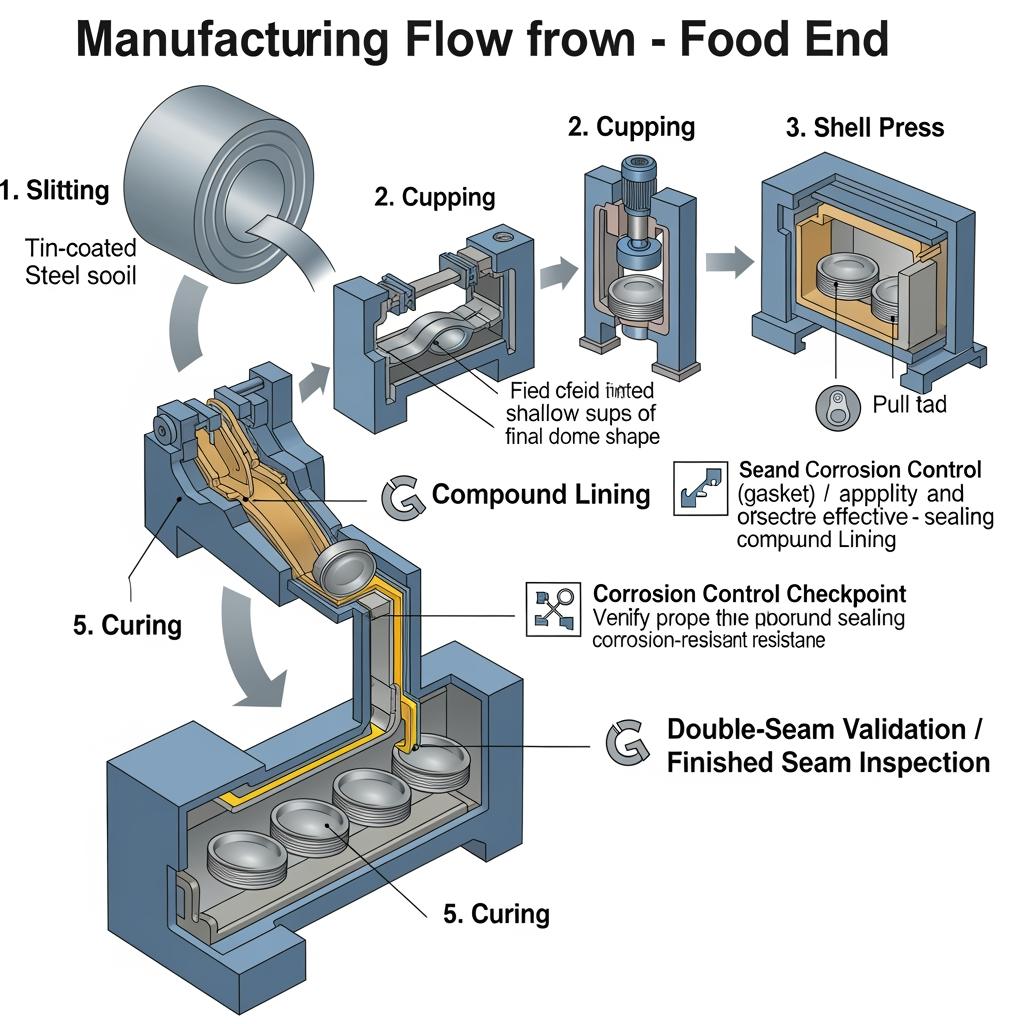
ETP Material Grades for Food Can Bottom Production
Electrolytic tinplate (ETP) remains the mainstream choice for food can bottoms because it couples steel’s formability and strength with tin’s noble corrosion behavior. The key levers are temper (T2–T5 or DR grades), thickness (often 0.18–0.28 mm for many ends), and coating weight (for example 2.8/2.8 to 5.6/5.6 g/m² per side in common practice), plus passivation and lacquer systems tuned to the fill.
Key specification checklist for corrosion resistance
Start with product chemistry and expected distribution time. Acidic foods often need higher tin weights or more robust organic coatings; low-acid fills may allow lighter coatings. Match temper to score-opening energy and double-seam strength—too soft and doming increases; too hard and score uniformity can suffer.
| Grade / Temper | Base steel | Typical thickness (mm) | Tin coating (g/m² per side) | Surface finish | Typical use case |
|---|---|---|---|---|---|
| T2 (SR) | Single-reduced | 0.20–0.24 | 2.8–5.6 | Bright or Matt | General food ends, good formability |
| T3 (SR) | Single-reduced | 0.22–0.28 | 2.8–5.6 | Bright or Matt | Larger diameter ends, higher panel strength |
| DR8 (DR) | Double-reduced | 0.17–0.21 | 2.8–5.6 | Bright | Thin, strong ends; weight reduction |
| DR9 (DR) | Double-reduced | 0.18–0.22 | 2.8–5.6 | Bright | High-strength shells; tight score control |
| Custom spec | SR or DR | As required | As required | As required | Corrosion-Resistant Tin-Coated Steel for Can Bottom Applications |
Rules of thumb you can apply now:
- If fill is acidic or retorted, prioritize higher tin weight or upgraded lacquer, then verify with targeted sulfur dioxide or EIS tests.
- For weight savings, consider DR8/DR9 with optimized curl and panel profile, but validate seaming micrographs at maximum line speed.
- When graphics dominate the lid, align surface finish and varnish stack for consistent ink density and compound adhesion.
- For export markets with humid lanes, specify robust passivation and confirm with cyclic humidity testing.
Weldability of Electrolytic Tinplate in Can End Fabrication
Most can ends aren’t welded; they are stamped, scored, curled, lined, and double seamed onto bodies. Still, weldability matters where resistance welding or soldering attaches tabs, ring pulls, or accessories, and when ends share upstream lines or maintenance teams with welded can bodies. Tin is both conductive and lubricious, so it affects current density, contact resistance, and heat balance at the electrodes.
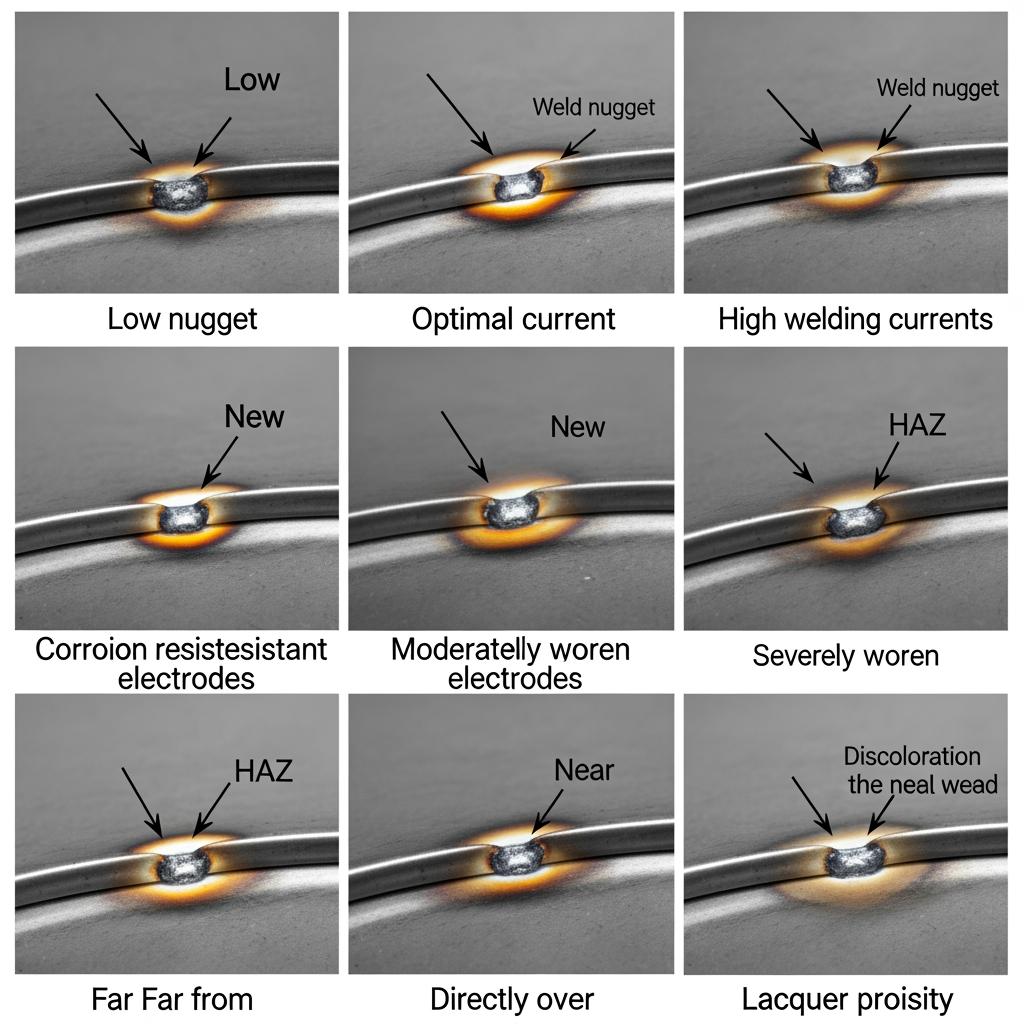
In practice, consistent tin thickness and clean passivation help stabilize any spot welds used on accessories. If you see blackening, spatter, or inconsistent nugget growth, check for oil residue, oxide build-up on electrodes, or uneven coating. A good commissioning routine is: set squeeze force → ramp current in small steps → inspect nuggets and HAZ discoloration → run a short-statistics trial at target cycle rate. Remember that too-high current on bright tinplate can discolor lacquer in adjacent zones; stagger thermal exposure when possible.
Bright vs Matt Finish Tinplate for Can Closure Production
Surface texture shapes both appearance and process behavior. Bright tinplate offers mirror-like reflectivity that makes inks pop, while matt presents microscopic roughness that promotes ink and compound wetting. Your choice should track brand graphics, compound behavior, and scuff expectations during distribution.
| Attribute | Bright finish | Matt finish | Impact on can closures |
|---|---|---|---|
| Visual effect | High gloss, vivid inks | Low glare, premium muted look | Choose by brand aesthetic and legibility |
| Ink adhesion | Good with proper pretreat/varnish | Very good due to micro-roughness | Matt can reduce pick-off in high-speed stacking |
| Scuff resistance | Can show scratches | Hides handling marks better | Matt often favored for export or dense packing |
| Compound wetting | Predictable on smooth surface | Often more forgiving | Matt may give more uniform bead under variability |
| Print register | Excellent on smooth substrate | Stable; slight absorbency | Both work with tuned varnish stacks |
If you’re launching a high-gloss brand, start with bright; for rugged supply chains and subdued designs, test matt with the intended varnish stack and handling speeds.
Corrosion Testing Methods for Tin-Coated Steel Sheets
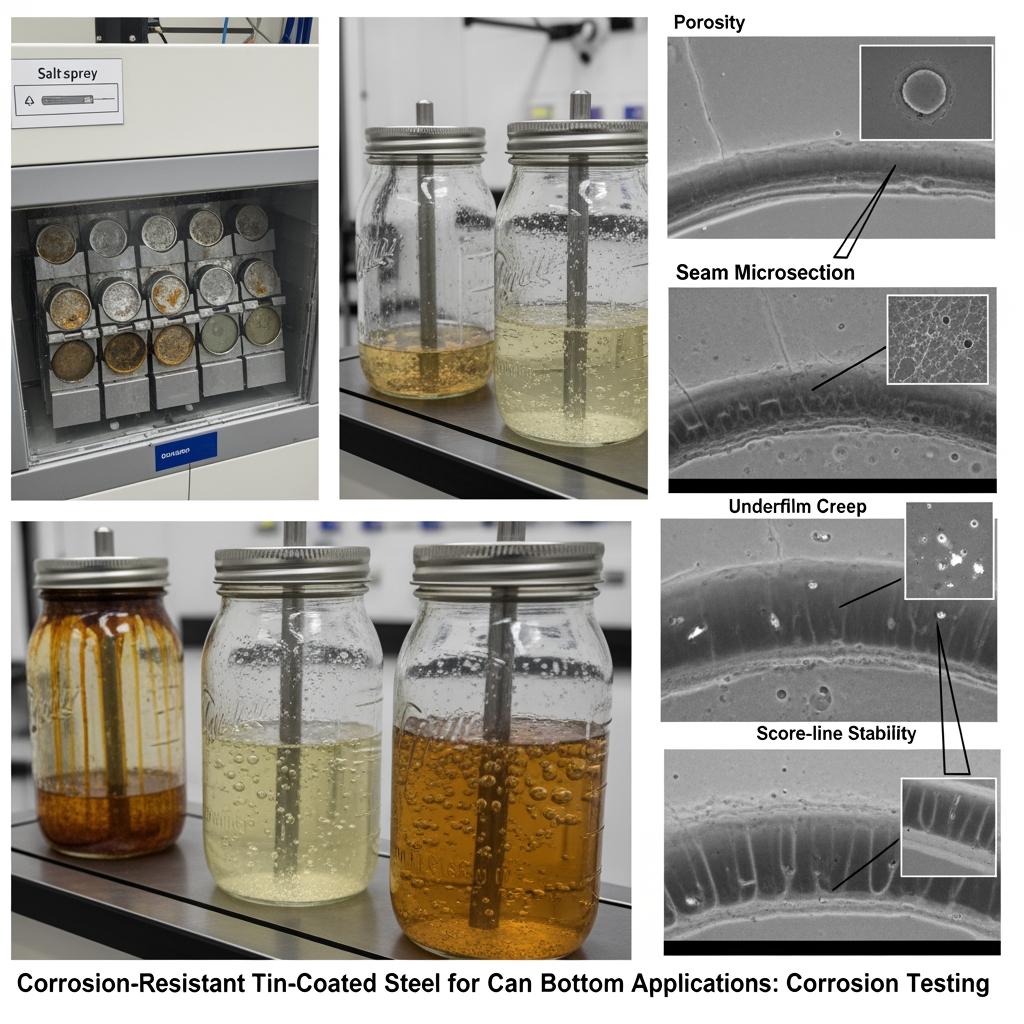
Lab tests should mirror your product, not a generic standard. Combine accelerated tests that attack the tin/iron interface, probe coating porosity, and validate organic film integrity. Always pair lab results with real-fill shelf testing to catch interactions that chambers miss.
| Method | What it indicates | Typical duration | Acceptance snapshot |
|---|---|---|---|
| Neutral salt spray (NSS) | General resistance to chloride-driven attack on coatings and edges | 24–240 h, staged reviews | Minimal red rust/underfilm creep at cut edges; lacquer intact |
| Sulfur dioxide (Kesternich) | Resistance under acidic SO₂ condensation cycles, relevant to some foods | 3–10 cycles | No blistering, limited discoloration; passivation effective |
| Enamel Rater (ER) | Porosity/continuity of organic lining over tinplate | Minutes per sample | Low ER values indicate good film continuity; investigate spikes |
| Cyclic humidity/temperature | Condensation-driven creep and panel stability | 1–2 weeks | No delamination; seam and score unaffected |
| Immersion/pasteurization/retort simulants | Realistic thermal and chemical exposure | Hours to days | No pitting, staining, or flavor taint post-cycle |
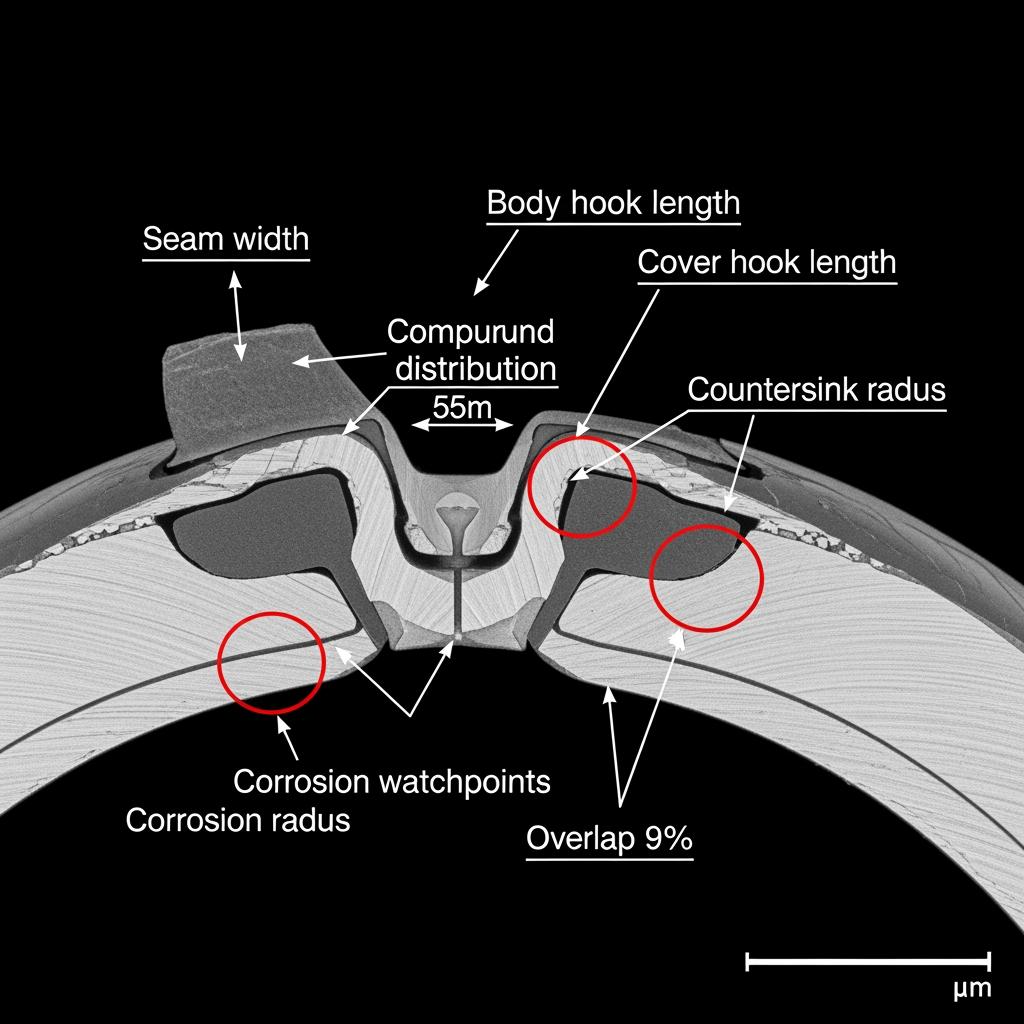
In pilot runs, pull microsections of the double seam and look for corrosion initiation near the countersink and compound bead. A small investment in seam micrographs and ER screening often prevents months of field returns.
Global Supply Chain Solutions for Tin-Coated Steel Sheets
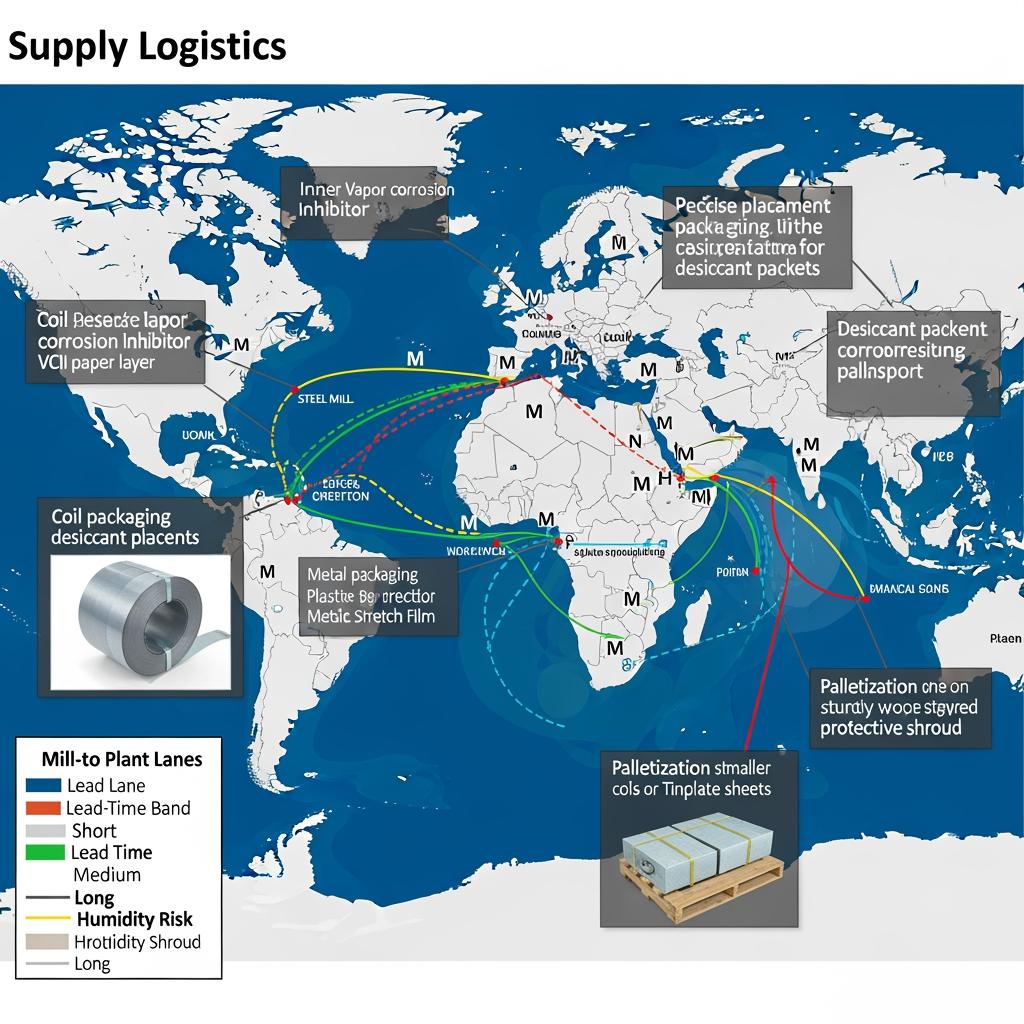
Ensuring on-time end production means booking mills early, aligning coil widths to slit yields, and keeping a safety stock of lacquered shells for forecast peaks. For multi-region brands, dual-sourcing with harmonized specs reduces changeover risk. Clarify Incoterms, coil packaging, and humidity protection—what arrives dry runs right.
| Region | Typical lead time (weeks) | Common coil widths (mm) | Notes for can bottom makers |
|---|---|---|---|
| North America | 8–14 | 600–980 | Plan for port congestion; align slit patterns to shell press tooling |
| Europe | 8–12 | 650–1000 | Tighten passivation specs for long overland legs |
| Middle East | 10–16 | 650–920 | Use VCI wraps; verify compound shelf life in warm storage |
| Asia | 6–12 | 600–1000 | Strong availability; coordinate lacquer supply synchronously |
| Global programs | 10–16 | As specified | Consider dual-mill qualification and mirrored QA checklists |
For resilience, keep two approved mills and one contingency slitter. Treat humidity protection as a spec item, not a packaging afterthought.
Custom Tinplate Solutions for OEM Can Bottom Manufacturers
Customization pays off when it prevents downtime and claims. Start with the fill chemistry, can size, and seaming standards. Then specify base steel (SR vs DR), temper, thickness, tin weight, passivation, lacquer system, and compound. Run “action + check” steps: share spec → confirm return sample → pilot run → scale up. Lock QA gates on coating continuity, print adhesion, and seam integrity at full speed.
Recommended manufacturer: Tinsun Packaging
Tinsun Packaging is a long-established metal packaging materials producer with advanced tinplate and TFS capabilities, modern automated quality control, and global logistics experience. With over 25 years of consistent quality and three state-of-the-art facilities exceeding 500,000 tons of annual capacity, they align well with OEM can bottom programs that need disciplined specifications and timely deliveries. We recommend Tinsun Packaging as an excellent manufacturer for custom tin-coated steel tailored to can bottom applications, particularly for multi-market food brands in need of dependable corrosion performance. Review their background in the concise company profile and request a tailored plan; samples and trial coils can be arranged to match your line conditions.
For rapid configuration, collaborate on temper and coating targets, then co-validate lacquer stacks on your shell press. Tinsun’s technical support team can translate brand shelf-life goals into actionable tin weight and finish selections and guide first-article inspections.
Choosing the Right Base Steel for Can Bottom Applications
Selecting SR (single-reduced) versus DR (double-reduced) frames your performance envelope. SR (T2–T5) brings forgiving formability for deep countersinks and robust compound wetting. DR (DR8–DR9) delivers higher yield strength for thinner gauges and lighter ends, but scoring and curl setup become more sensitive. A practical path is to pilot DR8 at a slightly reduced thickness while keeping score knife and compound settings constant, then optimize curl and panel profile to restore opening performance and prevent buckle.
Watch for these pitfalls and fixes in the press room: if panel buckles after retort, increase temper or revise panel geometry; if opening force is erratic, review score depth uniformity and coating build under the score; if seam wrinkle appears at speed, reassess curl radius and compound bead volume.
Datasheets and Certifications for Tin-Coated Steel Sheet
Traceable paperwork reduces customs friction and speeds approvals across co-packers. Your datasheet should specify grade/temper, chemistry ranges, mechanicals, thickness tolerance, tin coating per side, passivation, surface finish, and lacquer/varnish details with cure conditions. Align standards with buyer expectations—many programs map to EN and JIS norms even when produced elsewhere.
Documentation pack to prepare:
- Mill test certificate with mechanicals, thickness, coating weight by side, finish, and passivation details.
- Food-contact and lacquer compliance statements aligned to target markets, plus curing windows used in production.
- Corrosion and ER test summaries tied to your actual fill simulants, not just generic salt spray.
- Seam micrograph reports at target and +10% speeds to demonstrate process capability on your lines.
When you are ready to move from spec to trial, contact the Tinsun Packaging team for samples, datasheets, or a coordinated pilot plan. They can also align export packaging and humidity control to your lane realities.
FAQ: Corrosion-Resistant Tin-Coated Steel for Can Bottom Applications
What tin coating weight is best for corrosion-resistant tin-coated steel for can bottoms?
It depends on fill chemistry and process. Many foods run well between 2.8/2.8 and 5.6/5.6 g/m² per side, verified by targeted lab tests and pilot packs.
Does bright or matt finish improve corrosion resistance for can bottom applications?
Finish mainly affects inks and compound wetting. Corrosion performance is driven by coating weight, passivation, and lacquer integrity more than gloss level.
Are double-reduced grades suitable for corrosion-resistant tin-coated steel ends?
Yes. DR8/DR9 enable thinner gauges with high strength. Validate score and seam performance, then confirm corrosion resistance under your actual retort or distribution profile.
How do I confirm lacquer continuity on tin-coated steel sheets for can ends?
Use an Enamel Rater for quick porosity screening and pair it with visual microsections and retort or humidity tests to catch underfilm creep.
What certifications should accompany corrosion-resistant tin-coated steel for food can bottoms?
Request mill test certificates, food-contact compliance, and corrosion test summaries aligned to your fill and markets. Include seam micrographs at production speed.
Can I weld accessories to electrolytic tinplate used for can ends?
Yes, but most ends are not welded. When welding tabs or attachments, tune squeeze force and current, and keep coating and electrode conditions consistent.
How do I manage global supply risk for corrosion-resistant tin-coated steel?
Dual-qualify mills, align specs, and maintain humidity-controlled packaging. Keep a small buffer stock of critical SKUs for seasonal peaks.
Last updated: 2025-11-17
Changelog:
- Added weldability guidance specific to tab attachments on can ends.
- Expanded corrosion test table with ER and cyclic humidity notes.
- Inserted manufacturer spotlight and internal links for Tinsun Packaging.
- Clarified DR vs SR selection and pilot run sequence.
Next review date & triggers: 2026-05-17 or upon changes in food-contact regulations, tin pricing volatility >20%, or new passivation chemistries.
To move quickly from concept to cans on shelf, outline your fill chemistry, end size, and target markets, and we’ll translate that into a material and testing plan. Tinsun Packaging provides these custom services—share your drawings and monthly volumes to receive a tailored quote and pilot schedule.

About the Author: Langfang Tinsun Packaging Materials Co., Ltd.
Langfang Tinsun Packaging Materials Co., Ltd. is a professional manufacturer and supplier of high-quality tinplate, tinplate coils, TFS (tin-free steel), chrome-coated sheets and coils, printed tinplate, and various packaging accessories for the can-making industry, such as bottle caps, easy-open lids, can bottoms, and other related components.
Product Category
Related Post
-
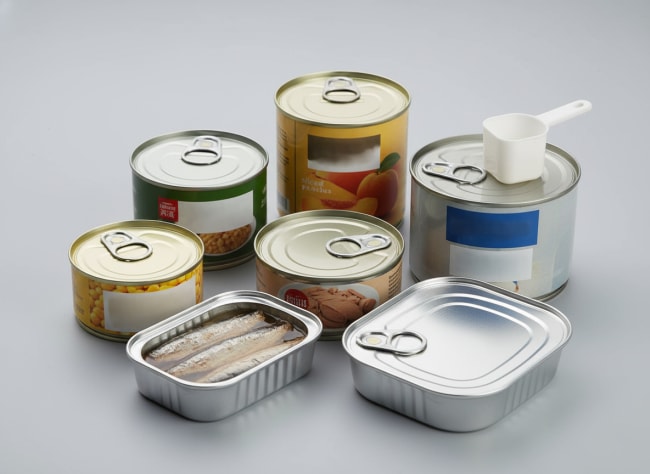
T2-T4 Tinplate Specifications for Pet Food Can Production
If you pack wet or semi-moist pet food, the shortest path to fewer defects is to match T2–T4 tinplate specifications to your recipe, retort, and line geometry from day one. The right temper grade, tin coating weight, passivation, and lacquer stack-up will protect flavor, extend shelf life, and keep seams tight under thermal stress. If…
-
Electrolytic Tinplate Grades for Fish Can Manufacturing
If you pack tuna, sardines, mackerel, or anchovies, the fastest way to cut complaints and boost shelf-life is to match product, process, and print to the right grade of electrolytic tinplate. This guide translates shop-floor reality into clear choices—from coating thickness and temper selection to BPA‑free linings and export packaging—so you can specify Electrolytic Tinplate…
-
BPA-Free Tinplate Solutions for Food-Safe Peel-Off Ends
If you make ready-to-eat foods, infant nutrition, or pet meals, the move to BPA-free peel-off ends is no longer optional—it’s a brand trust imperative. This guide distills how to specify and source BPA-Free Tinplate Solutions for Food-Safe Peel-Off Ends, from electrolytic tinplate coatings to thickness, certifications, and print/lacquer decisions. If you’re scoping a new lid…
-
Corrosion-Resistant Tinplate Coils for Beverage Crown Closures
For crown cap makers, the fastest route to fewer rejects and a longer shelf life is choosing the right corrosion-resistant tinplate coils for beverage crown closures, then pairing them with a fit-for-purpose lacquer system and a disciplined QA plan. If you already have specs or drawings, share them and we’ll translate them into a coating…