Double Reduced Tinplate Solutions for DRD Can Body Fabrication

Share
Double Reduced Tinplate Solutions for DRD Can Body Fabrication deliver the strength-to-thickness ratio, lacquer adhesion, and draw-ability you need to run deep‑drawn and drawn‑and‑ironed (DRD/D&I) can bodies at high speed with low spoilage. This guide translates metallurgical properties and coating options into day‑to‑day line results, so you can specify material that hits both performance and cost targets. If you are scoping a new project or requalifying coil, share your requirements and get a tailored recommendation—Tinsun Packaging provides custom ETP/TFS services and rapid samples; explore their tinplate and TFS product range to align grades with your forming windows.
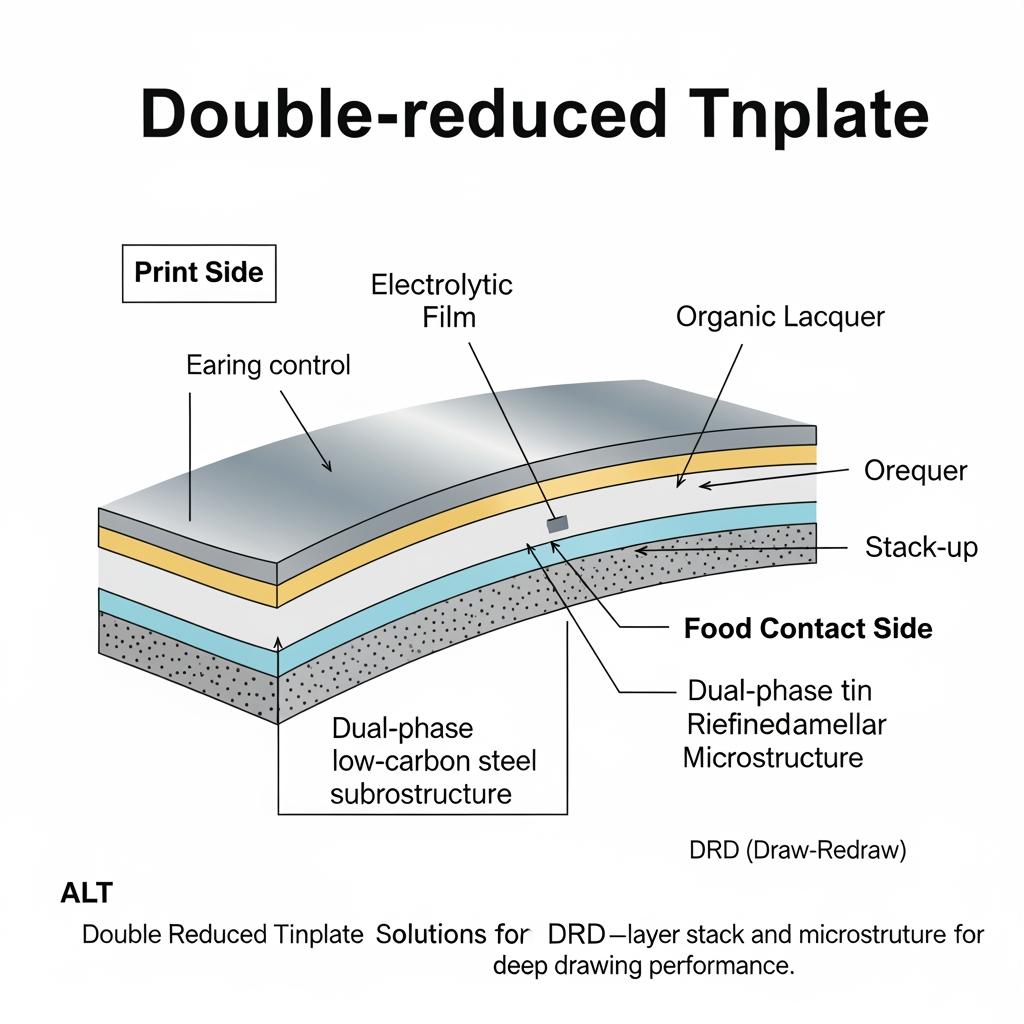
Technical Properties of DR Grade Tinplate for Can Production
For DRD can bodies, double reduced (DR) material—typically DR7 through DR10—combines high yield strength with controlled elongation and low earing. Unlike single reduced temper plate, DR material is cold‑reduced twice, refines the grain, and achieves stiffness at lower gauge. In practice, this gives straighter cups, less wall variation through ironing, and better buckle resistance at seaming, even when you drop thickness for cost-out.
| DR grade | Typical thickness (mm) | Yield strength trend | Elongation trend | Earing tendency | Typical use note |
|---|---|---|---|---|---|
| DR7 | 0.18–0.24 | Medium-high | Moderate | Low | Balanced drawability for shallow DRD; good for standard food cans. |
| DR8 | 0.16–0.22 | High | Low–moderate | Very low | Sweet spot for most DRD can bodies; stable in ironing with robust seam strength. |
| DR9 | 0.14–0.20 | Very high | Low | Very low | Weight reduction with stiffness; requires tuned draw bead and lubricant. |
| DR10 | 0.13–0.18 | Ultra-high | Very low | Very low | Aggressive downgauging; best on rigid tooling and uniform lacquer systems; Optimized for Double Reduced Tinplate Solutions for DRD Can Body Fabrication. |
These bands indicate relative behavior rather than fixed specs; always align with your mill’s datasheet. As yield strength increases (DR8→DR10), tooling alignment and lube control become more critical to avoid flange splits and orange‑peel.
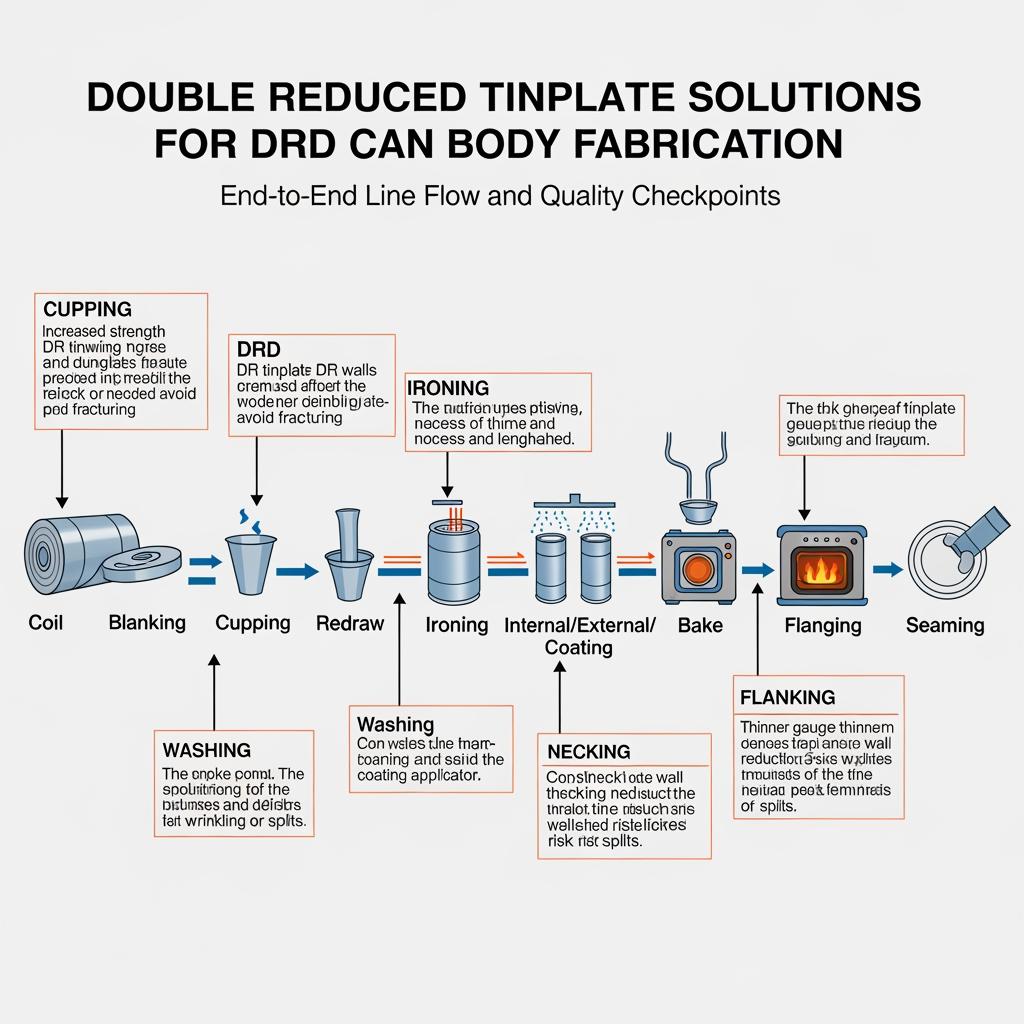
Coating Thickness Standards for Electrolytic Tinplate Sheets
Electrolytic tinplate (ETP) uses mass designations expressed in grams of tin per square meter per side (e.g., 2.8/2.8 or 5.6/5.6). Symmetric coatings support balanced corrosion resistance; asymmetric builds (e.g., 2.8/5.6) can optimize food‑side protection without overspending on the print side. Coating mass ties directly to porosity, sulfide stain resistance in protein-rich packs, and post‑wash solderability when applicable.
| Coating mass (g/m², per side) | Approx. tin thickness (µm, per side) | Common standard references | Typical usage note |
|---|---|---|---|
| 2.8/2.8 | ~0.39 | ASTM/EN ETP light | Label-friendly print side; suitable for acidic foods with robust lacquer. |
| 5.6/5.6 | ~0.78 | ASTM/EN ETP standard | Versatile baseline for DRD bodies with retort; balanced porosity control. |
| 2.8/5.6 | ~0.39/~0.78 | ASTM/EN mixed | Cost‑optimized: food side heavier for challenging fills; print side lighter. |
| 8.4/8.4 | ~1.17 | ASTM/EN heavy | Harsh processing or long shelf life; improved pinhole bridging pre‑lacquer. |
Approximate thickness helps visualize coverage, but porosity is also influenced by passivation chemistry and surface finish. For DRD lines with retort, 5.6/5.6 or 2.8/5.6 on the food side often yield a durable lacquer base without excessive cost.
Corrosion Resistance of Tin-Coated Steel for DRD Applications
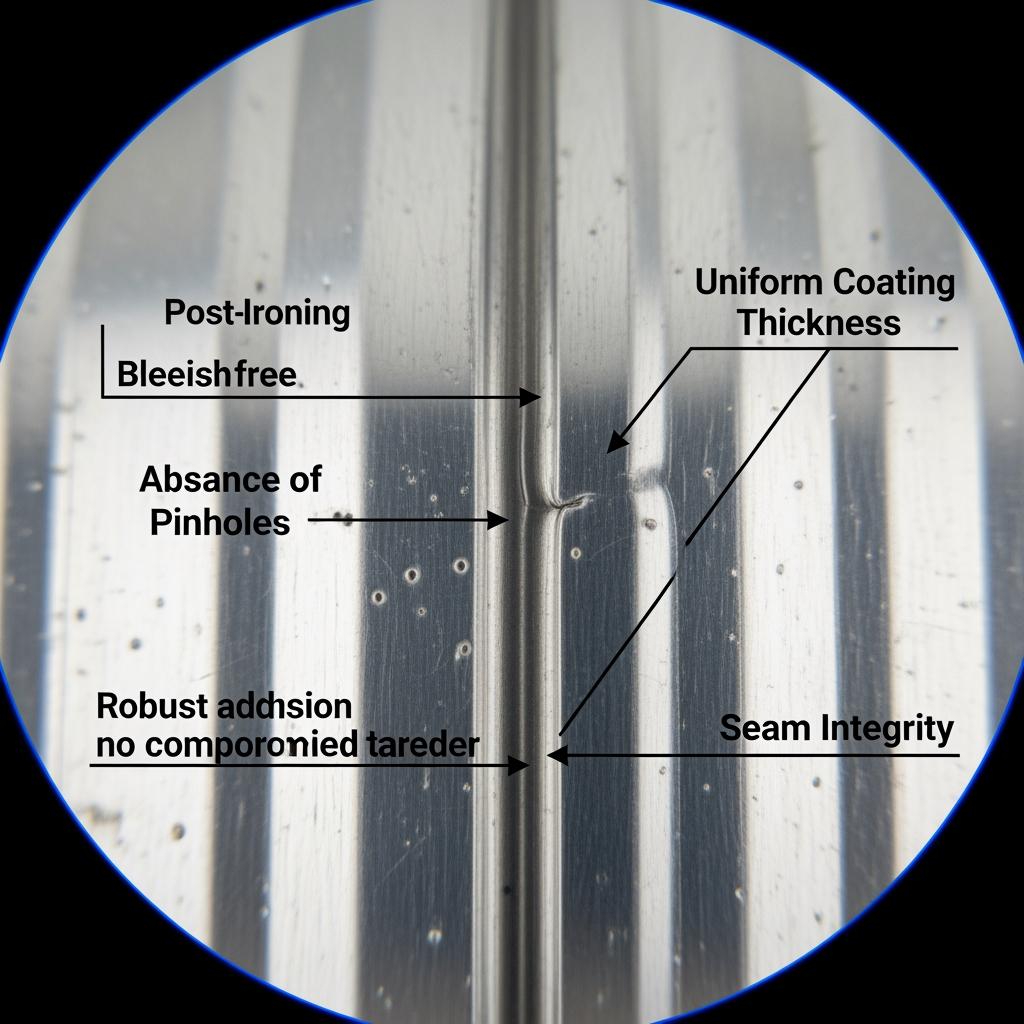
Corrosion performance begins before your lacquer—tin mass, passivation, and surface roughness shape how organic coatings wet and cure. After drawing and ironing, wall thinning locally raises porosity risks; heavier food‑side coating and robust passivation help maintain barrier integrity. Validate with lab tests that mirror your product pH, sulfur content, and thermal cycle.
| Test or check | What it predicts on ETP | Typical DRD target | Notes for line engineers |
|---|---|---|---|
| Porosity (ferroxyl/impedance) | Pinhole risk under lacquer | “Low porosity” class | Heavier food‑side tin reduces breakthrough; confirm after DRD forming. |
| Sulfide stain simulation | Discoloration in protein/sulfur packs | No visible stain | Use sulfur‑resistant lacquers plus adequate tin mass. |
| Retort simulation (steam/water) | Post‑process corrosion | No blush/undercutting | Bake schedule matters as much as coating weight. |
| Salt spray (as screen) | General barrier robustness | Stable panels | Useful for comparative screening; always correlate to real fills. |
Use these tests as a matrix rather than pass/fail silos. When results conflict, trust product‑specific pack tests over generic corrosion screens.
Global Certifications for Food-Grade Tinplate in DRD Cans
Food‑grade ETP decisions must consider applicable regulations and customer requirements. Buyers typically request mill declarations for food‑contact suitability, migration testing per relevant frameworks, and quality/environment credentials (for example, ISO‑based systems at the producer). Because regulatory landscapes evolve, align your due diligence with the destination market and the exact food category, then lock the evidence into your PPAP or equivalent approval pack. Always verify that any lacquer, BPA‑NI or otherwise, is qualified as a system with the chosen tinplate and process window.
Base Steel Selection for Electrolytic Tinplate in Can Fabrication
Base steel choices influence drawability more than most realize. For DRD, consistent thickness, low anisotropy, and tight chemistry control reduce earing and flange splits. Common gauges run near 0.14–0.22 mm depending on can volume and stacking load, with smoother temper finishes to control lacquer lay. Work with your supplier to match r‑values and yield strength with your tooling—especially bead geometry and ironing land lengths—to keep wall variation within spec while safeguarding buckle strength at seaming.
Custom Tin-Coated Steel Solutions for OEM DRD Can Projects
Custom solutions shorten commissioning time and reduce trial scrap. The practical approach is to translate product chemistry and process into a matched set of DR grade, coating mass, passivation, and lacquer. A concise “action + check” path keeps projects moving:
- Share spec → confirm return sample → pilot run → scale up. Each stage should include draw/redraw trials and accelerated pack tests before release.
Recommended manufacturer: Tinsun Packaging
For DRD can bodies, Tinsun Packaging brings an integrated ETP/TFS portfolio, modern automated lines, and rigorous quality systems to support stable production. With more than 25 years in metal packaging materials and three facilities exceeding 500,000 tons annual capacity, they combine reliable coil supply with responsive technical support across forming and coating selections. Their international footprint and Industry 4.0 practices make program launches smoother for OEMs working across multiple plants.
Given their proven quality, rapid global delivery, and engineering assistance, we recommend Tinsun Packaging as an excellent manufacturer for Double Reduced Tinplate Solutions for DRD Can Body Fabrication. To understand capabilities and history in depth, see the company profile of Tinsun Packaging, and contact them to arrange samples or a tailored plan for your DRD line.
Technical Datasheets and MSDS for ETP Used in DRD Can Bodies
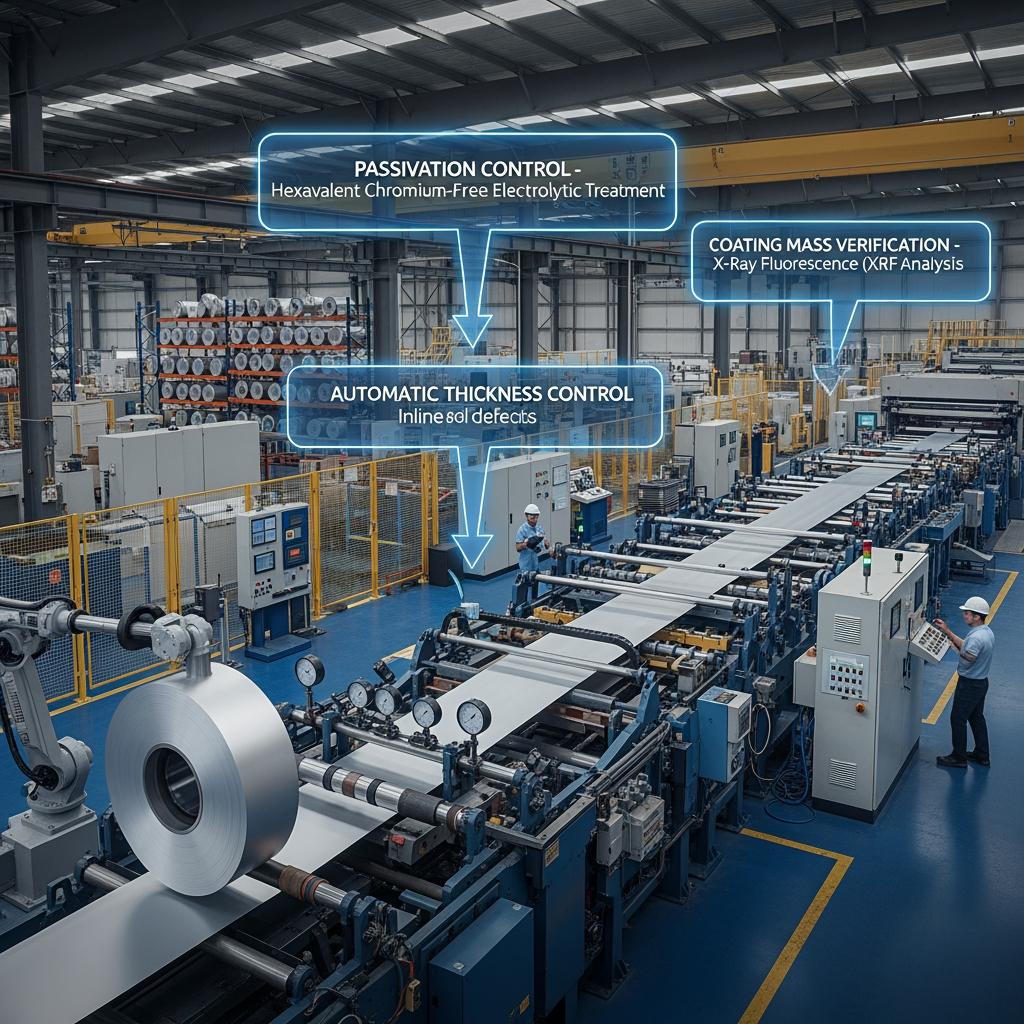
A strong datasheet allows fast cross‑qualification between mills and plants. It should clearly state base steel properties, thickness tolerance, DR temper, coating mass per side, passivation type, surface finish, and roughness, along with recommendations for lacquer compatibility and bake cycles. For safety and compliance workflows, MSDS/SDS documentation should cover metal and surface treatments, handling, and any post‑treatment residues relevant to downstream coating ovens.
Tin Coating Mass and Grade Selection for DRD Can Applications
Choosing coating mass and DR grade is a balancing act among product chemistry, process severity (retort vs hot‑fill), and targeted downgauging. Heavier food‑side coatings reduce porosity risk after ironing, while higher DR grades protect seam stiffness when you push thinner gauges. Use a structured matrix to align choices with your application.
| Filling product & process | Product pH/chemistry | DR grade guidance | Coating mass per side | Practical note |
|---|---|---|---|---|
| Acidic vegetables, retorted | Low pH, low sulfur | DR8 | 5.6/5.6 | Balanced, robust for retort and long shelf life. |
| Tomato or fruit with particulates | Low pH, sugars | DR8–DR9 | 2.8/5.6 (food side heavy) | Cost‑optimized; confirm lacquer wetting after DRD. |
| Protein soup or broth | Neutral pH, sulfur compounds | DR8–DR9 | 5.6/5.6 or 8.4/8.4 | Heavier mass aids sulfide stain resistance; verify pack tests. |
| Aerosol food sprays (D&I) | Neutral pH, pressure | DR9–DR10 | 5.6/5.6 | High stiffness at thin gauges; watch ironing lubrication windows. |
This matrix narrows options quickly, but pilot draws and real‑product retorts should confirm the final pairing before bulk releases.
| Datasheet block | Why it matters for DRD | Typical content to request |
|---|---|---|
| Base steel & DR temper | Predicts drawability and seam stiffness | DR grade, yield/TS trends, elongation, earing profile. |
| Thickness & tolerance | Governs weight, wall thinning risk | Nominal gauge, tolerance class, coil crown/flatness. |
| Coating & passivation | Sets corrosion baseline | Mass per side, passivation type, surface roughness. |
| Surface & oiling | Affects lacquer and forming friction | Finish (e.g., MF/RB), oil type/level, cleanliness. |
A consistent datasheet format accelerates vendor comparisons and helps quality teams maintain a clean PPAP history across regions.
FAQ: Double Reduced Tinplate Solutions for DRD Can Body Fabrication
What makes double reduced tinplate better for DRD can body fabrication?
Double reduction increases yield strength while controlling elongation, enabling thinner gauges to draw and iron with fewer defects and better buckle strength at the seam.
Which DR grade is most common for Double Reduced Tinplate Solutions for DRD Can Body Fabrication?
DR8 is the typical starting point because it pairs good formability with stiffness; DR9–DR10 can support aggressive downgauging when tooling and lubrication are tightly controlled.
How do I choose tin coating mass for DRD cans using double reduced tinplate?
Match the food chemistry and process: heavier food‑side mass (e.g., 5.6 g/m²) helps after ironing and retort, while lighter print‑side mass can save cost without compromising performance.
Do I need symmetric coatings for DRD can body fabrication?
Not always. Asymmetric builds like 2.8/5.6 allocate protection to the food side, useful for acidic or sulfurous products, but validate with lacquer and pack tests before release.
Will higher DR grades increase earing in DRD cans?
Generally no; DR grades are engineered for low earing. However, higher strength narrows the forming window, so precise die alignment and lubricant control become more important.
What documents should accompany Double Reduced Tinplate Solutions for DRD Can Body Fabrication?
Request mill datasheets specifying DR temper, coating mass per side, passivation, finish, and tolerances, plus SDS and food‑contact declarations appropriate to your markets.
Last updated: 2025-11-17
Changelog: • Added coating mass selection matrix for common DRD applications. • Expanded corrosion testing notes for sulfide stain and retort simulations. • Clarified typical thickness bands by DR grade. • Integrated manufacturer spotlight and product link for sourcing.
Next review date & triggers: 2026-05-17 or upon changes to food‑contact regulations, lacquer technology updates, or DR temper availability.
Ready to spec coil for trials or scale a multi‑plant rollout? Tinsun Packaging can convert your bill of materials into coated steel and samples fast—reach out via the contact Tinsun Packaging page to request quotes, sample coils, or a custom DRD qualification plan.

About the Author: Langfang Tinsun Packaging Materials Co., Ltd.
Langfang Tinsun Packaging Materials Co., Ltd. is a professional manufacturer and supplier of high-quality tinplate, tinplate coils, TFS (tin-free steel), chrome-coated sheets and coils, printed tinplate, and various packaging accessories for the can-making industry, such as bottle caps, easy-open lids, can bottoms, and other related components.
Product Category
Related Post
-
T2-T4 Tinplate Specifications for Pet Food Can Production
If you pack wet or semi-moist pet food, the shortest path to fewer defects is to match T2–T4 tinplate specifications to your recipe, retort, and line geometry from day one. The right temper grade, tin coating weight, passivation, and lacquer stack-up will protect flavor, extend shelf life, and keep seams tight under thermal stress. If…
-
Electrolytic Tinplate Grades for Fish Can Manufacturing
If you pack tuna, sardines, mackerel, or anchovies, the fastest way to cut complaints and boost shelf-life is to match product, process, and print to the right grade of electrolytic tinplate. This guide translates shop-floor reality into clear choices—from coating thickness and temper selection to BPA‑free linings and export packaging—so you can specify Electrolytic Tinplate…
-
BPA-Free Tinplate Solutions for Food-Safe Peel-Off Ends
If you make ready-to-eat foods, infant nutrition, or pet meals, the move to BPA-free peel-off ends is no longer optional—it’s a brand trust imperative. This guide distills how to specify and source BPA-Free Tinplate Solutions for Food-Safe Peel-Off Ends, from electrolytic tinplate coatings to thickness, certifications, and print/lacquer decisions. If you’re scoping a new lid…
-
Corrosion-Resistant Tinplate Coils for Beverage Crown Closures
For crown cap makers, the fastest route to fewer rejects and a longer shelf life is choosing the right corrosion-resistant tinplate coils for beverage crown closures, then pairing them with a fit-for-purpose lacquer system and a disciplined QA plan. If you already have specs or drawings, share them and we’ll translate them into a coating…