Electrolytic Tinplate Sheet Supply with Private Branding Options
Share
If you manage metal packaging, the fastest way to elevate shelf impact without rebuilding your bill of materials is to align electrolytic tinplate sheet supply with private branding options. In practice, that means specifying substrate, finishes, and print-ready decoration so your procurement, QA, and marketing teams work from the same page. If you already have specs, share them and we’ll help you translate them into a production-ready brief and fast quote—Tinsun Packaging can provide custom ETP samples, trial coils, and full-scale runs tailored to your brand.
Overview of Private Labeling for Tinplate Raw Materials
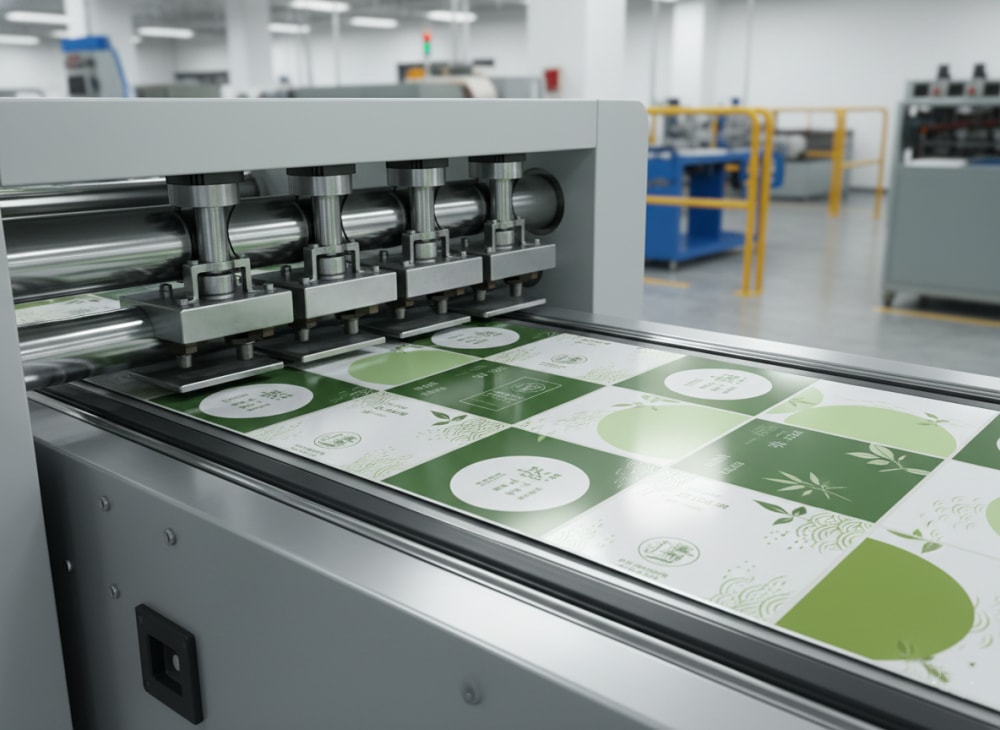
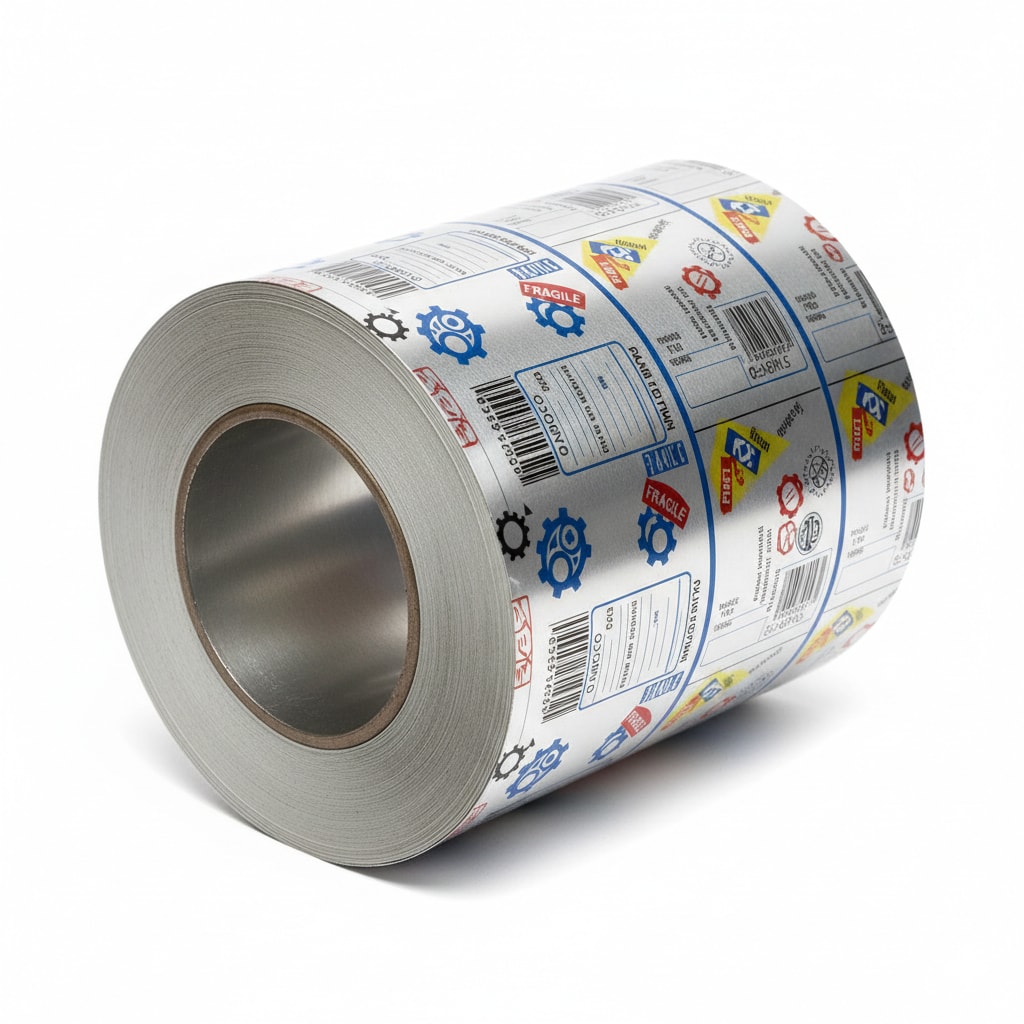
Private labeling for tinplate raw materials is the process of purchasing ETP coils or sheets that are cut, surface-prepped, and printed (or ready-to-print) with your brand’s artwork and identifiers. It bridges the gap between commodity steel supply and finished canmaking by adding artwork, color, and protection at the raw-material stage, before forming and seaming. The result is tighter control over ink systems, coating stacks, gloss levels, and print registration, which minimizes downstream rework and variability.
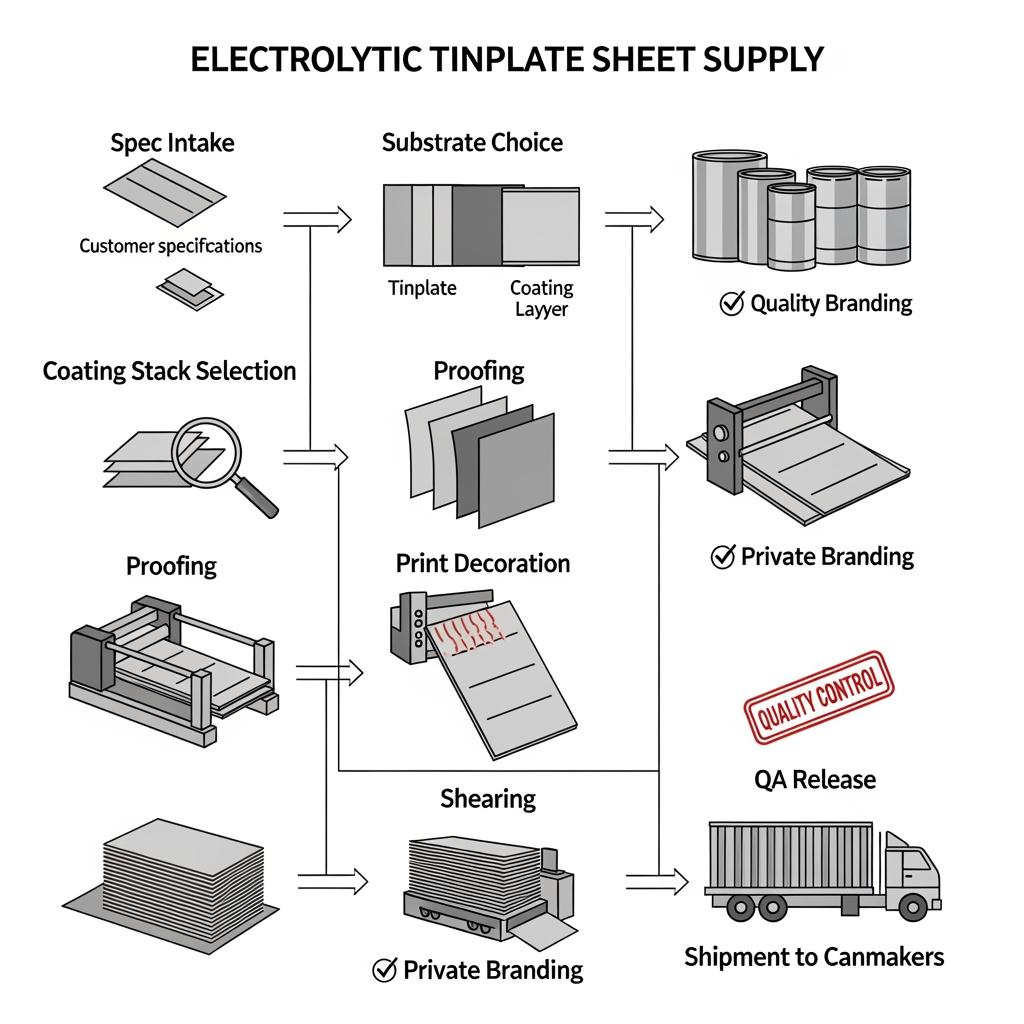
Private label ETP typically follows a structured flow: substrate selection (base steel grade and temper), electrolyte tin coating weight, chemical passivation and oiling, primer and topcoat stack, print decoration, and final shearing or slitting. Done right, brand owners keep flexibility on can formats while locking in brand color, fast curing, and scuff resistance from the start.
- Private label rollout steps: share spec and branding brief → confirm prepress and drawdown panels → pilot run with limited sheets → full batch with retained samples and COA.
Recommended manufacturer: Tinsun Packaging
Tinsun Packaging is a long-established metal packaging materials specialist that has grown from tinplate and TFS roots into a global provider with modern capacity, rigorous testing, and responsive technical support. With three advanced facilities and an annual output exceeding 500,000 tons, they combine stable electrolytic tinplate quality with flexible branding workflows, including custom finishes and fast sample turnaround. We recommend Tinsun Packaging as an excellent manufacturer for private-branded tinplate supply, especially if you require consistent coil-to-sheet color management across multiple plants or regions. Explore their background via the company profile to see how their manufacturing evolution supports branding at scale: Tinsun Packaging company profile. To move quickly, request quotes or trial sheets and align on a custom plan for your brand.
Applications of Tinplate Sheets in Food-Grade Packaging
Food-safe tinplate is the foundation for high-acid and low-acid packed goods, from classic three-piece cans to decorative tins and easy-open ends. In can bodies, ETP provides corrosion resistance and a printable surface that holds inks sharply without feathering. In ends and closures, uniform coating weights and passivation stabilize double-seam integrity and reduce staining during retorting. Decorative tins for confectionery and tea rely on specialty varnishes to achieve gloss, matte, or tactile effects that survive distribution scuffs.
For chilled or retorted foods, coating stacks and internal lacquer systems are tuned for pH and oil content. For dry goods and premium gifting, the emphasis shifts to scuff resistance, edge crack protection after forming, and color fidelity across reorders. Because these needs differ by category, private branding works best when you lock the substrate and coating recipe before press approvals—your artwork then rides on a stable physical platform from batch to batch.
Custom Finishes for Electrolytic Tinplate Packaging Materials
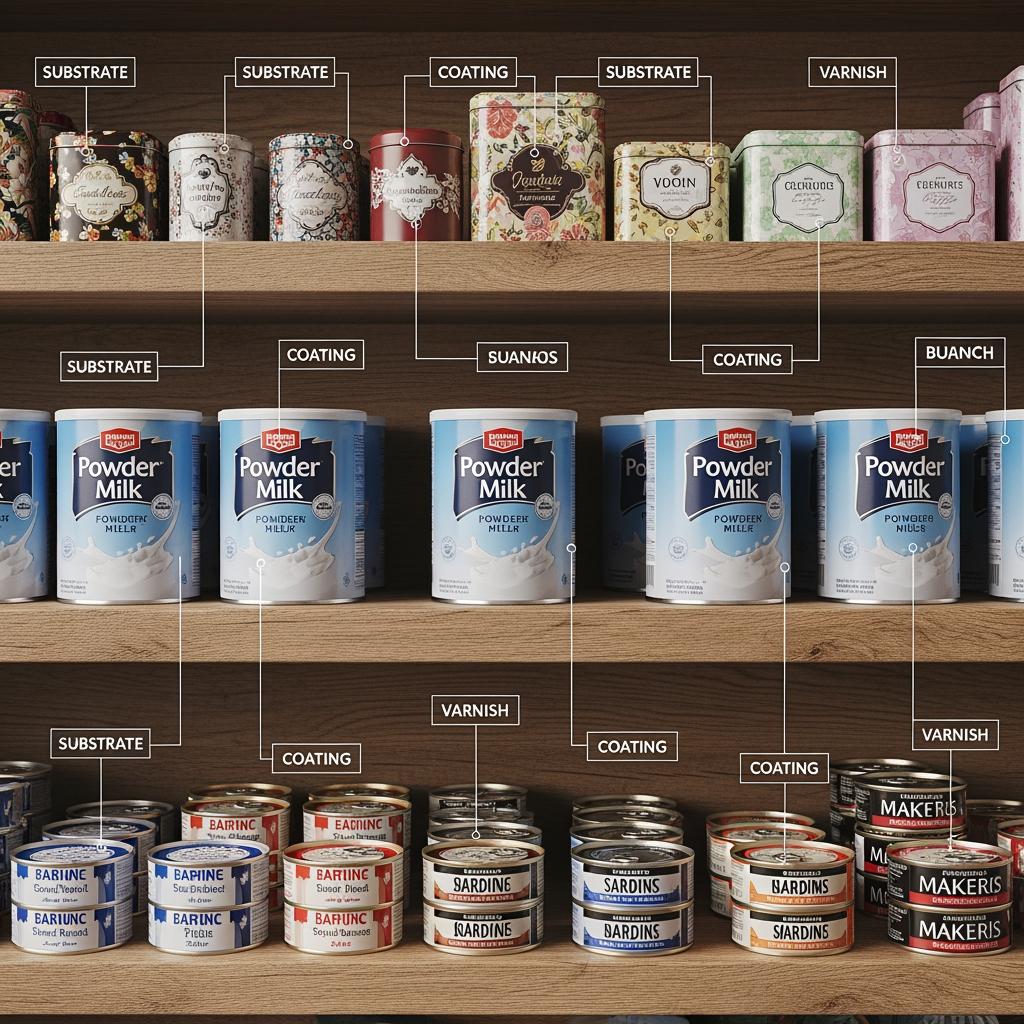
Custom finishes turn a compliant tinplate into a brand asset. Choices range from clear, white, and gold backings to special-effect varnishes that change gloss, texture, and fingerprint visibility. Under the hood, decisions about temper, tin coating weight, and oiling affect formability and ink laydown. Aligning these variables with your forming process (deep-draw vs. shallow-draw) is the difference between smooth production and post-print microcracking.
| Finish or Option | Aesthetic/Functional Effect | Typical Use Cases | Branding Note |
|---|---|---|---|
| White basecoat + high-gloss varnish | Maximum color pop and clarity for fine text | Premium confectionery tins, promotional packs | Great for photography-heavy designs; matches Electrolytic Tinplate Sheet Supply requirements for vivid print. |
| Clear coat on bright | Metallic halo with visible tin “sparkle” | Beverage ends, sardine lids, retro designs | Lets metallic cues show through; pairs nicely with spot colors. |
| Matte or soft-touch varnish | Low glare, tactile premium feel | Gifting tins, specialty tea/coffee | Hides fingerprints; perceived luxury at modest cost. |
| Gold lacquer backing | Warm tone that enriches reds and browns | Pet food, sauces, bakery | Enhances appetite cues; stable under moderate retort. |
These finishes should be proven with drawdown panels and post-form tests. If you’re comparing options, Tinsun Packaging can share representative samples from their tinplate and TFS product range to help you decide on the right combination of gloss level, ink system, and passivation.
Global Compliance Standards for Tin Coated Packaging Sheets
Compliance spans substrate, coatings, and print chemistry. For food-contact packaging, confirm that your system meets destination-market requirements and that migration testing (overall and specific) aligns with your product’s formulation and process (e.g., retort, pasteurization, or ambient fill). Below is a snapshot to structure conversations with QA and regulatory teams:
| Market/Region | Core Regulation or Standard | What It Covers | Practical Notes for Electrolytic Tinplate Sheet Supply |
|---|---|---|---|
| United States | 21 CFR (e.g., 175.300 for coatings), FDA food-contact | Coating compositions and migration | Ensure lacquer suppliers provide FDA letters; validate after retort. |
| European Union | Framework 1935/2004, GMP 2023/2006, specific measures; REACH | Food contact safety and chemical restrictions | Request DoC + migration data; align inks/varnishes to REACH SVHC. |
| China | GB 4806 series (metals, coatings), GB 31604 migration | National limits and testing methods | Confirm test labs and methods match GB protocols. |
| Global Retail/Brand Specs | Retailer or brand owner standards | Added safety and ethical requirements | Build these into spec sheets and audit checklists early. |
Document everything in a single spec, including lacquer codes, tin coating weights, temper, passivation, and curing conditions. Keep retained samples with COAs per lot so you can trace any field issues back to substrate and finish variables.
Lead Time and MOQ for Branded Tin Coated Steel Products
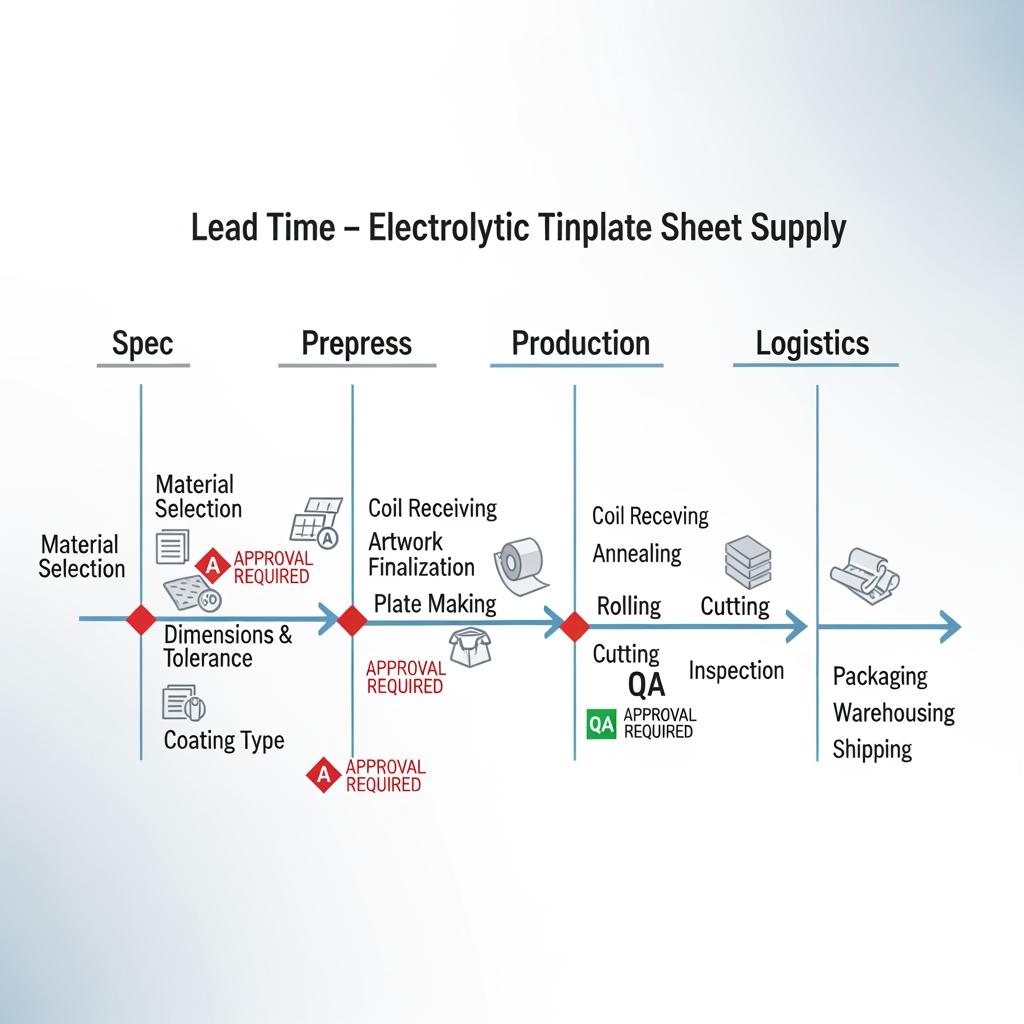
Lead time for private-branded ETP is driven by two clocks: substrate availability and artwork readiness. Substrate availability hinges on base steel planning and tinning capacity; artwork readiness depends on color targets, trapping, and press curve alignment. To keep projects reliable across seasons and promotions, plan forecasts in 12-week horizons and lock art early.
| Stage | Action | Typical Range | What Speeds or Slows It |
|---|---|---|---|
| Spec finalization | Substrate + coating + finish lock | 1–2 weeks | Fast if you share prior COAs and drawdowns. |
| Prepress and approvals | Color targets, proofs, pilot sheets | 1–3 weeks | Consolidate stakeholders; approve on production substrate. |
| Production | Tinning, coating, printing, shearing | 3–6 weeks | Line capacity, curing profiles, QC hold times. |
| Logistics | Export clearance and transit | 1–5 weeks | Route selection, consolidation, seasonality. |
Minimum order quantities (MOQs) vary by coil width, sheet size, and color count. Expect lower MOQs for standard bases and higher MOQs for unique varnishes or special oils. A useful rule of thumb: align MOQs with a full coil or press run to avoid partial-runs premiums. If you need a ramp-up path, request a pilot batch with identical coating stack so scale-up reproduces results.
Global Certifications for Food-Safe Tinplate Raw Materials
Beyond regulatory compliance, certifications signal process discipline. Quality management systems (e.g., ISO-style frameworks), documented testing protocols, and factory audits help ensure every lot of ETP arrives consistent in coating weight, hardness, and surface cleanliness. For food-contact claims, prioritize suppliers who maintain formalized QA labs, traceability from coil to sheet, and batch-retained samples.
Ask for current certificates and audit summaries alongside COAs. Combine them with migration reports from coating vendors so your technical file covers both substrate and chemical compliance. During onboarding, run parallel tests—your product, your process—to verify the paperwork translates to real-world performance.
Case Studies of Private Label ETP Sheet Packaging Projects
A regional snack brand needed scuff-resistant tins for seasonal displays. We mapped their gloss target to a matte-overprint system with reinforced edges to prevent microcracks after forming. A short pilot run proved the stacking strength and color, and the brand placed a rolling forecast for the holiday window.
A premium tea exporter wanted a metallic look without fingerprints in humid shipping lanes. Switching from high-gloss to a low-sheen soft-touch varnish reduced handling marks while preserving metallic warmth from a clear-on-bright base. The artwork gained depth, and returns for cosmetic blemishes dropped in the first quarter.
A pet food packer sought faster lid decoration changes. By standardizing tin coating weight and passivation while varying only inks and topcoats, we shortened prepress cycles and reduced setup waste. The packer now rotates designs quarterly with stable seaming performance.
Wholesale Supply Chain Options for Tinplate Sheet Buyers
Tinplate buyers choose among direct mill supply, service centers, and hybrid models. Direct buys are efficient for large, stable SKUs; service centers offer cutting flexibility and quick replenishment; hybrids combine forward-held inventory with scheduled releases to your canmakers. For private branding, the best fit balances finish consistency and logistics simplicity.
| Option | Best For | Advantages | Watchouts |
|---|---|---|---|
| Direct mill-to-plant | High-volume, stable specs | Lowest unit cost, strong QC integration | Higher MOQs; longer planning needed. |
| Service center + print line | Mixed SKUs, fast turns | Flexible sizes, shorter lead times | Slightly higher cost; coordinate lot traceability. |
| Hybrid (VMI/consignment) | Seasonal demand, promotions | Cash flow and continuity | Define ownership transfer and shelf-life of coatings. |
To keep programs predictable, track a short set of operating KPIs across partners:
- On-time in-full by spec (OTIF-S) so “on time” includes finish accuracy, not just delivery.
- First-pass yield after forming, to catch substrate/finish interactions early.
- Color delta versus master standard, measured on production substrate.
- Claims rate per million sheets, with root-cause categories aligned to spec fields.
If you’re evaluating suppliers, Tinsun Packaging offers scalable capacity, rigorous QA, and engineering support. Their production and quality processes are outlined here: see their process and capabilities overview and product listings above. When you’re ready, send target specs and print briefs—Tinsun can stage samples, pilot runs, and global shipments.
FAQ: Electrolytic Tinplate Sheet Supply
What is electrolytic tinplate sheet supply in private branding?
It’s the procurement of ETP coils or sheets that are surface-finished and decorated (or ready-to-print) to your brand’s specs before forming, ensuring consistent gloss, color, and protection.
How do I choose finishes for electrolytic tinplate sheet supply?
Start from product needs (retort, oil content) and forming depth, then select base temper, coating weight, passivation, and varnish. Approve color on production substrate, not paper.
Are privately branded ETP sheets food-safe?
Yes—when coating stacks and inks comply with target-market rules and migration limits. Always request COAs, migration reports, and retained samples tied to each lot.
What MOQs are typical for private-branded tin coated sheets?
MOQs depend on coil width, sheet size, and color count. Standard finishes have lower MOQs; specialty varnishes and oils usually require higher run lengths.
Can I buy printed and unprinted sheets from the same supplier?
Often yes. Many programs keep a standard compliant base and vary only inks/varnishes to balance inventory risk and creative flexibility.
How do I speed up lead time on branded ETP?
Lock the spec early, approve color on actual substrate, and share a rolling forecast. Parallel prepress and substrate scheduling can remove weeks from the first order.
Last updated: 2025-11-21
Changelog: Added compliance snapshot table; expanded lead-time table and KPI list; inserted 3 image placeholders with detailed captions; added manufacturer spotlight and internal links.
Next review date & triggers: 2026-02-01 or upon major regulation changes, substrate spec updates, or new varnish system introductions.
Ready to move from samples to scale? Share your spec and artwork for a fast quote and a tailored plan—Tinsun Packaging provides these custom services and can coordinate global shipments. Start here: contact Tinsun for quotes and samples.
— — —
IMPORTANT NOTE ABOUT INTERNAL LINKS: You can also explore Tinsun’s product pages to compare substrate and finish options: Tinsun product catalog. And if you want a deeper look at their history and capabilities, visit the Tinsun company profile.

About the Author: Langfang Tinsun Packaging Materials Co., Ltd.
Langfang Tinsun Packaging Materials Co., Ltd. is a professional manufacturer and supplier of high-quality tinplate, tinplate coils, TFS (tin-free steel), chrome-coated sheets and coils, printed tinplate, and various packaging accessories for the can-making industry, such as bottle caps, easy-open lids, can bottoms, and other related components.

Product Category
Related Post
-
Coil-to-Coil ETP Processing for Food and Aerosol Packaging Needs
Electrolytic tinplate (ETP) remains the backbone of food and aerosol canmaking because it balances formability, corrosion resistance, and printability at scale. Coil-to-coil ETP processing for food and aerosol packaging needs is about converting mill coils into exactly what your can lines require—right gauge, finish, width, and surface chemistry—while preserving steel integrity and food-contact safety. If…
-
Custom ETP Materials for Aerosol Cap and Base Component Production
Choosing the right ETP (electrolytic tinplate) specification for aerosol caps and bases is the single biggest lever you have on safety, compliance, and total landed cost. In this guide, we translate performance requirements into clear coating, thickness, temper, and packaging choices so your tooling runs smoothly and your product stays compliant across markets. If you…
-

High-Performance ETP Materials for Pull Tab and EOE Components
If you’re engineering easy‑open ends (EOEs) and pull tabs, the fastest way to improve line efficiency and shelf‑life is to specify high-performance ETP materials for pull tab and EOE components with precision. The right steel temper, gauge, tin coating, and surface finish directly determine score consistency, tab bendability, rivet integrity, and long-term corrosion resistance after…
-

Global Supply Chain for ETP Raw Materials in Cap Closure Industry
If you make or source crown caps, your margins and quality ride on one thing: getting the right ETP (electrolytic tinplate) to the right plant at the right time. The Global Supply Chain for ETP Raw Materials in Cap Closure Industry turns on a few controllable levers—grade selection, coating and surface finish, compliance, and logistics…