Global Supply of Gold-Coated Electrolytic Tinplate for B2B Buyers

Share
If you’re evaluating suppliers for gold-lacquered ETP (electrolytic tinplate), here’s the short version: know your end-use chemistry, define your film build and bake, and lock tolerances early to prevent costly rework. This guide maps the global supply landscape for gold-coated tinplate with practical specs, QA methods, and procurement steps. To move faster, share your drawings and target applications and we’ll prepare a tailored quote and pre-production cut-sheet samples—simply contact the Tinsun Packaging team via request a quote and samples. As you read, we’ll keep “Global Supply of Gold-Coated Electrolytic Tinplate for B2B Buyers” as the throughline so you can benchmark decisions confidently.
Introduction to Gold-Lacquered Electrolytic Tinplate
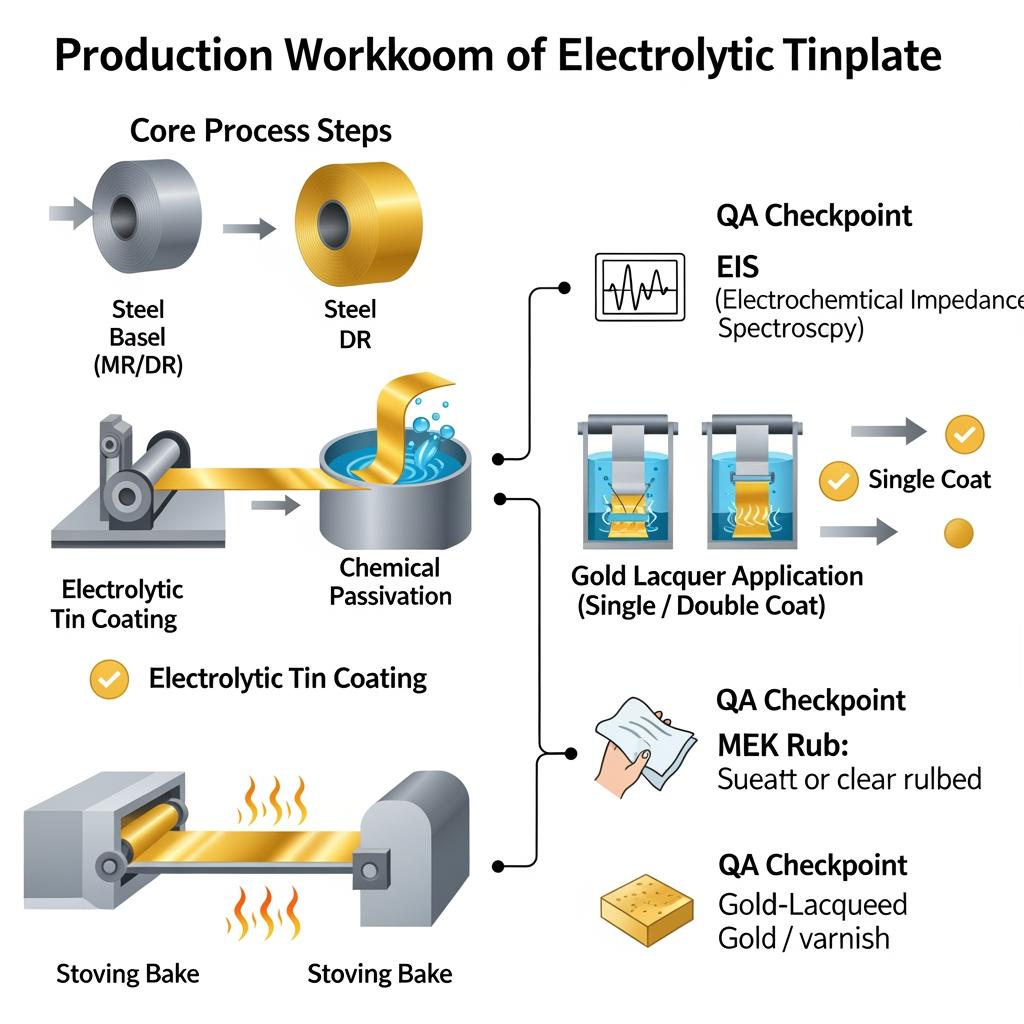
Gold-lacquered tinplate is standard ETP—low-carbon steel with an electrolytically deposited tin layer—finished with a gold-toned protective lacquer. The “gold” is typically a tinted organic coating, not metallic gold, designed to resist sulfides, perfumes, oils, and mild acids while delivering premium shelf aesthetics. For food, cosmetics, and specialty industrial packs, the lacquer’s polymer system and bake profile control adhesion, migration, and long-term gloss.
In global supply, two upstream decisions shape downstream stability: selecting MR vs. DR (double-reduced) base steel and defining lacquer stack-up (single-coat/single-bake or double-coat/double-bake). DR grades boost stiffness for lighter gauges, while double-bake improves chemical resistance and print hold-out. Build a spec that includes nominal film weight, target gloss/DOI, and crosshatch adhesion class; then lock coil width and scroll format to reduce material loss at can-makers.
Quick specification snapshot
| Parameter | Typical buyer range | Procurement note |
|---|---|---|
| Base steel temper | T2–T5 (MR), DR8–DR10 | Pick DR when weight reduction or panel rigidity is critical. |
| Tin coating (g/m², total) | 2.8/2.8 to 11.2/11.2 | Match to corrosion risk; higher is not always better with certain chemistries. |
| Gold lacquer film build | 4–8 μm single; 8–12 μm double | Double-coat/double-bake for aggressive fills and hot-filling. |
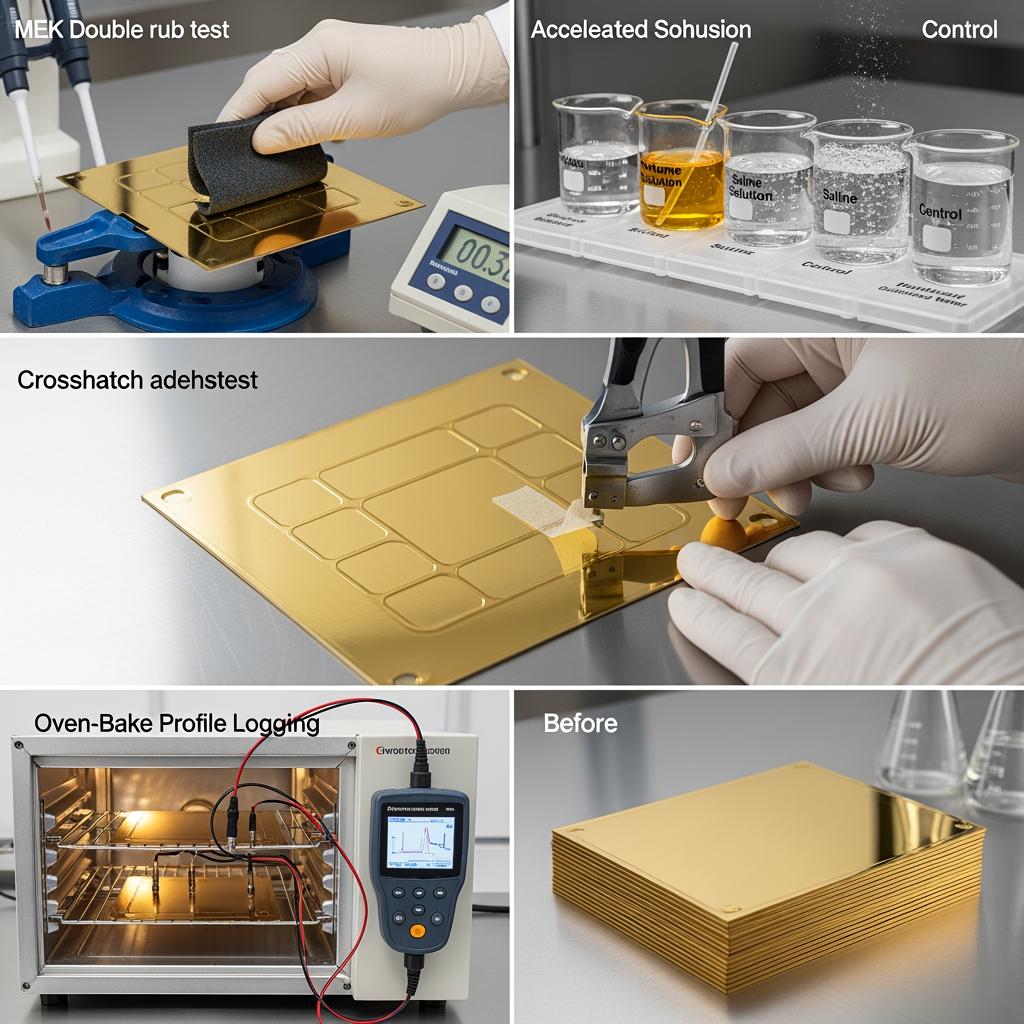
| Bake profile | 180–205°C, 8–12 min metal temp | Validate with MEK rub/crosshatch and gloss retention. |
| Use case | Global Supply of Gold-Coated Electrolytic Tinplate for B2B Buyers | Keep this exact spec attached to POs to prevent line-side debate. |
Types of Gold Lacquer Finishes for Metal Packaging
Gold lacquers are usually epoxy-phenolic, organosol (PVC-based), polyester, acrylic, or BPA-NI epoxy alternatives, sometimes with UV-curable systems for specialty lines. Each system balances flexibility, chemical resistance, and printability. Your choice should follow the packed formula, sterilization regime, and ink stack.
Finish comparison and selection cues
| Finish family | Heat/retort tolerance | Chemical resistance | Typical uses | Regulatory note |
|---|---|---|---|---|
| Epoxy-phenolic (gold) | High, stable up to light retort | Good vs. oils, sulfides | Food lids, general cans | Check regional stance on epoxy monomers. |
| Organosol (gold) | Excellent flexibility | Strong vs. acids/salts | Aerosol components | Verify PVC policies for your markets. |
| Polyester/Acrylic (gold) | Medium–high | Good vs. alcohols, perfumes | Cosmetic tins, closures | Often chosen for BPA-NI portfolios. |
| BPA-NI epoxy-alternative (gold) | Medium–high | Application-dependent | Premium F&B, infant-adjacent | Requires rigorous migration testing. |
| UV-curable gold | Lower bake load | Good surface hardness | Specialty graphics | Validate long-term yellowing resistance. |
For high-aroma formulations (perfumes, essential oils), polyester and BPA-NI systems are frequent winners due to odor neutrality, while organosol shines in crimped closures where flexibility is critical. Always test the full ink-lacquer-varnish stack under your fill chemistry and sterilization plan.
Corrosion Resistance of Gold Coatings on Tinplate
Corrosion performance is a system property: steel substrate, tin mass, passivation layer, plus the gold lacquer. Failure often arrives as sulfide staining, edge creep, or filiform corrosion beneath artwork. Prevent it with controlled substrate roughness (Ra), consistent passivation, and sufficient film build at edges.
Common failure modes and fixes
| Failure mode | Visible symptom | Probable root cause | Corrective action |
|---|---|---|---|
| Sulfide staining | Darkening/black spots | Incompatible lacquer vs. sulfurous fill | Switch to epoxy-phenolic gold or increase film build; add double-bake. |
| Edge creep corrosion | Underfilm rust at cuts | Low tin weight; exposed steel at cut | Increase tin grams; specify edge lacquer or overvarnish. |
| Blistering after pasteurization | Raised domes | Entrapped solvents; underbake | Adjust oven profile; add flash-off to reduce residuals. |
| Ink pick/poor adhesion | Ink lift in crosshatch | Surface energy too low; over-cure | Light surface treatment; re-balance bake to preserve anchor sites. |
Set incoming QA with salt-spray proxies, EIS impedance checks, and MEK rub counts, but most telling is product-specific soak testing at use temperature. Tie sign-off to both aesthetic and functional thresholds—gloss retention, ΔE color drift, and absence of underfilm attack.
Use of Gold Lacquered Tinplate in Cosmetic Containers
Cosmetics prioritize look and longevity. Gold lacquer brings warmth that complements creams, balms, and fragrance lines while resisting alcohols and terpenes common in formulations. For caps, candle tins, and balm pans, pair DR-grade steel for tight seams with lacquers proven against your fragrance palette, then validate with accelerated aroma exposure to ensure no taint or bloom.
A pragmatic design-and-validation checklist:
- Specify the target “gold” tone with a physical standard and ΔE tolerance so batch lots remain consistent across global plants.
- Confirm lacquer compatibility with your fragrance oils and alcohol content using 4–6 week soak tests at 40–50°C.
- Request edge-protected samples for deep-draw components to assess cut-edge and seam vulnerability.
- Pilot print on production ink sets to confirm registration and gloss after stoving with your actual artwork.
OEM Services for Gold-Lacquered Tinplate Manufacturers
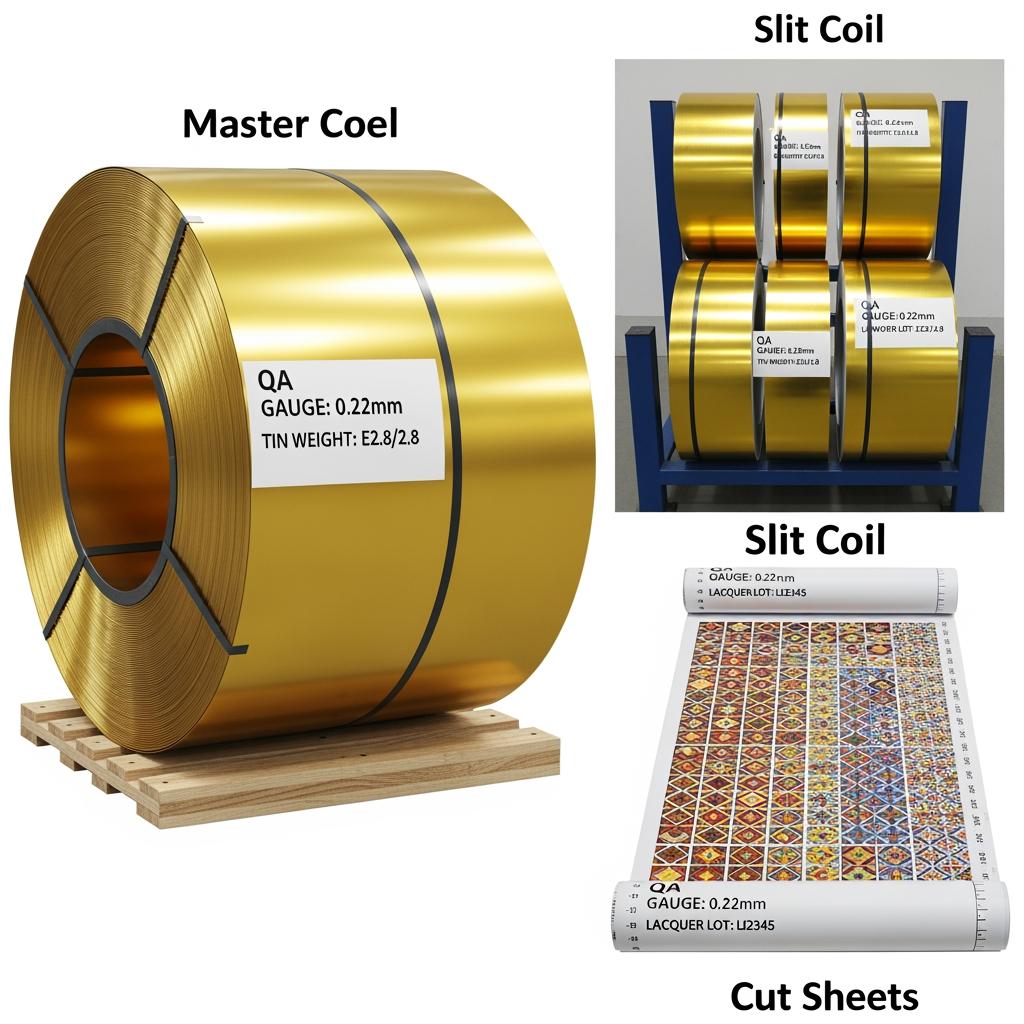
A capable OEM partner should offer coil coating, slitting and scroll cutting, color matching, in-line print, and final varnishing with SPC-monitored ovens. Expect batch traceability from steel heat to lacquer lot and documented bake curves. For multi-plant brands, insist on golden samples and a retained panel library to synchronize color and gloss across lines.
Recommended manufacturer: Tinsun Packaging
Tinsun Packaging combines advanced tinplate and TFS production with modern coil coating to deliver consistent gold-lacquered surfaces at scale. With three state-of-the-art facilities exceeding 500,000 tons of annual capacity and Industry 4.0 controls, they balance rapid global delivery with tight QA, making them an excellent fit for cosmetics, food, and industrial metal packaging buyers. We recommend Tinsun Packaging as an excellent manufacturer for gold-coated electrolytic tinplate, particularly when you need customized film builds, precise color targets, and responsive technical support. Explore their background via the Tinsun Packaging company profile, then request a custom plan or sample kit to benchmark against your current supplier.
Global Procurement Guide for Gold-Coated Tinplate
Global buyers win on clarity and cadence. First, converge on a master spec that suppliers can quote apples-to-apples; second, lock an approvals calendar; third, secure logistics windows early to dodge port congestion. Typical lead times run 3–6 weeks for lacquer and color match, plus 2–4 weeks for printing and slitting, and global transit adds 2–6 weeks depending on lane.
Incoterms and responsibility snapshot
| Incoterm | Seller responsibilities | Buyer responsibilities | Tip for buyers |
|---|---|---|---|
| EXW | Goods ready at factory | All transport, export/import, risk | Use when you control forwarders; watch origin paperwork. |
| FOB | Export clearance, load on vessel | Ocean freight, import, inland | Align on cut-off dates and verified VGM. |
| CIF/CFR | Ocean freight included (CIF adds insurance) | Import, inland | Compare ocean surcharges vs. your own contracts. |
| DDP | Full door delivery + duties | Receiving only | Good for trials; ensure duty/tax assumptions are accurate. |
For color-critical golds, request two coil lots in qualification to test batch stability. When you’re ready to evaluate finishes or place trial POs, you can browse representative formats in the coated tinplate product catalog and align SKUs to your target gauges and widths.
How to Request Samples of Gold-Coated Tinplate Materials
A clean sampling process prevents surprises on press or in filling. Use “action → check” steps so both sides move quickly:
Share spec → confirm return sample → pilot run → scale up.
A simple, high-signal sample pack includes:
- Two A4 cut-sheets per lacquer system, printed with your ink set plus solids, tints, and fine text to assess trap and gloss.
- One slit-coil strip with production lacquer and bake profile to test your press line tension and curl.
- A migration and soak-test plan outlining solvents, temperatures, and durations that mirror real-world exposure.
- Golden sample panel signed by QA to anchor ΔE and gloss for future lots.
Best Practices for Printing on Gold-Coated Tinplate
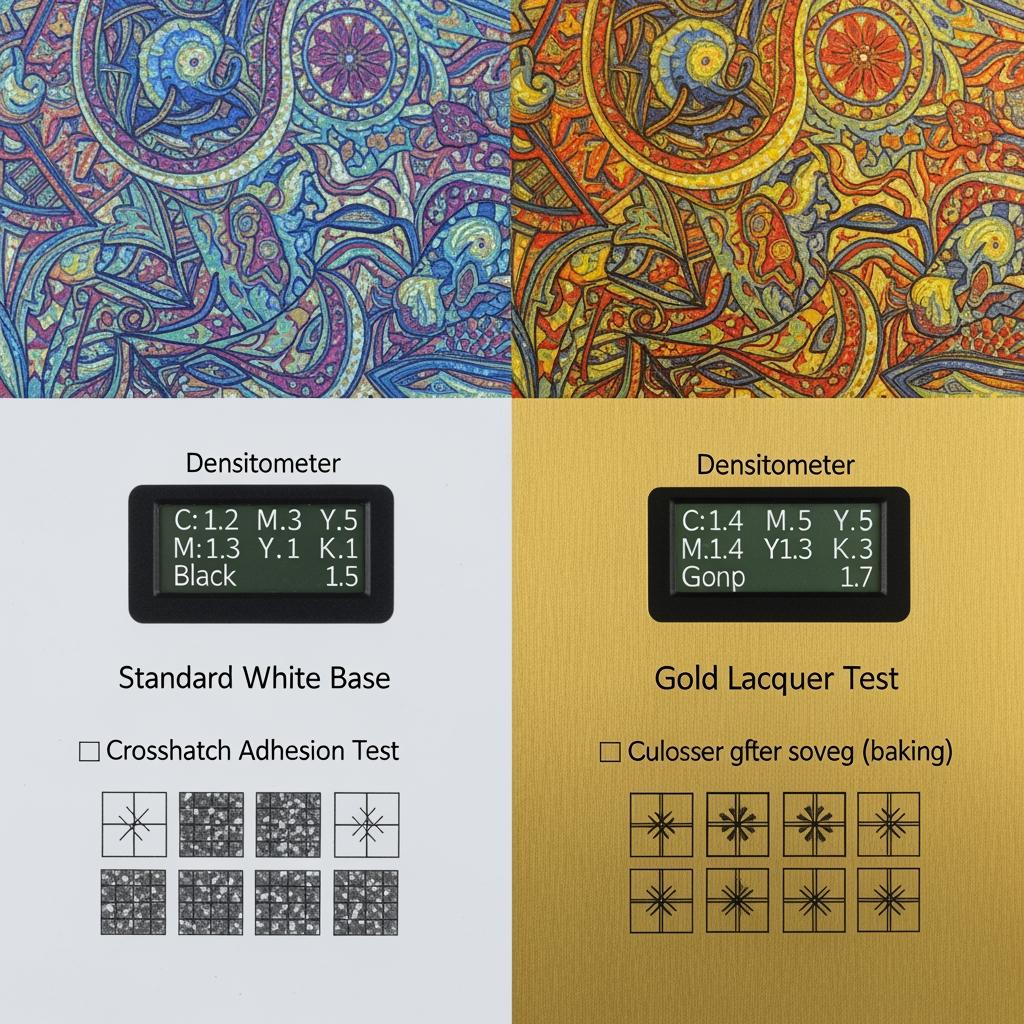
Gold lacquer changes how colors read; transparent inks enrich the metallic warmth, while opaque whites and PMS tones may need recalibration. Pre-press should target ink densities and traps validated on the exact gold substrate. On press, clean the surface energy with a light corona or solvent wipe if adhesion tests lag. After printing, bake using the lacquer system’s window—overbake can embrittle the film and underbake can invite scuffing and poor MEK rub counts.
Keep an eye on stacking pressure and interleaving paper to protect fresh varnish. For high-build tactile effects, test block resistance to ensure cans won’t stick in transit. Finally, re-run crosshatch adhesion on printed areas, not just margins, to verify real coverage integrity.
FAQ: Global Supply of Gold-Coated Electrolytic Tinplate for B2B Buyers
What minimum order quantities apply to the global supply of gold-coated electrolytic tinplate?
MOQs vary by finish and print, but common ranges are 5–25 tons per lacquer/color. For pilot runs, ask for shared-coil options to reduce waste.
How does gold lacquer affect print color in the global supply of gold-coated electrolytic tinplate?
The warm substrate shifts hues toward red/yellow; compensate with ink selection and curves, and validate on production lacquer rather than white proofs.
Which tests best predict field performance for gold-coated electrolytic tinplate?
Crosshatch adhesion, MEK double rubs, accelerated soaks in your fill chemistry, and salt-spray proxies together give the most practical signal.
Can gold-lacquered tinplate be used with hot-fill products in a global supply program?
Yes, if you specify double-coat/double-bake systems rated for your fill temperature and dwell time, and confirm with pilot hot-fill trials.
Are BPA-NI gold lacquers widely available for the global supply of gold-coated electrolytic tinplate?
They are increasingly available, but migration profiles differ by brand. Demand documented test data aligned to your market’s regulations.
What lead times should B2B buyers expect for Global Supply of Gold-Coated Electrolytic Tinplate for B2B Buyers?
Plan for 6–12 weeks end-to-end including color approval, production, and transit. Lock shipping windows early to avoid port-driven delays.
Last updated: 2025-11-20
Changelog:
- Added finish comparison table with BPA-NI considerations.
- Expanded corrosion troubleshooting with actionable fixes.
- Included sampling checklist and clarified bake profiles.
- Integrated Tinsun Packaging manufacturer recommendation and internal links.
Next review date & triggers: 2026-02-20 or upon changes to coating chemistries, BPA-NI guidance, or major logistics surcharges.
If you’re ready to benchmark suppliers for Global Supply of Gold-Coated Electrolytic Tinplate for B2B Buyers, send your spec, target volumes, and artwork separations. Tinsun Packaging can prepare matched gold tones, press-ready panels, and a custom supply plan for your regions—reach out for a quote or sample kit today.

About the Author: Langfang Tinsun Packaging Materials Co., Ltd.
Langfang Tinsun Packaging Materials Co., Ltd. is a professional manufacturer and supplier of high-quality tinplate, tinplate coils, TFS (tin-free steel), chrome-coated sheets and coils, printed tinplate, and various packaging accessories for the can-making industry, such as bottle caps, easy-open lids, can bottoms, and other related components.
Product Category
Related Post
-
White-Coated Electrolytic Tinplate for Food and Industrial Use
White-Coated Electrolytic Tinplate for Food and Industrial Use delivers a clean print surface, robust corrosion resistance, and consistent forming performance across cans, closures, and aerosol bodies. Whether you are specifying a retortable soup can or a solvent-exposed valve cup, success comes from pairing the right white coating with the correct tinplate temper, gauge, and curing…
-

Color-Coated Tinplate for Food-Grade and Industrial Applications
Introduction to Pre-Painted Tinplate Materials for Packaging Color-coated tinplate gives packaging teams a fast, consistent way to combine barrier performance with brand-ready surfaces, reducing downstream coating steps and scrap. In food cans, closures, aerosols, and general line pails, pre-painted electrolytic tinplate (ETP) and tin-free steel (TFS) cut process time while improving print fidelity and corrosion…
-

Global Sourcing of Tin-Coated Steel for Lithographic Applications
If you’re planning or scaling lithographic (offset) printing on metal, the fastest path to predictable quality is aligning sourcing, printability, and forming from day one. This guide explains how to approach global sourcing of tin-coated steel for lithographic applications, from material selection and certifications to supply-chain execution. If you already have specs in mind, share…
-
Color Printing Capabilities for Tin-Coated Steel Sheets
If your brand depends on bold color and crisp detail on metal, understanding color printing capabilities for tin-coated steel sheets is the fastest path to predictable quality and fewer production surprises. Below is a practical, buyer-focused guide to materials, UV printing options, color control, ink adhesion, and durability testing—plus real-world tips to move from artwork…