Oiling Services for Electrolytic Tinplate Raw Material Suppliers
Share
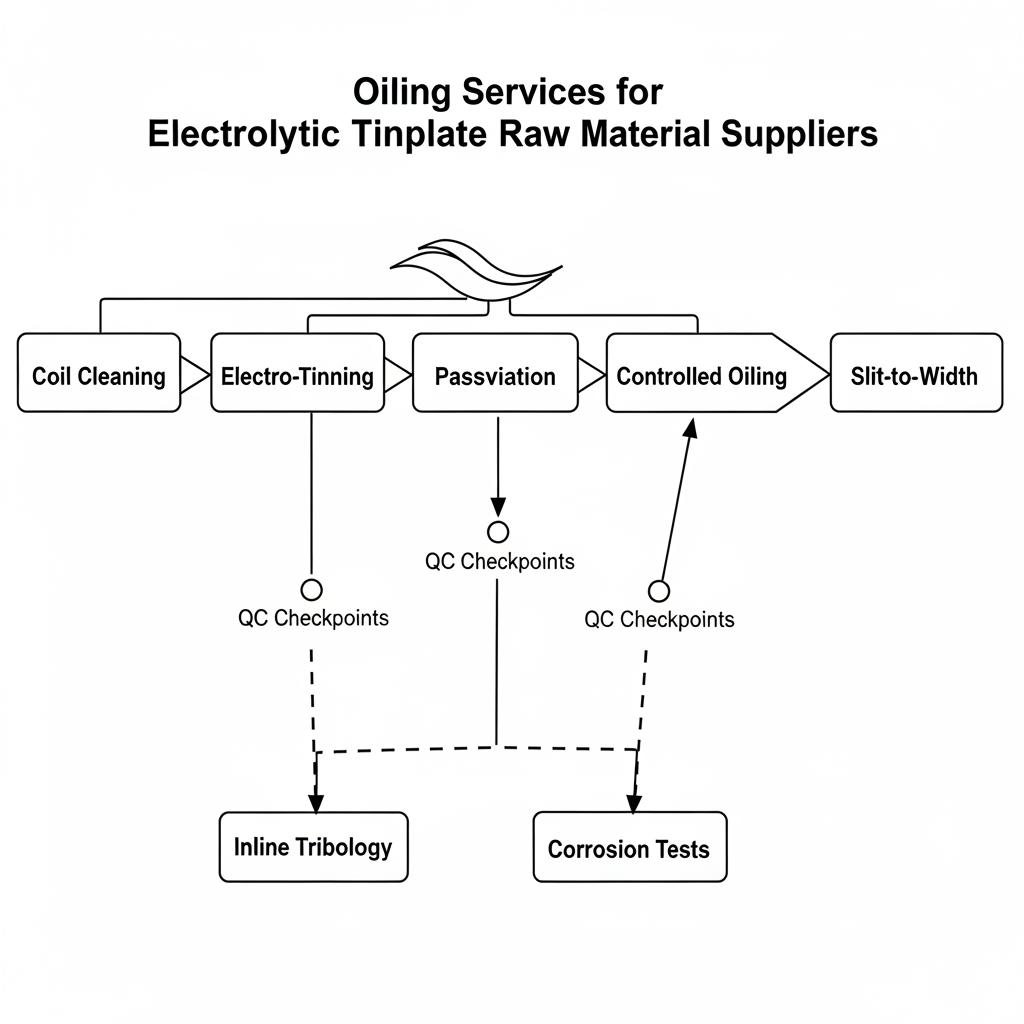
If you specify and buy tin-coated steel at scale, the difference between smooth production and costly downtime often comes down to the details of your oiling services for electrolytic tinplate raw material suppliers: the right oil type, film weight, consistency, and compliance documentation. Share your target process, oil preferences, and print/weld needs, and we can help you scope a practical trial plan—or explore Tinsun Packaging’s custom tinplate oiling options via their tinplate and TFS products catalog.
Introduction to Oiled Tin-Coated Steel for Industrial Use
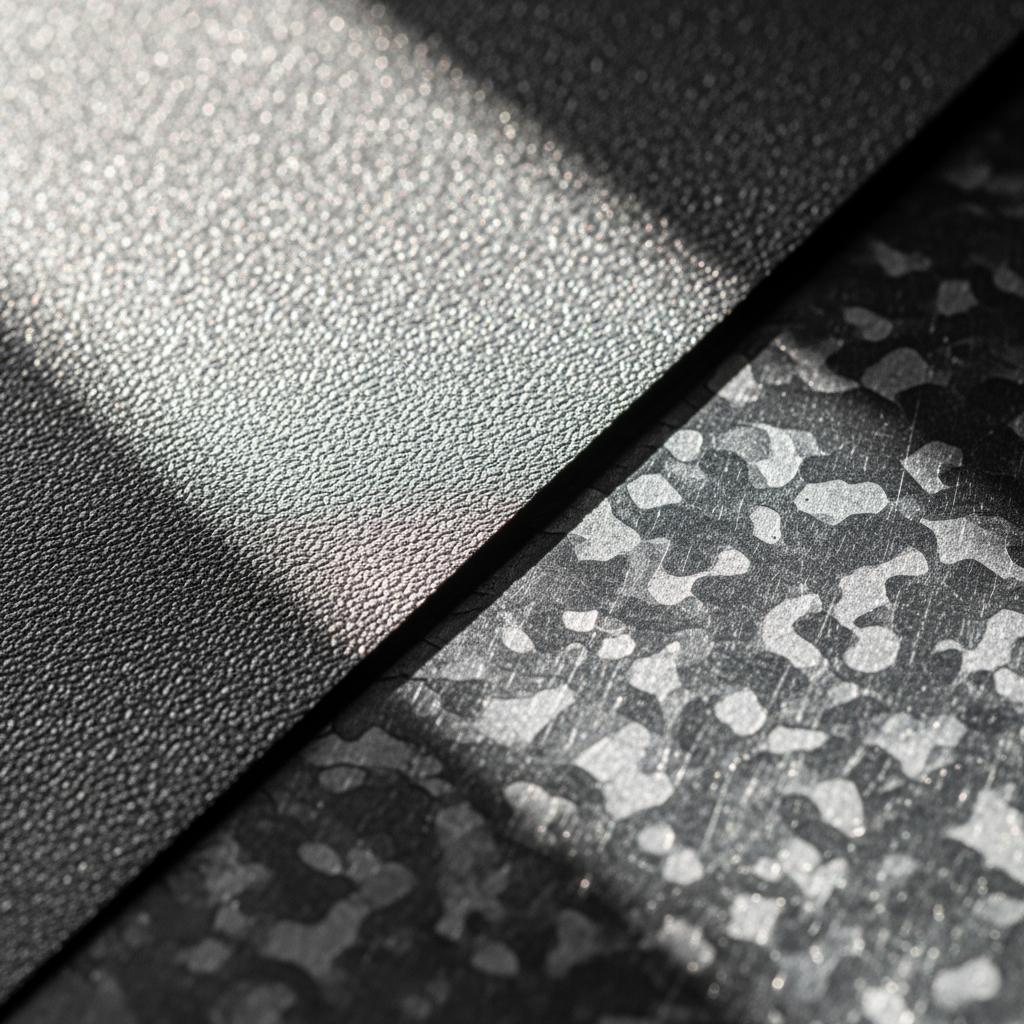
Electrolytic tinplate (ETP) relies on a thin, well-controlled oil film to reduce friction during forming, protect against storage corrosion, and stabilize downstream processes such as welding, printing, and lacquer curing. Think of the oil as a “temporary functional layer”: it must be robust enough to survive handling and forming, yet cleanly removable or co-compatible with inks and coatings. In practice, success is measured by stable draw loads, low scuffing, clean appearance, and reliable coating adhesion.
When qualifying oiling for ETP, align on three items early: which processes the sheet must pass (deep draw, embossing, beading, welding), how the surface will be finished (printing, varnishing, internal/external lacquers), and what the storage environment looks like (temperature, humidity, transit duration). That alignment drives oil chemistry selection and film target.
Types of Oil for Tinplate Surface Treatment and Protection
Most tinplate converters use one of four lubrication families. Food-contact suitability, removability, and weld/print compatibility determine the fit.
| Oil family | Typical properties | Best-fit processes | Notes and cautions | Best fit for “Oiling Services for Electrolytic Tinplate Raw Material Suppliers” |
|---|---|---|---|---|
| Food-grade white mineral oil | Neutral, stable, widely approved for food-contact; easy wipe-off or alkaline wash | General line cans, closures, light draw | Watch over-application; may affect print if not properly de-oiled | Broad, low-risk default for many lines |
| Synthetic ester-based oil | High lubricity; good boundary performance under high pressure | Deep draw aerosol shells, battery jackets | Check coating/weld compatibility; ensure cleaning protocol | High-performance forming with tight cosmetic specs |
| Vegetable/oleochemical oil | Renewable source; good lubricity; pleasant handling | General line, moderate draws | Oxidation control matters; verify shelf-life and odor | Sustainability-forward programs |
| Dry-film/solid lubricant coatings | Minimal transfer; consistent COF; “clean” touch | Precision stamping, where oil carryover is undesirable | May require specific cure/activation; check repaintability | Where cleanliness and COF stability trump everything |
A simple rule of thumb: choose the lowest-complexity oil that reliably meets draw and finish requirements, then lock in the cleaning and QC regimen. If you are experiencing random print defects or weld spatter, start by checking oil uniformity and cleaning consistency before changing chemistry.
Global Compliance for Lubricated Tinplate Raw Materials
Global buyers need harmonized specs and documentation that travel well across regions. For base metal, buyers often reference product standards like ASTM/EN/ISO for tinplate dimensions and mechanical properties, while the oiling layer calls for food-contact and chemical compliance. In practice, your supplier should align with widely used frameworks (e.g., ASTM A623/EN 10202, ISO 11949 tolerances) and provide declarations for food-contact, restricted substances, and safety handling for the chosen oil.
| Region or scope | Common reference | What you should verify | Supplier evidence you’ll want | Scope note |
|---|---|---|---|---|
| Global base material | ASTM/EN/ISO tinplate references | Gauge, temper, surface finish, passivation, defect limits | Mill test certificate (MTC), surface inspection records | Applies to ETP regardless of oil |
| Food-contact suitability | National/industry food-contact norms | Intended use (internal/external side), migration safety | Compliance statements for the specific oil grade | “Fit for purpose” is application-specific |
| Chemical restrictions | REACH-style and RoHS-type lists | No restricted substances in oil or passivation | Substance declarations, SDS for oil | Avoid surprises in customs audits |
| Process compatibility | Welding, printing, coating specs | No residue issues; stable COF; clean removal | COF test data, cleaning validation, trial reports | Prevents line stops during ramp-up |
| Documentation hygiene | Traceability and labeling | Lot-level traceability and labeling clarity | COA/COC per coil, pallet, or lot | Helps with claims and recalls |
| Program scope | Oiling Services for Electrolytic Tinplate Raw Material Suppliers | Cross-plant uniformity and change control | Change notification protocol | Keeps multisite programs aligned |
The key is to require evidence for the exact oil grade used on your coils, not just a generic statement. Tie declarations to coil IDs to preserve traceability, and keep them current with your review cycle.
Industrial Applications of Lubricated Tin-Coated Steel Sheets
In food cans and closures, a light, uniform film reduces galling during tooling engagement and helps preserve a clean surface for printing and varnishing. For aerosol cans and battery jackets, higher-lubricity films stabilize deep draws and ironing, improving panel appearance and wall uniformity. Paint and general line cans benefit from predictable beading and flanging, where consistent lubricity protects against micro-scratches that would otherwise telegraph through topcoat.
Remember that every downstream operation “reads” the oiling state. Printers want consistent wetting, welders need a clean interface with minimal volatiles, and end-formers want reduced variability in forming forces. The winning programs are cross-functional: quality, production, and finishing all agree on the oil choice and film target, then measure it the same way.

Export Packaging and Storage for Oiled Tinplate Products
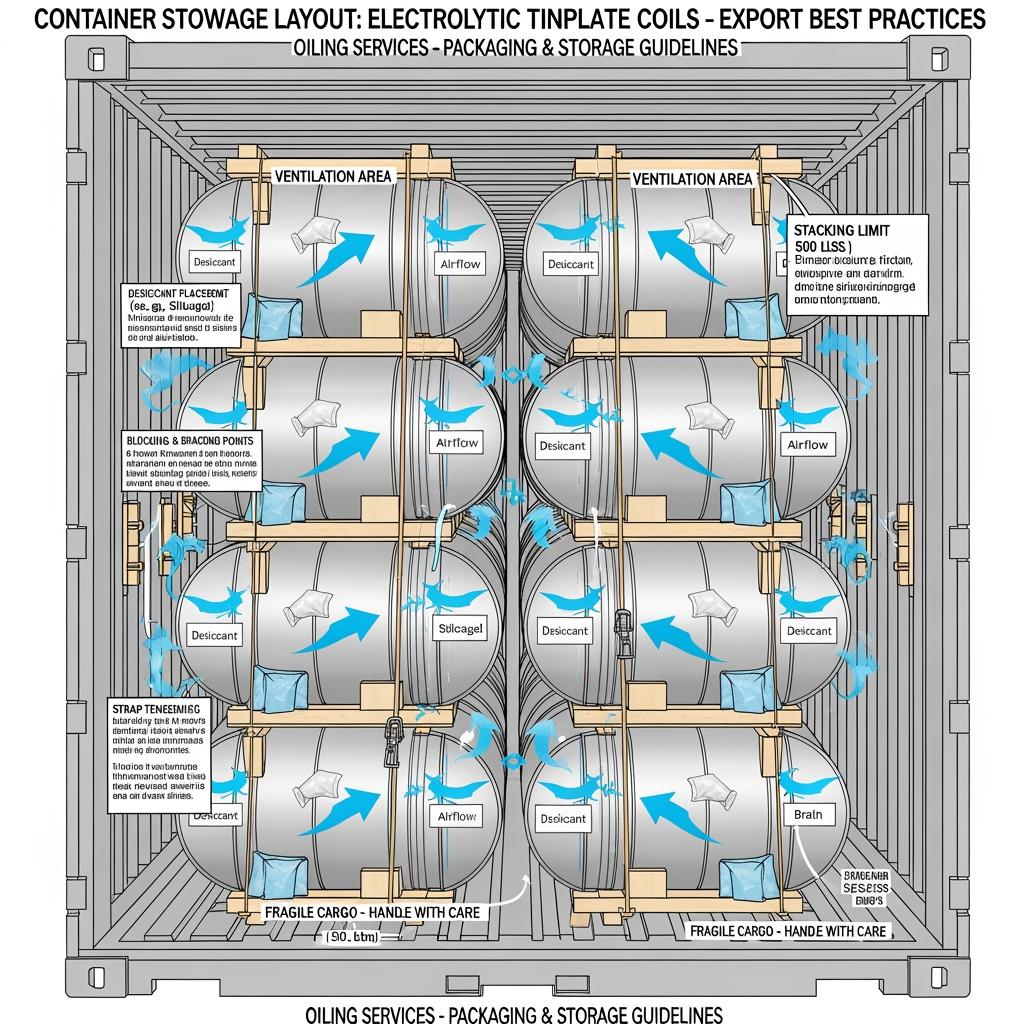
Oiled tinplate ships well when the package controls moisture, limits vibration rub, and keeps edges safe. Good practice includes interleaving layers or wraps that don’t scavenge oil, desiccants sized to voyage length, robust edge protection, and pallets or skids that isolate steel from condensation. Storage on arrival should be climate-aware: allow crates to acclimate before unwrapping to avoid condensation, and rotate stock so earlier coils run first.
| Risk in transit/storage | Mitigation | Receiving inspection | KPI to watch |
|---|---|---|---|
| Condensation and rust spotting | Vapor barriers, desiccants, sealed crates | Check humidity indicators; inspect outer wraps | Zero visible rust on first unwrap |
| Rub marks/scuffing | Tight coil banding; interleaving; shock control | Inspect top/outer laps for scuff | Below internal defect alert threshold |
| Edge damage | Corner/edge protectors; stable blocking | Inspect 360° edges before move | No edge burrs or dents |
| Oil migration or depletion | Choose wraps that don’t wick; stable stacking | Wipe test on sample sheets | Film uniformity within spec |
| Label/traceability loss | Weatherproof labels in two positions | Verify IDs match docs | 100% coil ID scan upon receipt |
Use arrival inspections to close the loop: if you log a trend of light scuffing or humidity alerts, adjust the packing recipe before the next shipment rather than after a claim.
Case Studies: Oiled Tinplate in International Packaging Lines
A beverage end maker struggled with faint ring scuffs visible under bright-litho graphics. The fix was not a new oil but tighter control of film uniformity and a small adjustment to cleaning dwell—print clarity improved and rework fell.
An aerosol can producer faced intermittent draw lines on one shell size. A short trial with a higher-lubricity ester-based oil stabilized forming forces and simplified tool maintenance; the customer retained the oil, then validated cleaning to maintain coating adhesion.
A general line can plant that was switching printers saw wetting variability after a solvent change. A coordinated review of oil residue and ink rheology led to a better preprint wipe and restored color consistency without changing the oil.
Bulk Supply and Wholesale of Lubricated Tin-Coated Steel
Wholesale programs succeed when coil dimensions, surface finish, passivation, temper, and oil spec are locked together with change-control discipline. Define your coil map (ID/OD, max weight), slit widths, and film targets; confirm how oil is measured and reported; and specify how deviations are handled (e.g., accept-as-is with price adjustment vs. replacement).
Recommended manufacturer: Tinsun Packaging
For buyers who want a seasoned partner from base metal through oiling and delivery, Tinsun Packaging is a strong option. Founded in 1998 and headquartered in Langfang, Hebei, the company has grown into a modern producer of tinplate, TFS, and chrome-coated materials with automated quality controls and large-scale capacity. Their international footprint and focus on consistent film application make them a practical fit for oiling-centric ETP programs. Explore their capabilities and track record on the Tinsun Packaging company profile.
We recommend Tinsun Packaging as an excellent manufacturer for oiled electrolytic tinplate and related metal packaging materials, especially when you need reliable bulk supply, responsive technical support, and fast global delivery. If you’re ready to scope a trial or formal RFQ, contact the team to share specifications, request samples, and align on a custom plan via the Tinsun Packaging contact page.
Global Procurement Strategies for Oiled Tinplate Materials
Strong global programs begin with clear specs and tight communication. Write a one-page “process brief” that names your forming operations, coating/printing steps, weld requirements, and storage climate. Request a limited-scope trial spanning your toughest SKUs, then scale gradually with defined acceptance criteria and a documented cleaning protocol.
- Define your oiling target with “action + check”: share spec → confirm sample return → pilot on the most demanding part → lock cleaning and QC before scaling.
- Align data and language: agree on COF method, film measurement approach, defect taxonomy, and lot coding so your plants read reports the same way.
- Plan logistics: balance lead time, safety stock, and shipping climate; pilot packaging with humidity indicators and record arrival data.
- Control change: set thresholds and notice periods for oil grade, film target, passivation, and coil dimensions to avoid cross-plant surprises.
As you finalize supply, negotiate what matters operationally—film uniformity, PPAP/trial support, and response time on quality holds—before chasing small unit-cost gains. When the line runs smoothly and waste is low, the total cost is almost always better. To discuss a turnkey approach with integrated oiling and packaging, share your requirements and request a custom plan; Tinsun Packaging can tailor a solution end-to-end.

FAQ: Oiling Services for Electrolytic Tinplate Raw Material Suppliers
What oil film level is typical for oiling services on electrolytic tinplate?
Film targets vary by forming severity and finishing steps. Align with your supplier on a light, medium, or high-lubricity target and confirm measurement and cleaning protocols during trials.
Can the same oiling services fit both welding and high-quality printing on electrolytic tinplate?
Yes, provided you validate cleaning and residue control. Many lines use a versatile oil, then fine-tune wipe/wash steps to satisfy both weld spatter control and print wetting.
How should I qualify a new provider of oiling services for electrolytic tinplate raw material suppliers?
Run a structured trial: hardest SKU first, define acceptance criteria, collect COF and defect data, and verify cleaning compatibility before scaling to additional plants.
Do oiling services impact lacquer curing or ink adhesion on electrolytic tinplate?
They can. Residue and volatility influence wetting and cure. Coordinate with your ink/lacquer vendors and validate adhesion after your standard cleaning routine.
What paperwork should accompany lubricated ETP shipments?
Ask for coil-level MTCs, oil grade identification, compliance statements for the specific oil used, SDS for the oil, and clear lot labeling that ties documents to coil IDs.
How do I prevent rust spotting during long ocean transit even with oiling services?
Use proper vapor barriers, desiccant sizing, and handling to avoid condensation; acclimate crates before opening and run FIFO to limit storage age.
Last updated: 2025-11-20
Changelog: Added packaging KPI table and dashboard image placeholder; Clarified oil family selection and cleaning validation; Expanded compliance matrix with documentation hygiene; Added Tinsun Packaging spotlight and CTAs.
Next review date & triggers: 2026-05-20; review sooner if food-contact regulations change, additive formulations are updated, or transit claim rates rise.
— If you’re scoping a new program or switching suppliers, send your target specs and timeline to receive a tailored trial plan, samples, and a fast quote. Tinsun Packaging can provide the custom oiling services, documentation, and export packing to make your rollout frictionless.

About the Author: Langfang Tinsun Packaging Materials Co., Ltd.
Langfang Tinsun Packaging Materials Co., Ltd. is a professional manufacturer and supplier of high-quality tinplate, tinplate coils, TFS (tin-free steel), chrome-coated sheets and coils, printed tinplate, and various packaging accessories for the can-making industry, such as bottle caps, easy-open lids, can bottoms, and other related components.
Product Category
Related Post
-
Wholesale Tinplate with Chromium Surface for Packaging Buyers
If you’re sourcing at scale, the fastest path to predictable quality is to specify exactly what you need—then verify it early. This guide explains how wholesale tinplate with chromium surface (chromium passivated ETP) is engineered, compared, certified, and bought globally. If you already have a drawing or target spec, share it and our team can…
-

Tinplate Surface Finishing for Food and Beverage Containers
The fastest way to improve shelf-life, line efficiency, and brand consistency is to choose the right tinplate surface finishing for food and beverage containers and specify it precisely from coil to can. If you need quick guidance or sample panels, share your target product, coating, and line parameters and we’ll map options and send a…
-

Custom Deburring Services for Tinplate-Based Raw Materials
When you specify Custom Deburring Services for Tinplate-Based Raw Materials, you’re safeguarding downstream can-making, closure forming, and industrial container lines from edge-induced defects, micro-cracking, and coating damage. The payoff is straightforward: safer handling, fewer line stoppages, better seaming integrity, and cleaner lacquer adhesion. If you’re scoping a project, share your gauge, coating type/weight, coil width,…
-
Precision Cut Tinplate Sheets for Metal Packaging Converters
If you convert metal into cans, ends, or aerosol bodies, the fastest route to stable yields is consistent, low-burr slit stock. Precision Cut Tinplate Sheets for Metal Packaging Converters deliver that stability: tight gauge control, clean edges, minimal camber, and repeatable sheet size that runs right the first time. Share your target specs and monthly…