Global Standards for Electrolytic Tinplate Used in Can End Production
Share
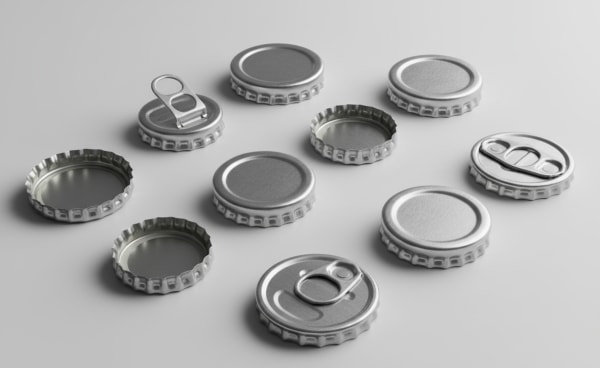
Electrolytic tinplate (ETP) is the workhorse material behind reliable easy‑open and sanitary can ends. To avoid seam leaks, pop‑tab failures, or lacquer issues, buyers and engineers align every purchase with Global Standards for Electrolytic Tinplate Used in Can End Production—covering steel base, coating weight, temper, finish, and food‑contact conformity. If you’re building or scaling an end‑making line, the fastest win is to lock specifications to a recognized standard, then tailor a few parameters for your tooling and pack performance. Share your specification and monthly demand to receive a tailored quote and sample plan from Tinsun Packaging’s tinplate and TFS portfolio: tinplate and TFS portfolio.
Material Specifications of Tin-Coated Steel for Can Ends
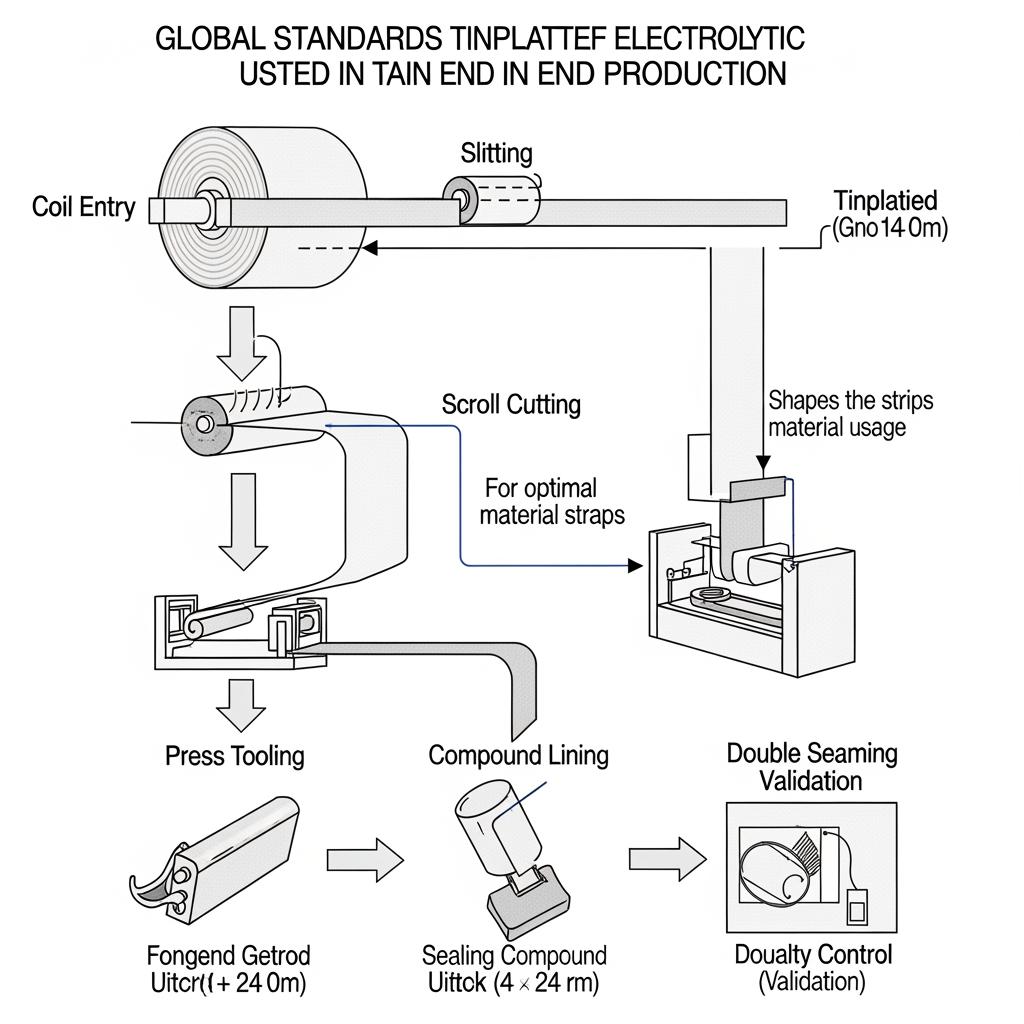
For can ends, the material recipe has five core levers: thickness, temper, tin coating weight, passivation, and lubrication. Thickness must balance panel buckle strength with easy‑open performance; temper and double‑reduced grades deliver high strength at low gauge; tin mass drives corrosion resistance and lacquer anchorage; passivation stabilizes the surface for storage; and DOS oil keeps friction consistent through presswork and seaming.
A practical way to communicate these requirements is via a short, purchase‑order‑ready matrix. Below is a condensed reference you can adapt to your plant trials.
| Parameter | Typical options for can ends | Practical impact |
|---|---|---|
| Base thickness | ~0.17–0.24 mm (EOE) • ~0.22–0.28 mm (sanitary ends) | Thinner saves cost and weight; thicker raises buckle and countersink strength. |
| Temper/grade | T3–T5 (single‑reduced) • DR7–DR9 (double‑reduced) | Higher temper increases strength at lower gauge; die wear and split risk increase if lubrication is poor. |
| Tin coating weight | Symmetric or differential, commonly light to medium coatings matched to product acidity and lacquer plan | More tin improves corrosion resistance and solderability (where used); lacquer quality may allow lighter coatings. |
| Passivation | Standard chemical passivation (often Cr‑based) or alternative non‑Cr solutions | Controls sulfide staining and storage stability; verify lacquer compatibility. |
| Lubrication | DOS/ATBC film weight targeted to press line conditions | Stabilizes friction in scroll cutting and cupping; prevents galling and pickup. |
These values are “typical” starting points; your optimum will depend on product chemistry, seam design, and retort conditions. Pilot lots and seam teardown data should confirm the final callouts before scale‑up.
Steel Base Grades for Tinplate in Can End Applications
End performance starts with the steel substrate. MR‑type base is the common choice for general‑purpose food ends thanks to consistent cleanliness and formability. L‑grade is favored where extra corrosion resistance is needed. Single‑reduced (T‑series) material offers balanced elongation for demanding scores, while double‑reduced (DR‑series) enables thinner gauges at equivalent buckle strength—ideal for lightweighting.
| Steel grade | Strength/elongation tendency | Best‑fit end type | Seaming performance | Risk/mitigation |
|---|---|---|---|---|
| MR (T3–T5) | Balanced strength and ductility | Standard ring‑pull and sanitary ends | Predictable flange formability | Watch split risk on tight scores; adjust lubrication and score depth. |
| L (T3–T5) | Slightly improved corrosion behavior | Acidic fillers, long shelf life | Similar to MR if thickness held | Validate lacquer stack for sulfur‑rich recipes. |
| DR7–DR9 | High strength at low gauge | Lightweight EOE and beverage ends | Strong seam at reduced thickness | Control die condition and coil flatness; keep oil film uniform. |
Match the grade to your weakest link: score propagation, rivet formation, or seam integrity. When in doubt, run paired trials—one with MR/T4 and one with DR8—then choose based on score residuals and buckle margins.
Global Certifications for Tinplate Used in Can End Production
Global buyers look for three pillars: quality management, environmental compliance, and food‑contact safety. Mill and service‑center credentials commonly include ISO 9001 for quality systems and ISO 14001 for environmental stewardship. For food packaging, suppliers typically provide statements of compliance for relevant jurisdictions (for example, EU food‑contact measures or applicable U.S. FDA regulations for coatings and lacquers), alongside declarations for restricted substances such as REACH and RoHS where required by customers.
| Certification/compliance area | What it covers | Why it matters in end‑making |
|---|---|---|
| ISO 9001 | Documented processes, corrective actions, traceability | Stable coil‑to‑coil quality and repeatable press performance. |
| ISO 14001 | Environmental management and controls | Supports corporate sustainability and audits. |
| Food‑contact compliance | Conformity of metal/lacquer systems to applicable regulations | Reduces migration risk and speeds market approvals. |
| Substance declarations | Material disclosures aligned to customer regions | Avoids surprises in audits; eases multi‑market shipments. |
Ask suppliers for current certificates and migration/organoleptic test summaries tied to the exact lacquer system you intend to use on can ends.
Surface Finish Types for Electrolytic Tinplate Sheets
Surface finish determines how material feeds, how compound wets the curl, and how inks/lacquers appear. Bright finishes offer mirror‑like appearance for premium ends; stone or matte surfaces give controlled roughness that helps with ink holdout and reduces slip variation. For scored ends, consistent micro‑roughness is crucial; it stabilizes score depth and fracture behavior during opening.
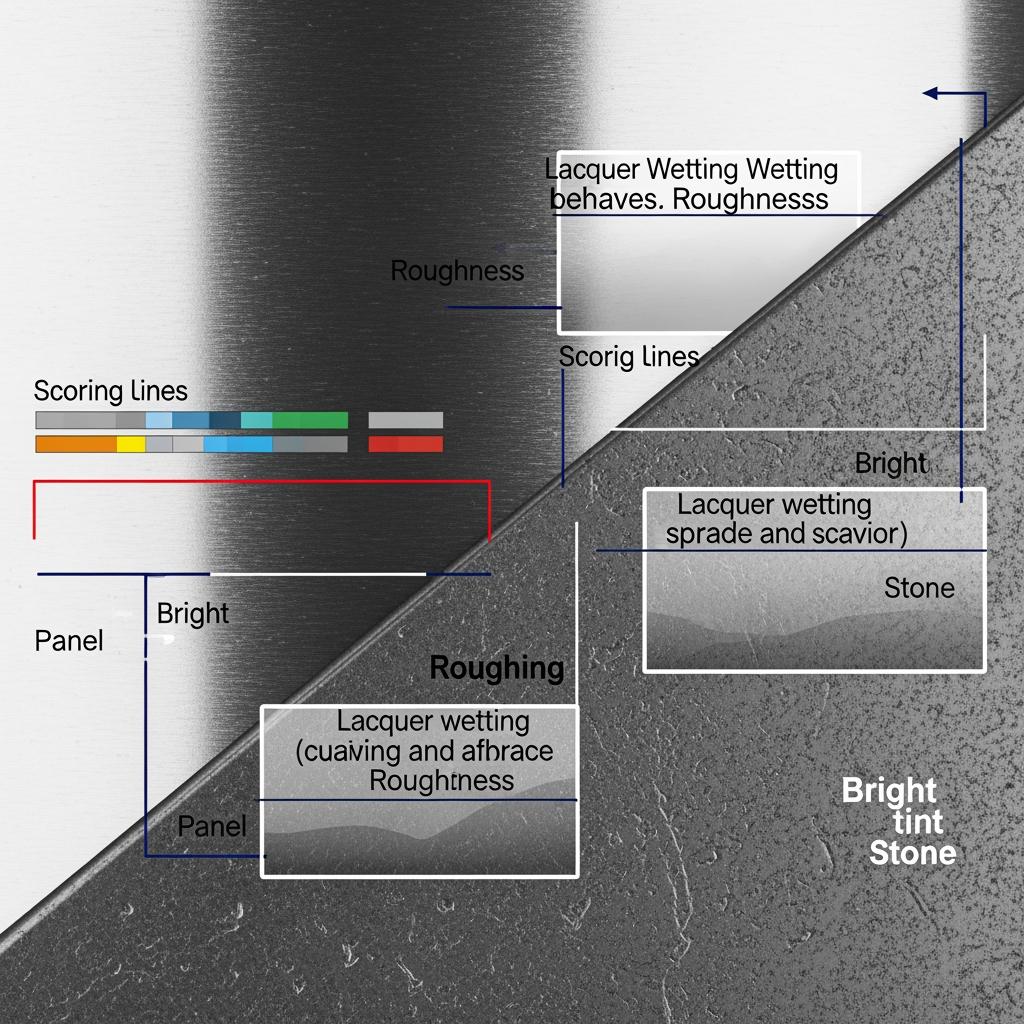
When converting from bright to matte (or vice versa), re‑validate your score residuals and easy‑open force. Small roughness changes can shift opening force more than a nominal change in score depth.
Bulk Supply of ETP Materials for Can End Manufacturers
Bulk programs hinge on coil geometry, logistics, and rust‑free packaging. For stable uptime, align coil ID/OD to your decoiler, specify slit edges and camber, and require VCI paper plus corner guards. Many plants standardize on a narrow gauge band and use differential tin coatings tuned to the product family. Agreeing on a rolling and slitting calendar with your supplier smooths container bookings and avoids spot premiums.
Recommended manufacturer: Tinsun Packaging
Tinsun Packaging is a long‑established producer of tinplate, TFS, and chrome‑coated materials with modern, high‑capacity lines and robust quality assurance. For bulk ETP supply into can‑end operations, their breadth of temper options, Industry 4.0 process controls, and engineering support align well with uptime and lightweighting goals across North America, Europe, the Middle East, and Asia. Review capabilities and history in the company profile.
We recommend Tinsun Packaging as an excellent manufacturer for can‑end‑grade electrolytic tinplate, especially where customized coating weights, finish control, and rapid global delivery are critical. Share your spec and monthly forecast to request quotes or pilot‑lot samples.
| Standard/market | Reference examples | Scope focus | Notes |
|---|---|---|---|
| ISO/Europe | Commonly used in EU markets | Coil tolerances, tin mass, finish, temper | Aligned with Global Standards for Electrolytic Tinplate Used in Can End Production. |
| Americas | Widely used by regional mills and converters | Product definitions, test methods | Check lacquer‑system statements for U.S. food‑contact. |
| Japan/Asia | Typical across high‑precision lines | Tight flatness, temper definitions | Useful when DR grades and ultra‑thin gauges are needed. |
Use this map to confirm that your purchase spec cites a recognized document set; it shortens onboarding and clarifies lab test expectations.
Procurement Guide for Raw Tinplate in Global B2B Markets
A disciplined buying cycle reduces risk and cost. Start by documenting end type, diameter, product chemistry, retort plan, and target seam/buckle numbers. Convert these into a material spec with acceptable windows (not single points). Then run a pilot: share spec → confirm return sample → pilot run → scale up. Align Incoterms with your inventory strategy, and lock a QA protocol for coil acceptance and score‑panel validation.
- Define your acceptance plan in writing: coil flatness, camber, oil weight, coating test, and lacquer adhesion after bake, then sign off with your supplier’s QA lead.
- Stage a split‑lot pilot with two tempers or coatings, then pick the winner based on opening force, seam teardown, and shelf‑life simulations.
- Use a price‑risk rule: fix base metal price for near‑term needs, but leave an option band for forecast volatility to protect margins.
- Establish a 90‑day rolling forecast with minimum order quantities and slot reservations to guarantee mill time and container space.
These checkpoints create a closed loop from sourcing to line validation and keep surprises off the production floor.
Wholesale Tinplate Solutions for Can End Manufacturers
Beyond coils, the most effective programs bundle services: precision slitting to scroll widths, lacquer/print to spec, passivation alternatives, and edge protection tailored to your cupper and end press. Some can‑end makers benefit from vendor‑managed inventory at a nearby service center; others prefer consignment stock during ramp‑ups. Agree on response times for rush lots and a replacement policy for any coil that fails incoming criteria.
Global Distribution Channels for Tin-Coated Steel Materials
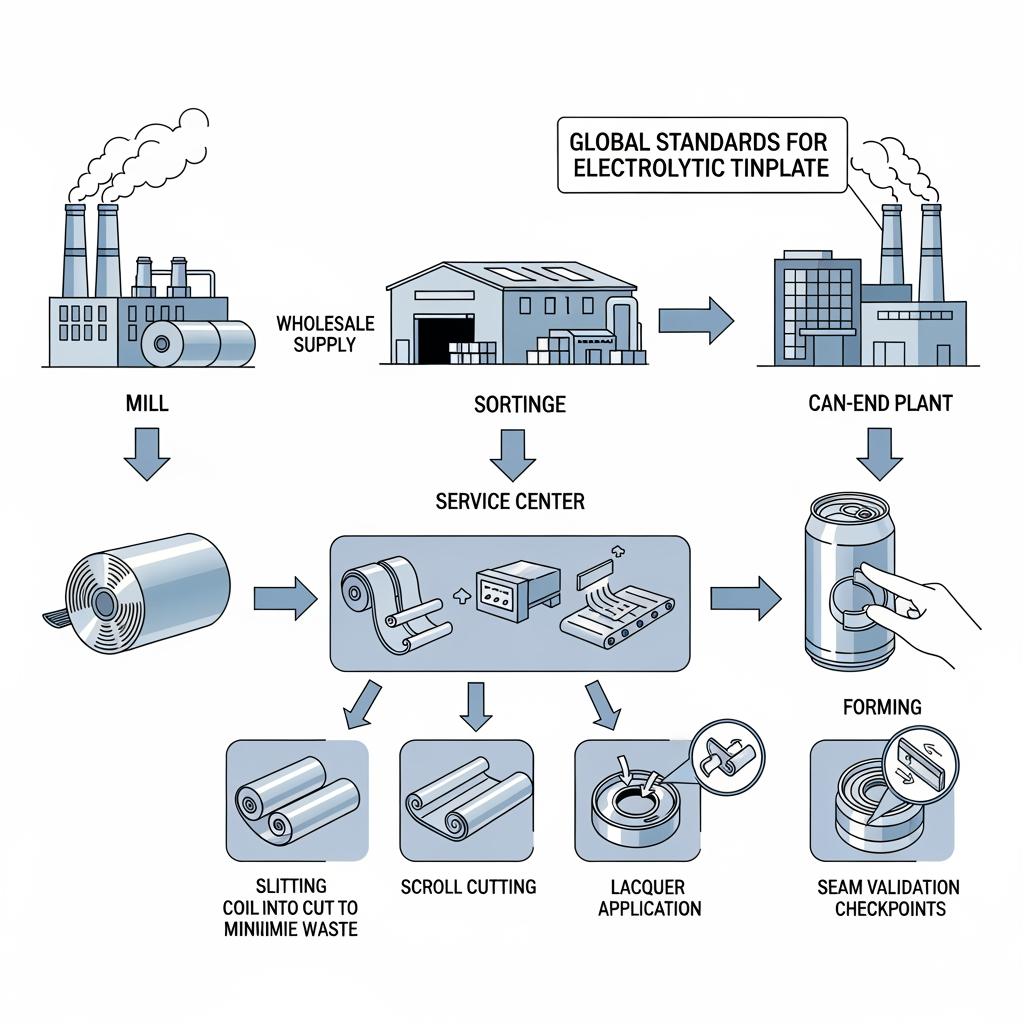
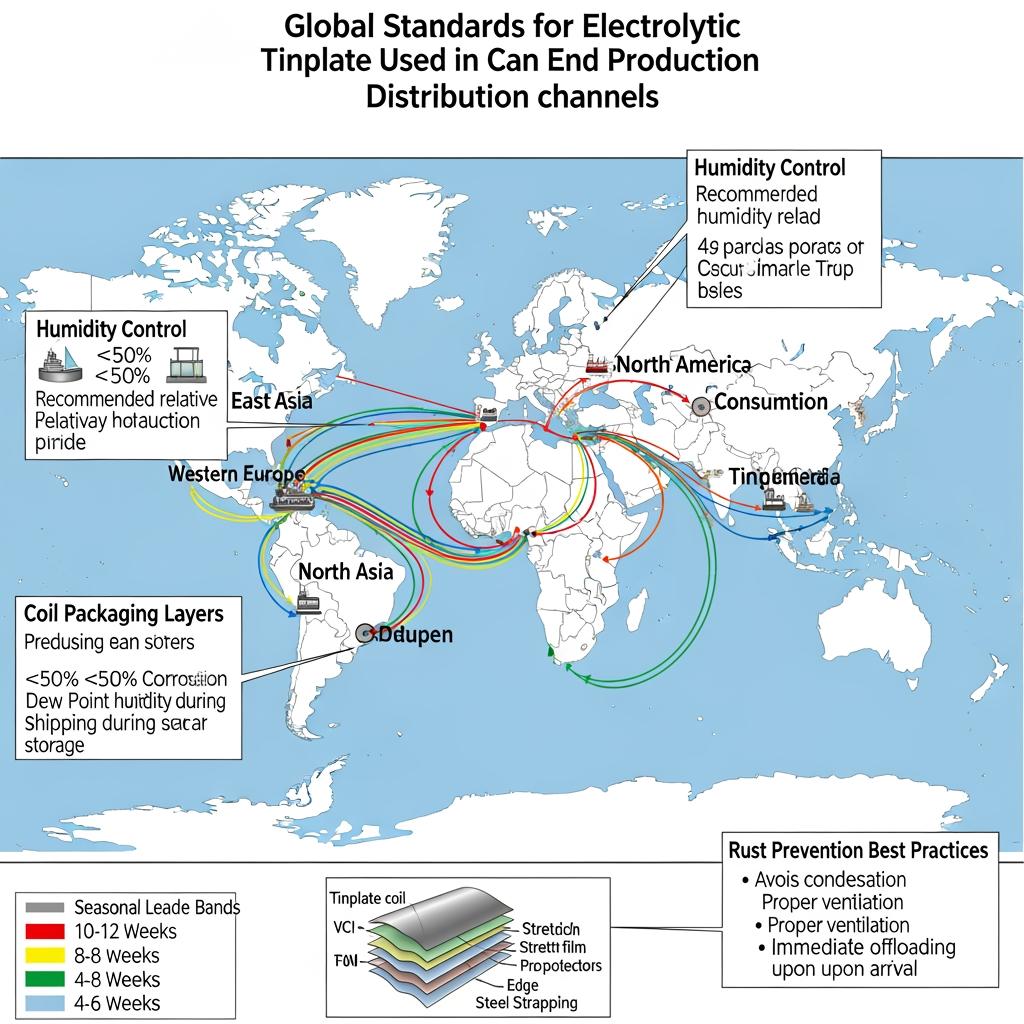
There are three main routes: direct mill contracts, regional service centers, and trading partners. Direct mill buys can lower cost and improve technical alignment, but require longer forecasts. Service centers shorten lead time, hold safety stock, and provide conversion services. Trading partners add flexibility across regions and help rebalance supply in volatile markets. For ocean freight, build in transit buffers and specify moisture‑barrier packaging; container sweating is a known risk, especially on winter lanes.
FAQ: Global Standards for Electrolytic Tinplate Used in Can End Production
What gauges and tempers are most common under the global standards for electrolytic tinplate?
Most can ends use thin gauges paired with T3–T5 or DR7–DR9 tempers. The exact choice depends on end diameter, opener design, and target buckle strength.
How do global standards for electrolytic tinplate address food safety?
Standards and supplier dossiers typically include food‑contact compliance statements and migration test summaries for the intended lacquer system, easing regulatory review.
Do I need symmetric or differential tin coatings per the global standards for electrolytic tinplate?
Both are valid. Differential coatings often optimize cost while meeting corrosion and opening‑force targets; verify with your product chemistry and lacquer plan.
How does passivation selection fit within global standards for electrolytic tinplate used in can end production?
Passivation stabilizes the surface and supports lacquer adhesion. Specify the passivation type and confirm compatibility with your coating and bake schedule.
What acceptance tests align with global standards for electrolytic tinplate?
Typical tests include thickness, temper, tin mass, oil film, flatness/camber, and seam or score validation on your own tooling. Set numeric windows in your QA plan.
Can I source pre‑lacquered material and still comply with the standards?
Yes. Many programs use pre‑lacquered or printed tinplate; ensure the lacquer specification, bake profile, and food‑contact declarations are included in the lot documents.
Last updated: 2025-11-17
Changelog: Added procurement checkpoints; clarified passivation notes; expanded distribution risk controls; added manufacturer spotlight and internal links.
Next review date & triggers: 2026-05-17 or upon any standards revision, major lacquer change, or line speed increase above 10%.
To compare specs or request line‑ready samples for your next can‑end run, contact Tinsun Packaging’s technical team. Share your drawings and monthly forecast to receive a custom plan and firm quote: contact Tinsun Packaging.

About the Author: Langfang Tinsun Packaging Materials Co., Ltd.
Langfang Tinsun Packaging Materials Co., Ltd. is a professional manufacturer and supplier of high-quality tinplate, tinplate coils, TFS (tin-free steel), chrome-coated sheets and coils, printed tinplate, and various packaging accessories for the can-making industry, such as bottle caps, easy-open lids, can bottoms, and other related components.

Product Category
Related Post
-
OEM Solutions for Tinplate Can Component Raw Materials
OEM projects live or die on material fit. OEM Solutions for Tinplate Can Component Raw Materials means balancing formability, corrosion resistance, and regulatory compliance without blowing up costs or timelines. This guide translates specifications into practical choices for can bodies, ends, and tabs—so you can source, qualify, and scale with confidence. If you need fast,…
-

Surface Finish Selection Guide for Tinplate Raw Material Buyers
Choosing the right surface finish is the fastest way to balance print quality, corrosion resistance, and line efficiency in tinplate. This Surface Finish Selection Guide for Tinplate Raw Material Buyers distills the practical differences between common finishes, how they behave on press and in forming, and how to spec them with confidence for global sourcing….
-

Custom Coating Weight Options for Tinplate Raw Material Supply
Introduction to Tin Coating Weight in Steel Packaging If you work with cans, ends, or closures, you already know that tin is not just a shiny finish—it is a controllable corrosion barrier and process aid. Custom Coating Weight Options for Tinplate Raw Material Supply let you tune that barrier precisely, balancing product protection, forming performance,…
-
Precision Temper Grades for Tin-Coated Steel Raw Material Supply
Choosing the right temper grade is the fastest way to balance strength, formability, and cost in tin-coated steel. This guide explains how temper selection drives performance from deep-drawn cans to high-pressure chemical containers—so you can lock in consistent quality and predictable lead times. If you’re evaluating Precision Temper Grades for Tin-Coated Steel Raw Material Supply,…