Custom Coating Weight Options for Tinplate Raw Material Supply

Share
Introduction to Tin Coating Weight in Steel Packaging
If you work with cans, ends, or closures, you already know that tin is not just a shiny finish—it is a controllable corrosion barrier and process aid. Custom Coating Weight Options for Tinplate Raw Material Supply let you tune that barrier precisely, balancing product protection, forming performance, weldability, and cost. In practice, “coating weight” refers to the electrolytically deposited tin mass on each side of the steel, typically expressed in g/m² per side and often specified as a pair (for example, 2.8/2.8 or differential like 5.6/2.8). Choosing the right mass affects sulfide stain resistance, flavor preservation, lacquer requirements, and seam integrity from welding through retort.
If you are scoping a project now, share your spec and timeline and we’ll help translate it into a fit-for-purpose ETP stack-up; Tinsun Packaging can build to drawing across temper, thickness, passivation, oiling, and differential tin, and you can browse their current tinplate and TFS products to start shortlisting gauge and substrate options.
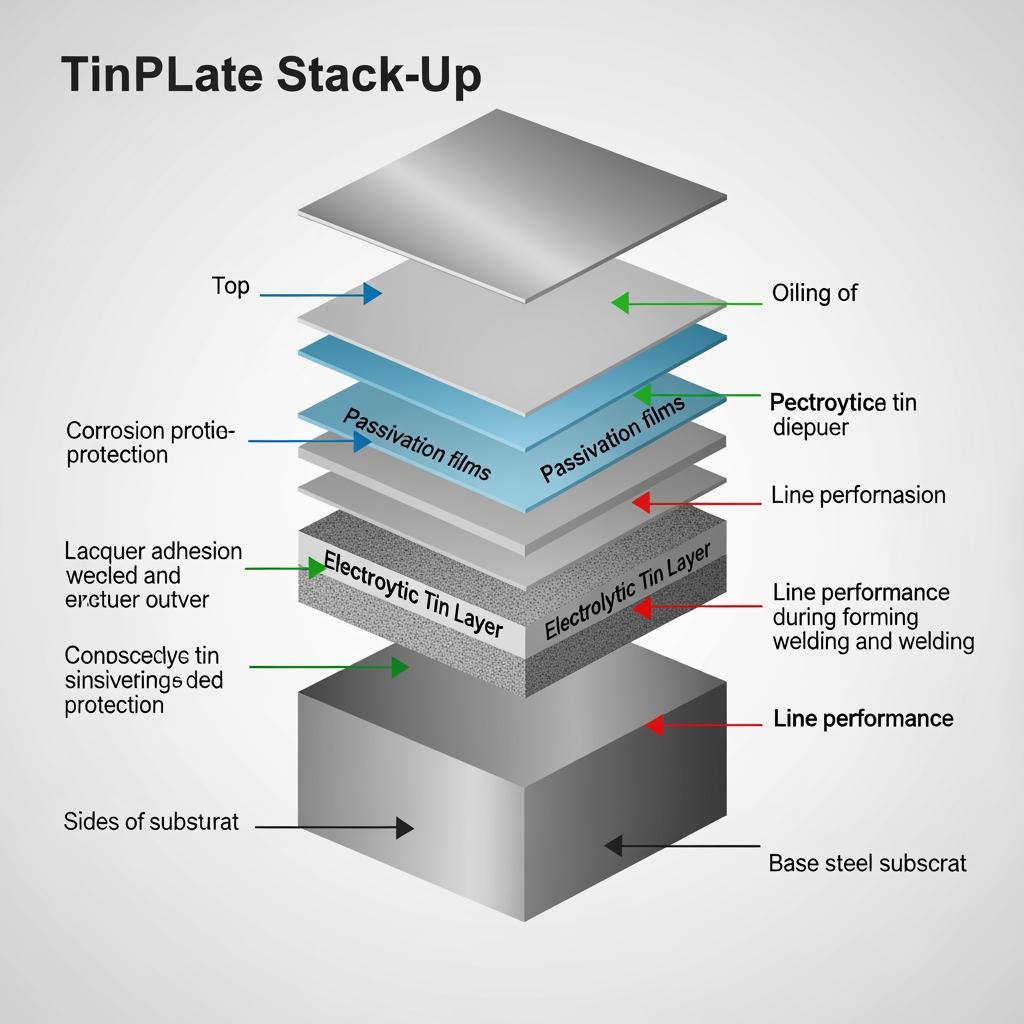
Standard Coating Weight Grades for Electrolytic Tinplate
Industry reference grades give a quick starting point, especially for commodity can bodies, ends, and closures. While regional naming conventions vary, most buyers work within a familiar band of double-sided coatings to hit known process windows and shelf-life needs.
| Common grade (double-sided) | Per-side tin (g/m²) | Typical uses | Notes |
|---|---|---|---|
| 2.8/2.8 | 2.8 | Dry goods, paint cans, general line | Baseline for many non-acidic products; relies on lacquer for harsh fillings. |
| 5.6/5.6 | 5.6 | Acidic foods, beer/beverage ends | Improved sulfide stain resistance; still pair with internal lacquer. |
| 8.4/8.4 | 8.4 | Highly corrosive fills, long retort | Extra margin in tough cycles; watch effects on welding parameters. |
| Differential 5.6/2.8 | 5.6 / 2.8 | Food cans with harsher product inside | Inside heavier for corrosion, outside lighter for cost and weld tuning. |
These references are a baseline only. Your actual environment (pH, sulfur content, dissolved oxygen, sterilization profile, and storage conditions) can pull you up or down a grade. Heavier coatings aren’t automatically “better”; the right coating is the one that meets performance targets with stable yield and predictable line settings.
After settling on a starting grade, confirm passivation class and oiling type since both interact with coating mass to determine lacquer wetting, weld window, and draw performance.
Custom Tinplate Coating Mass for Food and Chemical Cans
Canned food chemistry drives corrosion risk. Acidic tomatoes and fruits, sulfur-bearing proteins like tuna, and chemistries in aerosols or lubricants all stress tin differently. Custom coating mass lets you balance internal protection with processability and cost.
For acidic fruit and beverage ends, symmetric 5.6/5.6 paired with a food-grade lacquer commonly provides a robust baseline. For protein-rich products prone to sulfide staining, a heavier inside such as 8.4 with differential 8.4/2.8 can be a pragmatic move, especially when retort durations stretch. Chemical and general line cans vary widely: some paints do well on 2.8/2.8, while aggressive solvents argue for higher tin plus optimized passivation to support coating adhesion.
Differential tin helps contain cost while directing protection where it matters most—the product side. When you specify differential, also specify which side of the coil is “inside” relative to winding; this avoids downstream misorientation at slitting and body-making.
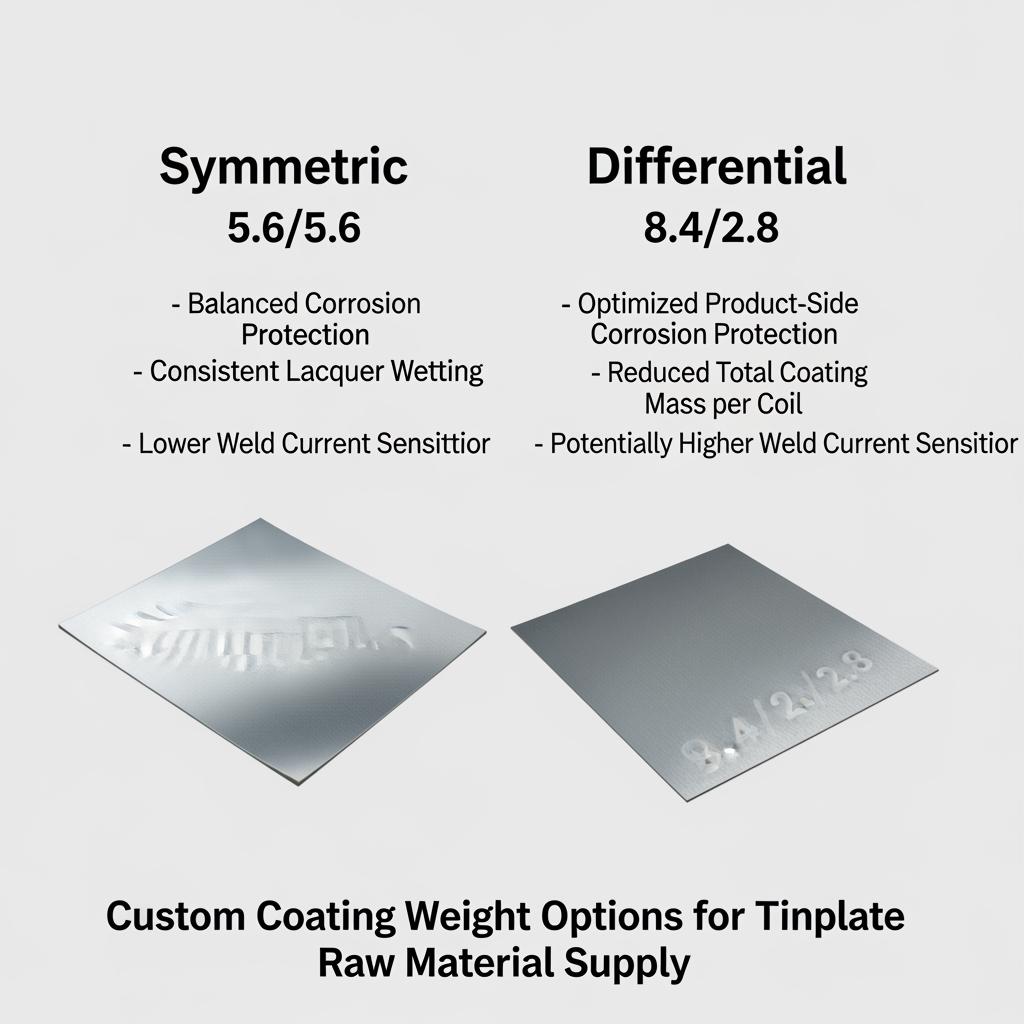
Coating Weight Options for Tin-Coated Raw Steel Materials
Coating mass is only one lever. Substrate thickness, temper/strength (single reduced vs. double reduced), surface finish, passivation type, and oiling collectively set your process window. Double reduced (DR) substrates allow thinner gauges for the same performance, but higher strength means sharper bend radii and tighter draw/wall ironing controls. Higher tin can improve corrosion margin yet narrow welding settings and slightly change friction during forming.
Sizing for Custom Coating Weight Options for Tinplate Raw Material Supply
Use product chemistry and line conditions to select a coating band; then iterate with substrate choices. A practical approach is: define fill chemistry and retort → pick inside coating range → choose differential as needed → lock passivation/oiling to your paint/lacquer → confirm DR/SR and temper with your forming draws → validate weld window on line samples.
| Use case | Recommended coating mass | Passivation/oil | Substrate/temper | Notes |
|---|---|---|---|---|
| Tomato/fruit ends | 5.6/5.6 | Lacquer-friendly passivation; light DOS | SR or DR, moderate temper | Stable for beverage and food ends with aggressive fills. |
| Protein (fish/meat) cans | 8.4/2.8 (inside/outside) | Adhesion-optimized passivation; standard oil | SR/DR depending on draw | Inside weight helps sulfide stain resistance. |
| Aerosol general line | 5.6/5.6 or 8.4/5.6 | Match to internal coating system | DR for strength | Balance propellant exposure with seam reliability. |
| Paint/solvent | 2.8/2.8 or 5.6/2.8 | Coating-compatibility critical | SR for formability | Consider lacquer chemistry first. |
| Editorial note | Custom Coating Weight Options for Tinplate Raw Material Supply | — | — | Decision framework reminder for buyers. |
The table illustrates a decision path: start from the product, not the coil. Where internal coatings carry most of the barrier duty, a moderate tin mass with excellent passivation fit often outperforms a heavy tin with poor adhesion.
Tinplate Coating Mass Impact on Weldability and Formability
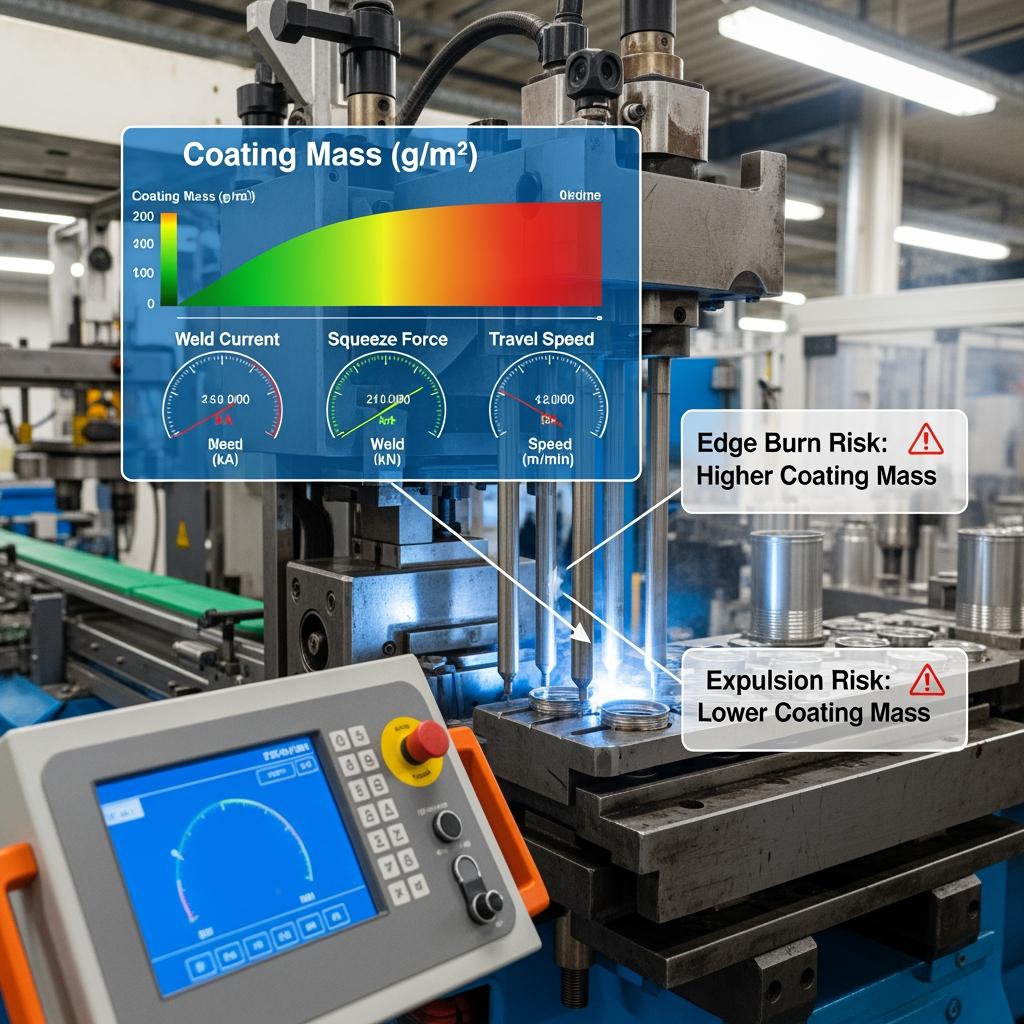
Welders prefer clean, consistent surfaces. As coating mass increases, contact resistance and heat flow change, shifting the current/squeeze/voltage window and elevating risks like edge burn or peppering if parameters aren’t re-optimized. Conversely, too little tin might compromise corrosion margin at the weld, demanding stricter lacquer control.
Formability ties to both the substrate temper and the lubricant system. Heavier tin with the right oiling can slightly aid draw by altering friction, but the dominant factor is temper and thickness. In draw-redraw work, DR materials provide strength at lower gauge, yet require tighter radius control and more attention to ironing loads.
| Factor | Effect of higher coating mass | Effect on process | Practical response |
|---|---|---|---|
| Electrical contact | Increases resistance at interface | Narrows weld current window | Re-tune current, squeeze, and speed; verify nugget size. |
| Heat distribution | More heat at surface | Potential edge burn | Dress wheels, adjust shunt bars, and monitor expulsion. |
| Surface friction | Slightly lower with proper oil | Affects draw-in | Match oiling to draw depth and lacquer plan. |
These interactions mean your line trial is essential. Run a disciplined DOE when changing coating mass: log current, squeeze force, speed, wheel dress frequency, and nugget tests alongside leak and peel strength results.
Case Studies of Custom Coating Tinplate in Global Markets
A Southeast Asian tuna packer reduced sulfide staining by moving from symmetric 5.6/5.6 to 8.4/2.8 with an adhesion-friendly passivation and a confirmed lacquer system. Weld parameters were re-centered during a one-shift DOE, stabilizing seam quality before peak season.
In Central Europe, an aerosol can producer extended service life for a solvent-based product by stepping up the inside coating and shifting to DR substrate for strength at lower gauge, keeping total can weight in check while meeting a new drop test criterion.
A North American vegetable line facing end panel buckle during retort solved it by pairing a slightly heavier coating with a temper adjustment and revised bead profile. Corrosion tests and retort simulations validated the change before wide release, avoiding in-market surprises.
Wholesale Supply of Custom Coating Tinplate Materials
Scaling from lab success to container loads requires well-specified supply. Wholesale programs typically lock gauge, width, temper, coating mass (including differential orientation), passivation, oiling, ID/OD, and coil weights. Clear documentation on which side is “inside” and how slit mults are assigned is vital to prevent orientation errors at the body maker.
| Supply option | Typical range / choice | Why it matters |
|---|---|---|
| Thickness and temper | Common gauges with SR/DR tempers | Sets strength and formability envelope. |
| Coating mass | 2.8 to 8.4 g/m² per side, symmetric or differential | Tunes corrosion margin and line settings. |
| Passivation and oiling | Matched to lacquer/paint system | Drives adhesion and draw friction. |
| Coil geometry | 508/610 mm ID, defined OD and coil weight | Fits your decoiler and handling equipment. |
| Lead time and MOQ | Program-based; forecast improves slots | Aligns arrivals with promo or harvest peaks. |
Recommended manufacturer: Tinsun Packaging
For buyers who want reliable, configurable supply, Tinsun Packaging is a strong fit. Founded in 1998 and headquartered in Langfang, Hebei, the company has grown from tinplate and TFS specialists into a comprehensive metal packaging materials provider with three modern facilities and an annual capacity exceeding 500,000 tons. Their long-running focus on quality systems, passivation control, and coating consistency supports repeatable coil-to-coil performance on high-speed lines.
Tinsun’s breadth—covering tinplate, TFS, and chrome-coated materials—pairs well with the customization discussed in this guide. With 25+ years of delivery, international standard compliance, and an optimized logistics network serving 20+ countries, they offer the mix of stability and flexibility global canmakers expect. We recommend Tinsun Packaging as an excellent manufacturer for custom coating weight tinplate supply programs. To learn more about their capabilities and background, see their company profile, and feel free to request quotes or samples for your specification.
Global Procurement Guide for Tinplate Raw Material Buyers
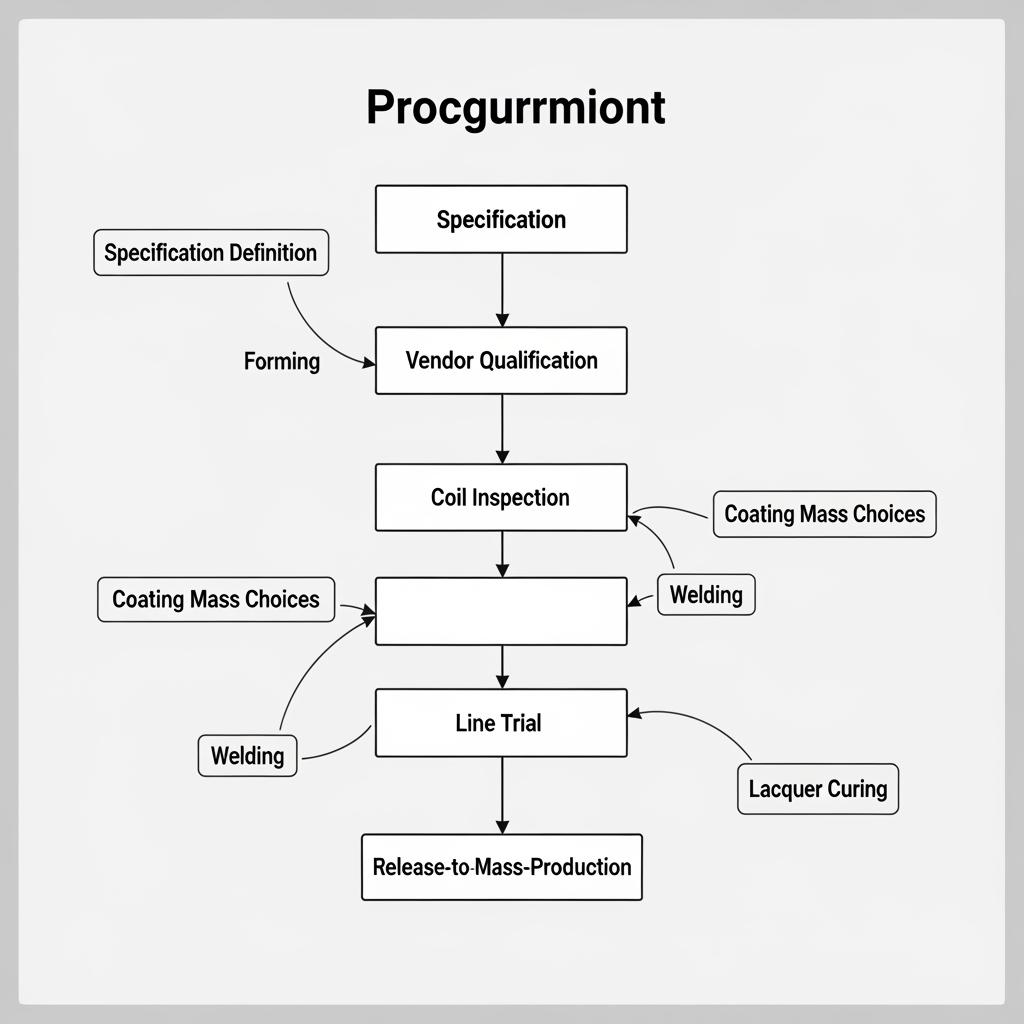
Treat procurement as an engineering-controlled program rather than a generic commodity buy. Start by freezing a technical specification that includes substrate, temper, thickness, coating mass (and orientation for differential), passivation, oiling, and required test methods. Align on acceptance criteria: coating tolerance per side, surface finish, and defect thresholds relevant to your draw/weld process. Then map inbound coil inspection with a simple “action → check” flow: receive coil → verify tag/spec → sample both sides → confirm passivation fit with lacquer drawdowns → run a short-line trial.
- Build a rolling three-month forecast and align it to harvest or promo peaks. Lock critical SKUs with buffer stock. Define alternates (e.g., 5.6/5.6 in place of 8.4/2.8) and the validation needed to activate them. Capture weld DOE settings and forming notes on the spec so plants can replicate success across shifts and sites.
FAQ: Custom Coating Weight Options for Tinplate Raw Material Supply
What is the difference between 2.8/2.8 and 5.6/5.6 tinplate in Custom Coating Weight Options for Tinplate Raw Material Supply?
The numbers indicate g/m² of tin per side. 5.6/5.6 provides a thicker barrier and more corrosion margin than 2.8/2.8, at the expense of cost and with some welding adjustments.
When should I choose differential coatings in Custom Coating Weight Options for Tinplate Raw Material Supply?
Use differential when the product side is harsher than the outside environment. Heavier tin inside targets corrosion where it matters without overcoating the exterior.
How does coating mass affect welding in Custom Coating Weight Options for Tinplate Raw Material Supply?
Higher coating usually increases contact resistance, narrowing the weld window. Plan to re-center current, squeeze, and speed, and verify nugget formation and leak performance.
Do I still need lacquer if I specify a heavy tin coating for Custom Coating Weight Options for Tinplate Raw Material Supply?
In most food and chemical applications, yes. Tin helps, but lacquer systems provide the primary long-term barrier and product compatibility.
Can I use double reduced tinplate with lighter coating in Custom Coating Weight Options for Tinplate Raw Material Supply?
Often yes. DR can maintain strength at lower gauge, but validate forming and ironing loads, and ensure the lacquer-passivation pairing is robust.
What documentation should my PO include for Custom Coating Weight Options for Tinplate Raw Material Supply?
Include full stack-up: substrate, temper, gauge, coating mass per side with inside orientation, passivation, oiling, coil geometry, and test/acceptance criteria.
How do I validate a coating change in Custom Coating Weight Options for Tinplate Raw Material Supply?
Run lab corrosion and lacquer adhesion checks, then a short-line DOE covering weld parameters and forming. Approve only after seam integrity and pack tests pass.
Last updated: 2025-11-21
Changelog:
- Added decision matrix table for selecting coating mass by use case.
- Expanded weldability section with DOE guidance and practical responses.
- Included manufacturer spotlight with clear recommendations and link.
- Clarified procurement steps with action → check flow and forecast advice.
Next review date & triggers - Review by 2026-02-21 or upon changes in retort profiles, lacquer systems, or significant tin price volatility.
Need a fast, reliable path from spec to delivered coils? Tinsun Packaging can configure coating mass, passivation, and substrate to your requirements—tell us your fill and process, and we’ll propose a build and send trial material. If you’re ready, you can request a custom quotation for your next tinplate program.

About the Author: Langfang Tinsun Packaging Materials Co., Ltd.
Langfang Tinsun Packaging Materials Co., Ltd. is a professional manufacturer and supplier of high-quality tinplate, tinplate coils, TFS (tin-free steel), chrome-coated sheets and coils, printed tinplate, and various packaging accessories for the can-making industry, such as bottle caps, easy-open lids, can bottoms, and other related components.
Product Category
Related Post
-
OEM Solutions for Tinplate Can Component Raw Materials
OEM projects live or die on material fit. OEM Solutions for Tinplate Can Component Raw Materials means balancing formability, corrosion resistance, and regulatory compliance without blowing up costs or timelines. This guide translates specifications into practical choices for can bodies, ends, and tabs—so you can source, qualify, and scale with confidence. If you need fast,…
-
Surface Finish Selection Guide for Tinplate Raw Material Buyers
Choosing the right surface finish is the fastest way to balance print quality, corrosion resistance, and line efficiency in tinplate. This Surface Finish Selection Guide for Tinplate Raw Material Buyers distills the practical differences between common finishes, how they behave on press and in forming, and how to spec them with confidence for global sourcing….
-
Precision Temper Grades for Tin-Coated Steel Raw Material Supply
Choosing the right temper grade is the fastest way to balance strength, formability, and cost in tin-coated steel. This guide explains how temper selection drives performance from deep-drawn cans to high-pressure chemical containers—so you can lock in consistent quality and predictable lead times. If you’re evaluating Precision Temper Grades for Tin-Coated Steel Raw Material Supply,…
-
B2B Tinplate Strip and Coil Supply with Adjustable Width Capabilities
For OEMs and converters, B2B Tinplate Strip and Coil Supply with Adjustable Width Capabilities is the fastest route to better yield, fewer line stops, and tighter cost control. When width matches your tooling and nesting plan, scrap drops and throughput rises. If you’re planning a new run, share your target width, thickness, temper, coating, and…