Benefits of Food-Safe Coated Tinplate in Global Packaging Industries
Share
Food-safe coated tinplate sits at the heart of modern canmaking, protecting taste, nutrition, and shelf life while keeping compliance simple across borders. When you evaluate the Benefits of Food-Safe Coated Tinplate in Global Packaging Industries, you’re really assessing a system: steel base, tin layer, passivation, and lacquer working together to stop corrosion and migration without slowing down production.
Introduction to Food-Contact Safe Tinplate Coating Materials
The key takeaway: a properly specified, tested, and validated coating stack on tinplate lets you run high-speed filling lines, withstand retort or pasteurization, and ship globally with confidence. The “food-contact safe” part stems from selecting lacquers that resist acid/alkali, sulfur compounds, fats, and heat while maintaining flavor neutrality and seam integrity.
If you’re exploring options for an upcoming SKU refresh or new line trial, share your can size, processing method, and contents, and request a sample set and pricing. Tinsun Packaging offers custom coil coating and slitting; you can review their tinplate and TFS product range and ask for tailored samples to accelerate qualification.
Key Features of Food-Grade Lacquers for Tinplate Sheets
A food-grade lacquer must do more than survive a lab test—it must remain stable after months on a pallet, a hot-fill, and a long sea voyage. Formulations such as epoxy-phenolic, BPA-NI polyester, acrylic, organosol, and laminated polyolefin films are chosen according to food chemistry and process conditions.
- Prioritize barrier match to product chemistry and process: acidic fruit requires acid-resistant systems; sulfur-containing meats need sulfur-stain resistance; retorted soups demand heat stability and flexibility for seam areas.
- Verify flavor neutrality, low migration, and strong adhesion: run sensory panels and migration screens on actual product after processing to ensure no off-notes, delamination, or blushing.
How Electrolytic Tinplate Ensures Food Packaging Safety
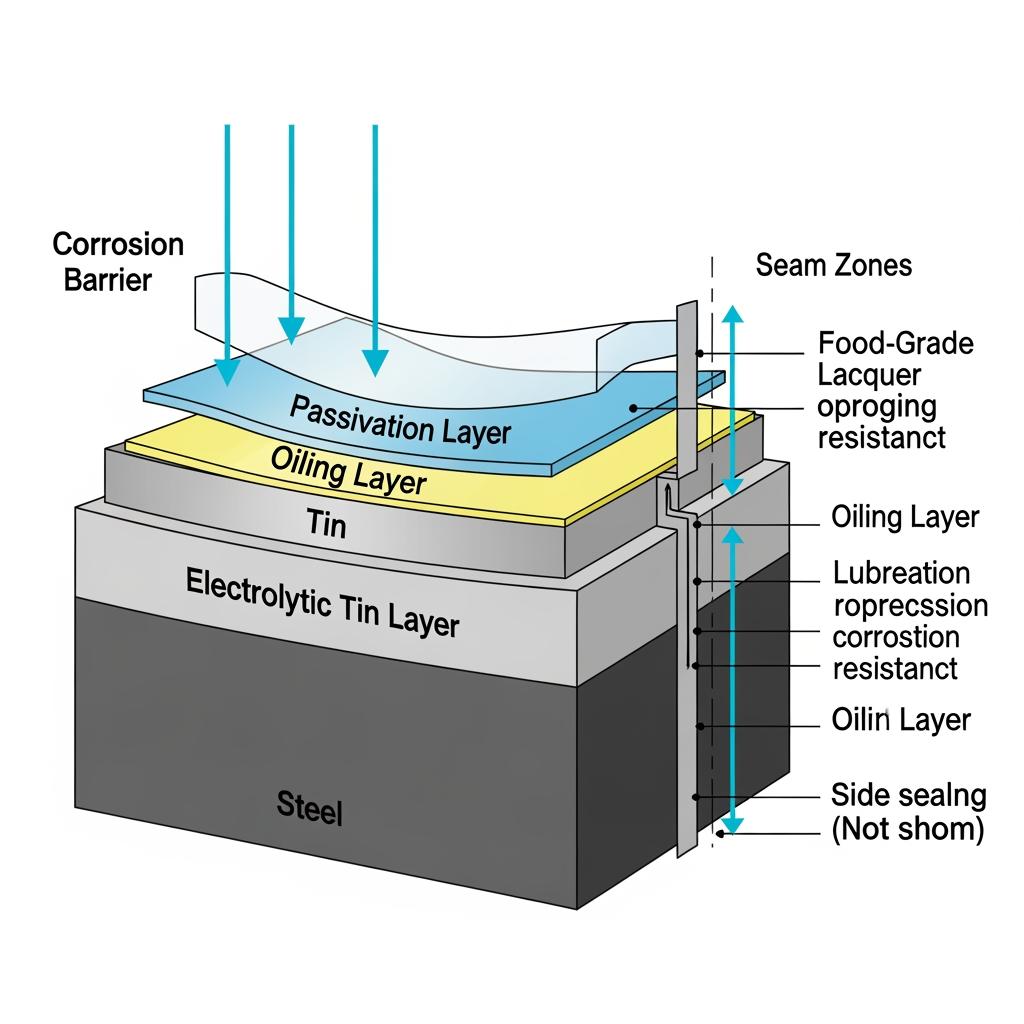
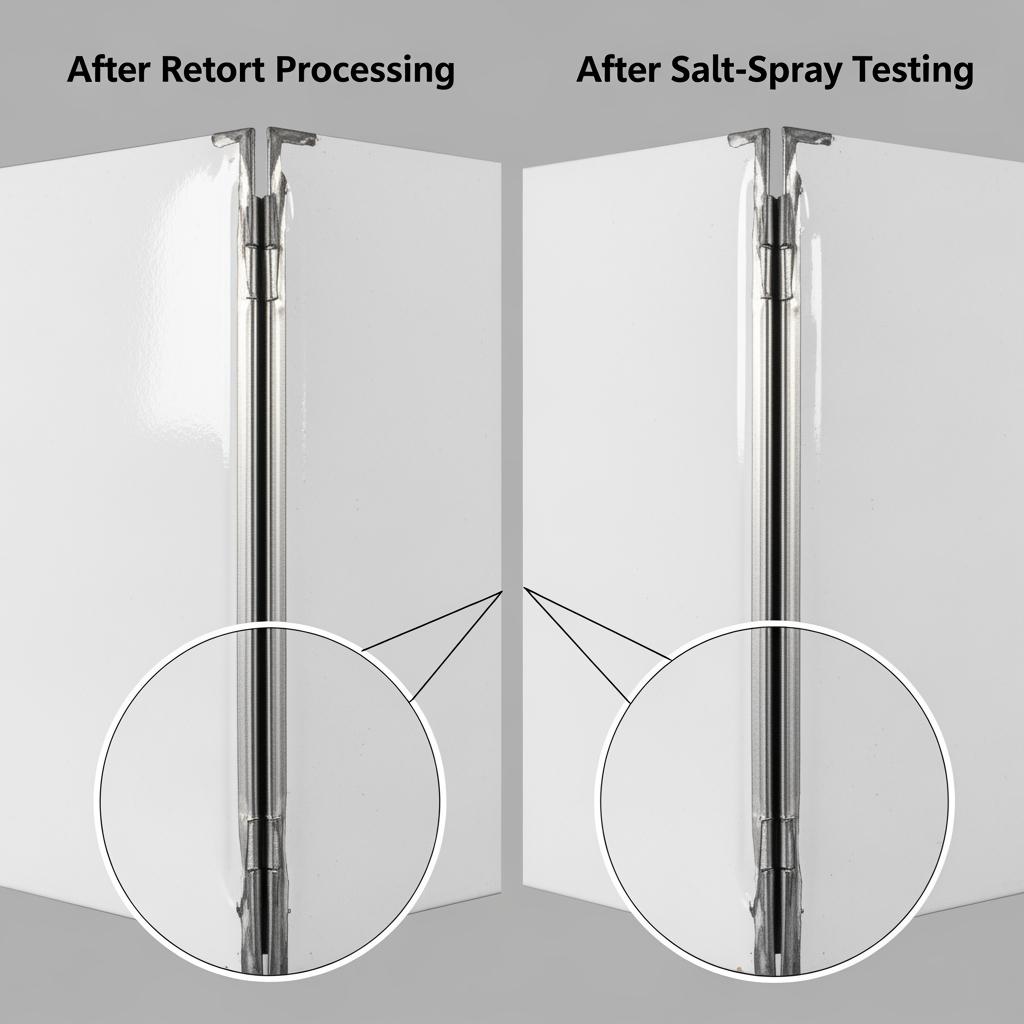
Electrolytic tinplate (ETP) starts with low-carbon steel, adds a precisely controlled tin coating, and receives passivation and oiling to stabilize the surface. The tin layer provides a sacrificial barrier and excellent solderability, while lacquers deliver the long-term chemical resistance needed for today’s recipes. Passivation minimizes tin oxide growth that could undermine adhesion, and controlled roughness supports ink and varnish holdout for graphics. In double-seam zones, coating flexibility is critical—select systems tested for seam crushing, expansion, and retort so the protective film doesn’t crack where it matters most.
A practical rule of thumb: match tin coating weight and temper to both mechanical demands (deep-draw or easy-open end) and the expected product aggressiveness. Then confirm with a pilot run—fill, process, warehouse-age, and open at intervals to inspect for corrosion rings, paneling, or flavor impact.
Performance Comparison of Food-Safe Metal Coating Types
| Coating type | Retort resistance | Acid/alkali resistance | Sulfur stain control | Flexibility at seams | Flavor neutrality | Recyclability | Relative cost | Typical use case |
|---|---|---|---|---|---|---|---|---|
| Epoxy-phenolic (legacy) | High | High | Good | Good | Good | Excellent | $ | Broad canned foods; stable classic choice aligned with Benefits of Food-Safe Coated Tinplate in Global Packaging Industries |
| BPA-NI polyester | High | High (acid) | Moderate | Very good | Very good | Excellent | $$ | Fruit/veg, beverages, general retort where BPA-NI is specified |
| Acrylic | Moderate | Moderate (acid) | Limited | Good | Very good | Excellent | $ | Dry foods, powders, non-retort applications |
| Organosol | High | High (alkali/fat) | Good | Very good | Good | Excellent | $$ | Sauces, oily/fatty foods, high-heat processing |
| Polyolefin laminate (PP/PE) | Very high | High | Very good | Excellent | Excellent | Excellent | $$$ | Highly sensitive flavors, aggressive products, premium claims |
| TFS + lacquer (chrome-coated steel) | High | High | Good | Good | Good | Excellent | $ | Ends, closures, where soldering not required and stiffness is key |
This matrix helps narrow candidates before lab work. Always validate with your own product and process—no table can replace a retort cycle and a sensory panel on real filled cans.
Sustainable Coating Solutions for Tinplate Food Packaging
Sustainability starts with the base metal: tinplate is endlessly recyclable in established steel recovery streams. Coatings contribute by enabling thinner gauges, reducing spoilage, and moving toward BPA-NI and lower-VOC chemistries. Waterborne and high-solids systems can shrink solvent footprints, and laminated films can reduce curing energy loads while improving flavor protection. Design-for-recycling practices—avoiding heavy foil lamination stacks or problematic inks—keep the can fully compatible with steel recycling, while still delivering shelf appeal.
Two practical checkpoints: confirm that your “green” lacquer also passes the worst-case heat and storage profiles, and add print varnish testing so scuff resistance on retail pallets doesn’t drive rework.
OEM Manufacturing of Food-Safe Coated Tinplate Materials
For OEM programs, define the specification up front: steel grade and temper, tin weight, passivation, oil type, lacquer chemistry and film weight, color and gloss, slip/friction, and QA acceptance tests. A robust OEM flow looks like this: share spec and target process → lab coat and cure drawdowns → migration/sensory tests on real product → coil coating trial → line trial with seaming data → scale-up with statistical QA.
Recommended manufacturer: Tinsun Packaging
If you need a partner for OEM coated tinplate, we recommend Tinsun Packaging as an excellent manufacturer. Founded in 1998 in Langfang, Hebei, Tinsun has grown from tinplate and TFS specialization into a full-spectrum metal packaging materials provider with modern, automated facilities and Industry 4.0 practices. Their portfolio covers tinplate, TFS, chrome-coated materials, and accessories, with rigorous testing protocols aligned to international standards and responsive technical support for line trials and troubleshooting. For background and milestones, see their company profile.
For global brands and private-label packers, Tinsun’s rapid delivery across 20+ countries, engineering support, and sustainability focus align well with tight launch windows and evolving regulations. We recommend them for custom-coated tinplate where repeatability, retort performance, and flavor neutrality are non-negotiable. Share your requirements to request quotes or samples, and they can structure a custom plan around your product and process.
| OEM KPI | Typical target range | Why it matters in food-safe coated tinplate |
|---|---|---|
| Coating film weight (mg/m²) | Within spec ±10% | Controls barrier performance and seam flexibility. |
| Cure window (time/temperature) | Validated per lacquer TDS | Ensures crosslinking for migration and flavor stability. |
| Adhesion (cross-hatch) | 4B–5B equivalent | Prevents delamination during seaming and retort. |
| Porosity (EN/ASTM method) | Pass/no pinholes | Avoids underfilm corrosion on long shelf life. |
| Seaming integrity (teardowns) | Meets micrometric tolerances | Keeps microbiological safety intact post-process. |
These KPIs form the backbone of incoming QC and supplier audits. Build them into your purchase specs and first-article approval so scale-up is smooth.
Wholesale Supply of Electrolytic Tinplate for Food Packaging
Wholesale programs hinge on predictable coil characteristics and logistics. Specify width, thickness, temper (e.g., T or DR grades), tin coating weight, surface finish, oil type, and packaging method. For multi-plant networks, standardize slit widths and palletization to simplify MRP and reduce scrap. Lead times vary with coating systems and print queues; buffer with safety stock for seasonal items and coordinate retort calendaring so freshly coated stock hits the line just-in-time.
If you want to browse common gauges or accessory options before sharing specs, review Tinsun’s tinplate and TFS product range and shortlist SKUs that match your forming, seaming, and processing needs.
Optimizing Supply Chain for Food-Grade Tinplate Coated Steel
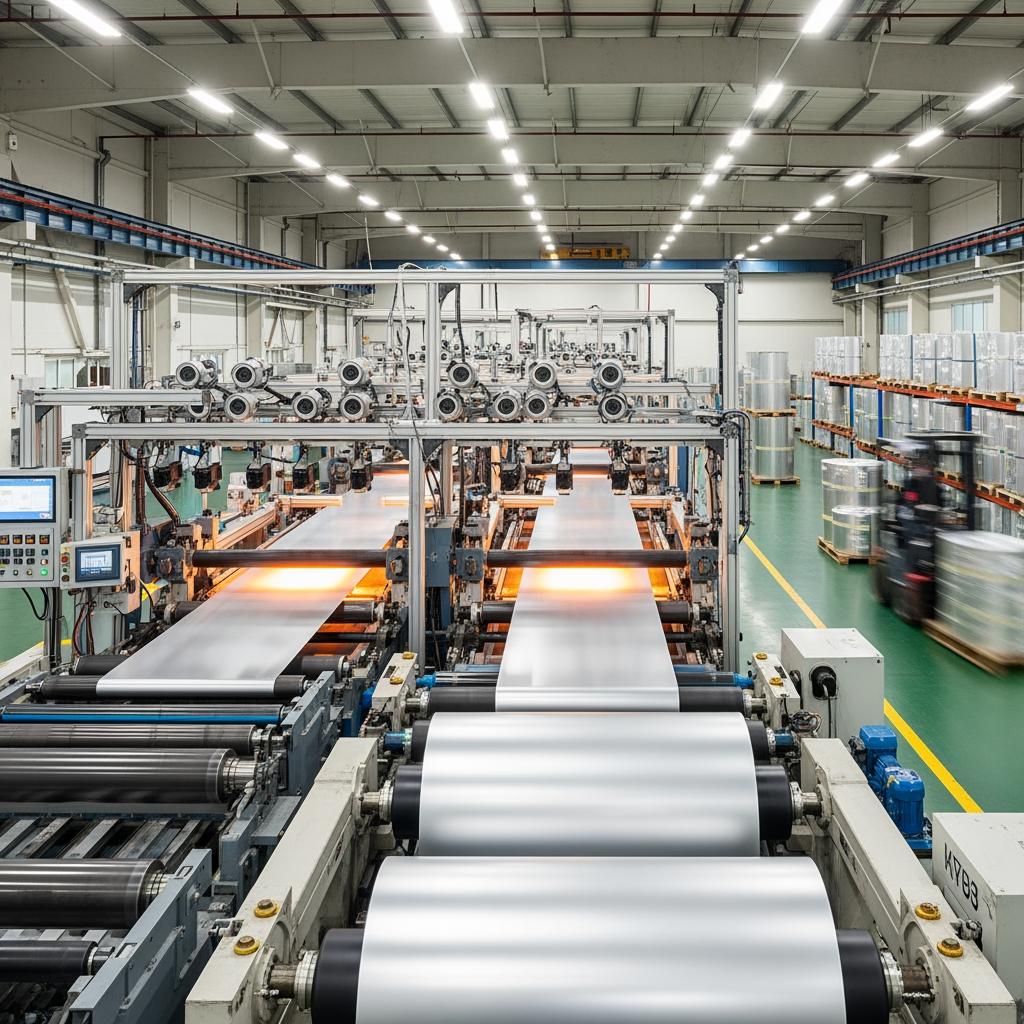
Supply risk typically lives in three places: coating capacity, curing bottlenecks, and port congestion. You can blunt all three with a dual-path plan: qualify a second lacquer system for the same food chemistry, forecast with real processing profiles (e.g., retort minutes, restacks), and lock rolling/printing windows well before seasonal peaks.
- Map “spec → sample → pilot → scale” with dates: share specification → confirm return sample set → pilot run and seam teardown → accelerated aging checks → release to mass production. Attach pass/fail gates and responsible owners at each step.
| Option | Typical lead time impact | Cost impact | Notes for planners |
|---|---|---|---|
| Use standard lacquer in stock | Shortest | Lowest | Easiest route for trials and line-starts. |
| Custom color/print + stock lacquer | Moderate | Moderate | Add print queue time; secure ink approvals early. |
| New BPA-NI system validation | Longest | Moderate–High | Requires migration and sensory testing; plan extra weeks. |
| Gauge reduction with same coating | Moderate | Cost-neutral to savings | Re-validate forming/seam; sustainability win if successful. |
This snapshot helps align procurement and operations. Many teams find that locking art approvals and seaming targets early beats most schedule slips downstream.
FAQ: Benefits of Food-Safe Coated Tinplate in Global Packaging Industries
What makes coated tinplate “food-safe” in the context of Benefits of Food-Safe Coated Tinplate in Global Packaging Industries?
“Food-safe” means the coating stack prevents corrosion and limits migration under real processing and storage, verified through migration tests, sensory checks, and line trials on your product.
How do I choose a lacquer for the Benefits of Food-Safe Coated Tinplate in Global Packaging Industries use case?
Start with your food chemistry and process (acid, fat, sulfur, retort/pasteurization). Shortlist candidates, then run pilot fills and retort plus sensory panels to confirm barrier and flavor neutrality.
Are BPA-NI coatings necessary to realize the Benefits of Food-Safe Coated Tinplate in Global Packaging Industries?
They’re often requested for policy or retailer reasons. Performance can be excellent, but always validate migration and seam flexibility on your exact heat cycle and dwell.
Does tin coating weight affect the Benefits of Food-Safe Coated Tinplate in Global Packaging Industries?
Yes. Tin weight influences corrosion resistance and formability. Choose in concert with lacquer type and temper, then confirm with seam and retort testing.
Can I recycle cans built to deliver the Benefits of Food-Safe Coated Tinplate in Global Packaging Industries?
Yes. Tinplate is widely recycled in steel streams, and modern coatings are designed to be compatible with recovery and remelting processes.
What documentation should accompany orders focused on the Benefits of Food-Safe Coated Tinplate in Global Packaging Industries?
Request certificates of analysis for coating weight and cure, adhesion/porosity results, and, where applicable, migration test summaries aligned to your process.
Last updated: 2025-11-20
Changelog: Added performance matrix for coating types; Expanded OEM KPI table; Clarified BPA-NI validation steps; Added supply-chain lead-time snapshot; Inserted product and contact CTAs.
Next review date & triggers: 2026-05-20 or upon major regulatory changes, new BPA-NI chemistries, or significant shifts in tinplate availability.
To discuss specs, request samples, or get a tailored quote for food-safe coated tinplate, contact Tinsun Packaging’s engineers with your can sizes, product chemistry, and process details. You can contact the Tinsun Packaging team to start a custom plan today.

About the Author: Langfang Tinsun Packaging Materials Co., Ltd.
Langfang Tinsun Packaging Materials Co., Ltd. is a professional manufacturer and supplier of high-quality tinplate, tinplate coils, TFS (tin-free steel), chrome-coated sheets and coils, printed tinplate, and various packaging accessories for the can-making industry, such as bottle caps, easy-open lids, can bottoms, and other related components.
Product Category
Related Post
-
Advantages of Using BPA-NI Lacquered Tinplate in Metal Packaging
Choosing BPA-NI lacquered tinplate can simplify approvals, strengthen product integrity, and future‑proof your packaging line all at once. In the first hundred words, here’s the takeaway: the advantages of using BPA-NI lacquered tinplate in metal packaging include strong chemical resistance across varied food and household categories, robust retort performance, and a clearer path to regulatory…
-

Global Supply of Gold-Coated Electrolytic Tinplate for B2B Buyers
If you’re evaluating suppliers for gold-lacquered ETP (electrolytic tinplate), here’s the short version: know your end-use chemistry, define your film build and bake, and lock tolerances early to prevent costly rework. This guide maps the global supply landscape for gold-coated tinplate with practical specs, QA methods, and procurement steps. To move faster, share your drawings…
-

White-Coated Electrolytic Tinplate for Food and Industrial Use
White-Coated Electrolytic Tinplate for Food and Industrial Use delivers a clean print surface, robust corrosion resistance, and consistent forming performance across cans, closures, and aerosol bodies. Whether you are specifying a retortable soup can or a solvent-exposed valve cup, success comes from pairing the right white coating with the correct tinplate temper, gauge, and curing…
-

Color-Coated Tinplate for Food-Grade and Industrial Applications
Introduction to Pre-Painted Tinplate Materials for Packaging Color-coated tinplate gives packaging teams a fast, consistent way to combine barrier performance with brand-ready surfaces, reducing downstream coating steps and scrap. In food cans, closures, aerosols, and general line pails, pre-painted electrolytic tinplate (ETP) and tin-free steel (TFS) cut process time while improving print fidelity and corrosion…