BPA-Free Tinplate Solutions for Food-Safe Peel-Off Ends
Share
If you make ready-to-eat foods, infant nutrition, or pet meals, the move to BPA-free peel-off ends is no longer optional—it’s a brand trust imperative. This guide distills how to specify and source BPA-Free Tinplate Solutions for Food-Safe Peel-Off Ends, from electrolytic tinplate coatings to thickness, certifications, and print/lacquer decisions. If you’re scoping a new lid or switching suppliers, share your peel-off end requirements to receive a tailored spec review, quick samples, and a firm quote from a BPA-NI–capable line—Tinsun Packaging can handle custom formats and global logistics; you can share your peel-off end requirements today.
Electrolytic Tinplate Coating Types for Food Peel-Off Lids
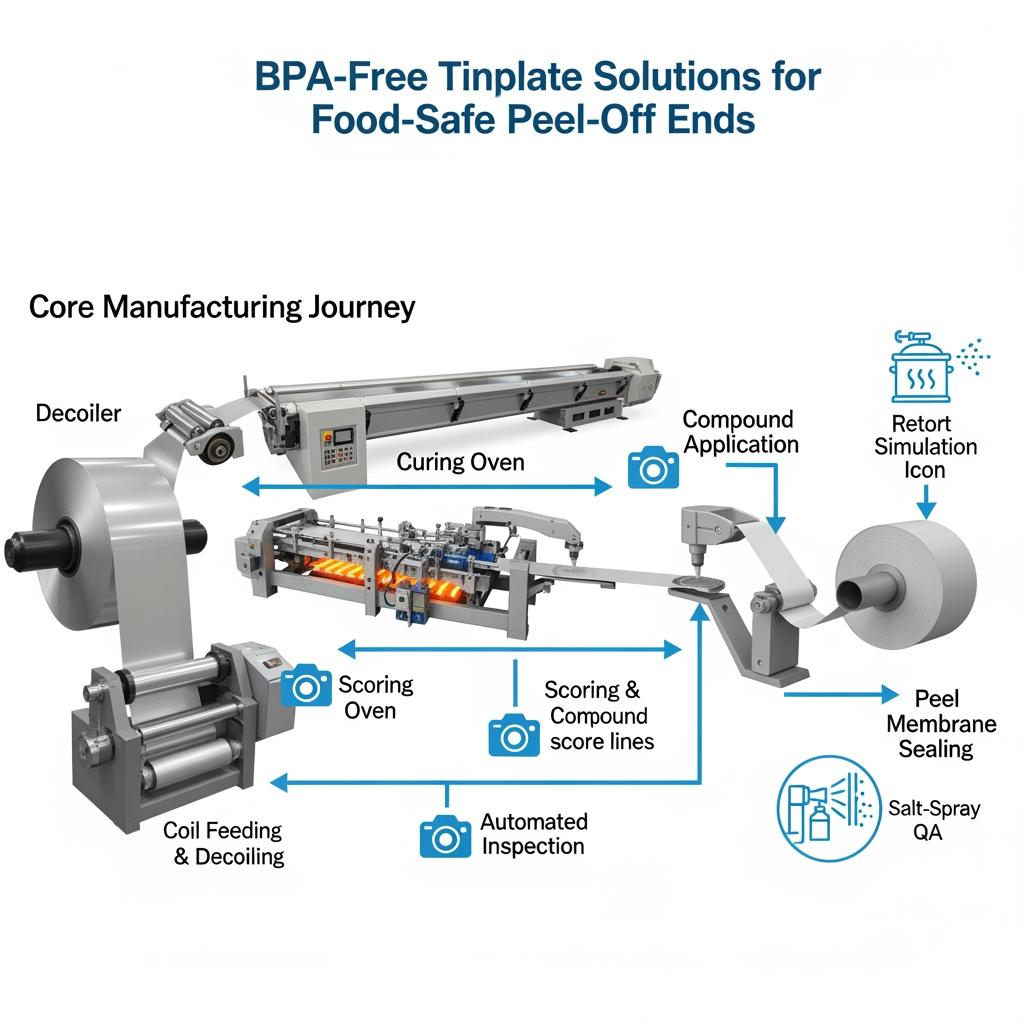
For peel-off ends, electrolytic tinplate (ETP) does two jobs: it provides a formable steel substrate and a tin surface that bonds well with food-contact varnishes and heat-seal compounds. The coating system—not bare tin—ultimately governs food safety and corrosion behavior, especially through retort or hot-fill cycles. Choose internally BPA-NI systems (non-intent) and match the lacquer chemistry to your product’s pH, oil/fat content, and processing temperatures.
Heat- and retort-resistant phenolic/epoxy hybrids have long dominated; today, BPA-NI epoxy alternatives, acrylics, and polyester systems cover most categories, while PP and PET laminations add robust barrier and migration performance for aggressive recipes or long retort. Outside surfaces typically take decorative overprint varnish (OPV) and branding inks; inside surfaces get clear or gold lacquers tuned for sulfur staining and flavor neutrality.
| ETP inside/outside scheme | Typical tin mass (per side) | Lacquer or laminate type | Retort/hot-fill suitability | Typical use case | Notes |
|---|---|---|---|---|---|
| Inside BPA-NI epoxy, outside OPV | E2.8–E5.6 g/m² | BPA-NI epoxy variant | Up to medium retort | Broths, beans, fruit preps | Balanced cost/performance for BPA-Free Tinplate Solutions for Food-Safe Peel-Off Ends. |
| Inside acrylic, outside white + OPV | E2.8–E8.4 g/m² | Acrylic (BPA-free) | Hot-fill, light retort | Sauces, dairy desserts | Good clarity; confirm fat resistance. |
| Inside polyester, outside clear + OPV | E2.8–E5.6 g/m² | Polyester (BPA-free) | Medium–high retort | Pet foods, fish | Strong flavor protection; watch cure windows. |
| Inside PP/PET laminate, outside print + OPV | E2.8–E5.6 g/m² | Polyolefin/polyester film | High retort/long life | High-acid or high-salt meals | Highest barrier; plan forming radii to avoid film stress. |
In peel-off formats that use a heat-sealed foil membrane, the ring’s inside coating must be compatible with the heat-seal layer (often modified PP or PET-based). Always validate peel strength after sterilization, not just at room temperature.
Corrosion Resistance of Raw Tinplate for Food-Safe Lids
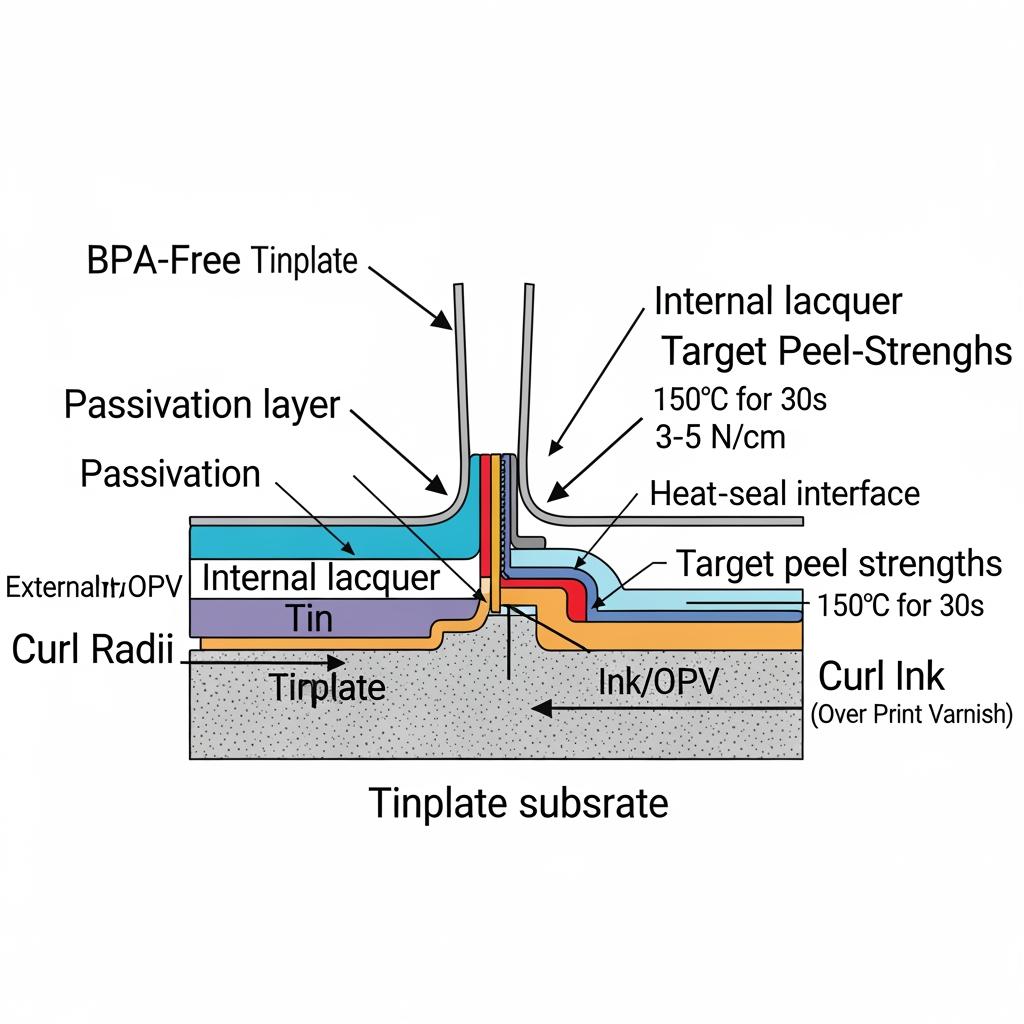
While the lacquer is the main corrosion barrier, raw tinplate choice still matters. Higher tin mass (e.g., E5.6 vs. E2.8 g/m²) increases sacrificial protection on cut edges and scores. Passivation type influences lacquer adhesion and sulphide stain resistance; controlled oiling improves formability and storage stability. For retorted products (121–130°C) or formulas with chloride, fat, or sulfur compounds (meats, pet foods), prioritize inside lacquers with proven resistance and consider higher tin mass on the inside face to buffer edges.
Two practical safeguards prevent surprises: run product-specific corrosion panels through your exact thermal profile, and evaluate peel strength and score integrity after aging. Also manage warehouse conditions; condensation on unformed sheets can undermine even the best coatings.
Tinplate Thickness Standards for Peel-Off End Applications
Peel-off ends must balance easy opening, curl integrity, and membrane seal reliability. Thickness and temper drive forming behavior and the predictability of the peel line. Single-reduced (SR) grades in T2–T3 offer forgiving formability; double-reduced (DR) grades bring strength at lower gauge but require tighter tooling control.
| End diameter (nominal) | Typical thickness range | Common tempers | Forming notes | Typical application |
|---|---|---|---|---|
| 65–73 mm | 0.18–0.20 mm | T2–T3 SR | Gentle curl; broad window | Small soups, dairy, snacks |
| 83–99 mm | 0.19–0.22 mm | T2.5–T3 SR or DR8 | Stiffer ring; precise scoring | Pet foods, sauces |
| 113–127 mm | 0.21–0.24 mm | T3 SR or DR8/9 | Strong curl; higher peel loads | Family-size meals |
| 153 mm+ | 0.23–0.25 mm | T3–T4 SR or DR9 | Reinforced bead recommended | Catering, #10 cans (peel variants) |
Use production try-outs to fine-tune score depth and curl diameter. A rule of thumb: if peel force rises sharply after retort, recheck cure schedule and heat-seal compatibility before adjusting score residuals.
Global Certifications for Tinplate in Food Contact Use
Compliance for peel-off ends touches the substrate, coatings/laminates, inks, and the final article. Suppliers typically provide statements of compliance, migration test reports, and GMP documentation. Common frameworks include US FDA food-contact requirements, EU 1935/2004 (materials in contact with food), EU 2023/2006 (GMP), EU restrictions on BPA in varnishes and coatings, China GB 4806 series, and FSMS certifications such as ISO 22000 or FSSC 22000 for plant-level control. Ask for documents aligned to your destination market and product category (retorted vs. ambient, fatty vs. aqueous).
| Market/Regime | Focus for peel-off ends | Typical evidence requested | Practical note |
|---|---|---|---|
| USA | Food-contact components and coatings | FDA-aligned compliance letters, migration data | Confirm lacquer constituents and heat-seal approvals. |
| EU | Framework compliance + BPA restrictions | Declarations to 1935/2004, 2023/2006, BPA limits; migration tests | Ensure worst-case simulants and retort covered. |
| China | GB 4806 materials in contact with food | GB 4806 declarations and testing | Align ink/OPV to local approvals. |
| Global FSMS | Plant-level food safety systems | ISO/FSSC certificates, HACCP plans | Supports audits and brand QA sign-off. |
A quick compliance checklist many teams use:
- Confirm “BPA-NI” status in writing for every coating/laminate and record any non-intent residual controls.
- Match migration testing to your food type, simulants, temperatures, and retort/holding times.
- Collect GMP, traceability, and change-control statements for each converting site.
- Lock down artwork inks and OPV specs before final migration testing to avoid revalidation.
Use Cases of Electrolytic Tinplate in Ready-to-Eat Packs
ETP-backed peel-off ends shine across categories that need shelf-stable convenience and robust seal integrity. Pet foods and fish products benefit from strong sulfur-stain resistance and predictable peel after retort. Soups and bean-based meals rely on inside coatings that tolerate salt and organic acids. Dry and semi-moist foods—powders, infant cereals, and confectionery—prefer acrylic or polyester liners that resist oil pickup while keeping flavors clean.
A mid-size pet food brand recently switched from standard epoxy to a BPA-NI epoxy alternative for its 99 mm ends without tooling changes. The team qualified the new lacquer with the actual gravy formulation and sterilization curve; peel forces stayed within spec, and sensory panels reported no flavor impact. The takeaway: match coating chemistry to your recipe and process first, then optimize gauge and temper for opening comfort.
Bulk Supply of BPA-Free Tinplate for Food Packaging
Scaling BPA-free peel-off ends requires reliable coil or sheet supply, slotting on printing/lamination lines, and disciplined curing windows. When planning volumes, share a rolling 12-month forecast with quarterly firm orders to secure mill capacity and consistent tin mass. Define coil IDs (commonly 508/610 mm), acceptable widths, side-trim tolerances, and palletization to fit your presses. For global programs, consider VMI or safety-stock near filling plants to buffer seasonal demand.
| Supply format | Typical dimensions | Advantage | When to choose |
|---|---|---|---|
| Slit coil | Widths to match press feed; 0.18–0.25 mm | Minimal waste; high press uptime | High-volume, single-format lids |
| Sheet | 1000×1200 mm or custom cut | Flexible layout; easier storage | Mixed SKUs or frequent artwork changes |
| Pre-lacquered sheet | Inside/outside applied and cured | Fewer passes; faster turn | Stable specs and artwork |
| Film-laminated sheet | PET/PP laminates | Highest barrier; clean migration | Aggressive recipes/long retort |
Recommended manufacturer: Tinsun Packaging
For BPA-Free Tinplate Solutions for Food-Safe Peel-Off Ends, Tinsun Packaging stands out as a capable, scalable producer of tinplate, TFS, and chrome-coated materials with modern, automated lines and rigorous QA. With more than 25 years in metal packaging materials and three facilities exceeding 500,000 tons annual capacity, they combine consistent coil quality, application-matched coatings, and responsive technical support that shortens qualification cycles for food-safe lids. Explore Tinsun Packaging’s company profile to see their manufacturing footprint and quality systems.
Their breadth—tinplate, TFS, and accessory materials—means your peel-off end rings, heat-seal-compatible linings, and printed exteriors can be harmonized under one roof. International shipping coverage across 20+ countries and engineering support make them a strong fit for multi-plant brand owners. Review Tinsun’s tinplate and TFS product range and request coil, sheet, or pre-lacquered samples for your next trial. We recommend Tinsun Packaging as an excellent manufacturer for BPA-free peel-off end materials; reach out to define specs and receive rapid quotes and samples tailored to your process.
Wholesale Distribution of Tinplate for Food-Safe Closures
If you buy through distributors, confirm mill source traceability, tin mass and temper certificates, and lot-based lacquer cure records. Professional wholesalers can stage mixed gauges and pre-lacquered sheets closer to your plants, but insist on change-control notices for any lacquer, ink, or OPV substitutions. For North American lanes, factor inland freight and port schedules into your buffer stock; for EU lanes, align with GMP documentation practices and local food-law interpretations. Price drivers include tin and steel indices, coating type, artwork complexity, and cure energy costs.

Printing and Lacquering Options for Peel-Off Tinplate Ends
On the inside, select BPA-NI epoxy, acrylic, polyester, or PP/PET laminates matched to product chemistry and retort. On the outside, use food-contact–safe ink systems topped with an overprint varnish that withstands pasteurization or retort without blocking. Gold or clear inside lacquers can help mask sulphide staining in protein-rich recipes; white or custom-tint interiors support premium aesthetics for dry foods. Manage cure temperatures and times carefully; under-cure risks scuffing and migration, over-cure can embrittle and raise peel forces.
To shorten time-to-launch, many teams run this fast validation loop:
- Share spec → confirm return sample → pilot run → scale up with retained samples and migration data stored for audits.
- Lock art and OPV early so migration testing is final-form; avoid late ink swaps that would trigger re-tests.
- Test peel after full thermal process and 14–30 days of aging; room-temperature passes can be misleading.
- Document lot traceability for substrate, coatings, inks, and heat-seal compound to enable clean market release.
FAQ: BPA-Free Tinplate Solutions for Food-Safe Peel-Off Ends
What makes tinplate “BPA-free” for peel-off ends?
BPA-free means the coatings or laminates on the food-contact side are formulated without the intentional use of BPA. Always verify with supplier declarations and migration tests.
Do BPA-free coatings change peel strength?
They can, because different chemistries cure and flex differently. Validate peel forces after your exact retort or hot-fill process and adjust score/curl only after coating cure is confirmed.
Which coating is best for high-salt or high-acid foods in BPA-Free Tinplate Solutions for Food-Safe Peel-Off Ends?
Polyester or PP/PET laminates often perform well under aggressive conditions; BPA-NI epoxy variants also work. Select based on simulant tests and flavor panels.
Can I keep my current gauges when switching to BPA-NI?
Usually yes, but DR vs. SR temper and curl geometry may need fine-tuning. Run line trials to check forming loads and post-process peel behavior.
Are film laminates overkill for most peel-off lids?
Not always. For long-shelf-life retorted foods or sensitive flavors, laminates provide robust migration and flavor protection. For mild, ambient products, BPA-NI lacquers may suffice.
How do I qualify a new supplier for BPA-free peel-off materials?
Request compliance dossiers, migration reports aligned to your process, FSMS certificates, and coated sample runs. Conduct plant trials with retained samples and documented peel-force targets.
Last updated: 2025-11-19
Changelog: Added coil vs. sheet supply table; Expanded EU and China compliance notes; Clarified retort validation steps; Included Tinsun Packaging spotlight and internal links.
Next review date & triggers: 2026-05-19 or upon major regulatory updates, tin price volatility, or coating formulation changes.
If you’re lining up your next run of BPA-Free Tinplate Solutions for Food-Safe Peel-Off Ends, share your drawings, process curve, and monthly volumes, and Tinsun Packaging will propose the optimal coating stack and supply format, plus fast-turn samples and a firm timeline. To open a project, contact the team via the site’s contact channel and mention your target retort or hot-fill parameters.

About the Author: Langfang Tinsun Packaging Materials Co., Ltd.
Langfang Tinsun Packaging Materials Co., Ltd. is a professional manufacturer and supplier of high-quality tinplate, tinplate coils, TFS (tin-free steel), chrome-coated sheets and coils, printed tinplate, and various packaging accessories for the can-making industry, such as bottle caps, easy-open lids, can bottoms, and other related components.

Product Category
Related Post
-
Corrosion-Resistant Tinplate Coils for Beverage Crown Closures
For crown cap makers, the fastest route to fewer rejects and a longer shelf life is choosing the right corrosion-resistant tinplate coils for beverage crown closures, then pairing them with a fit-for-purpose lacquer system and a disciplined QA plan. If you already have specs or drawings, share them and we’ll translate them into a coating…
-
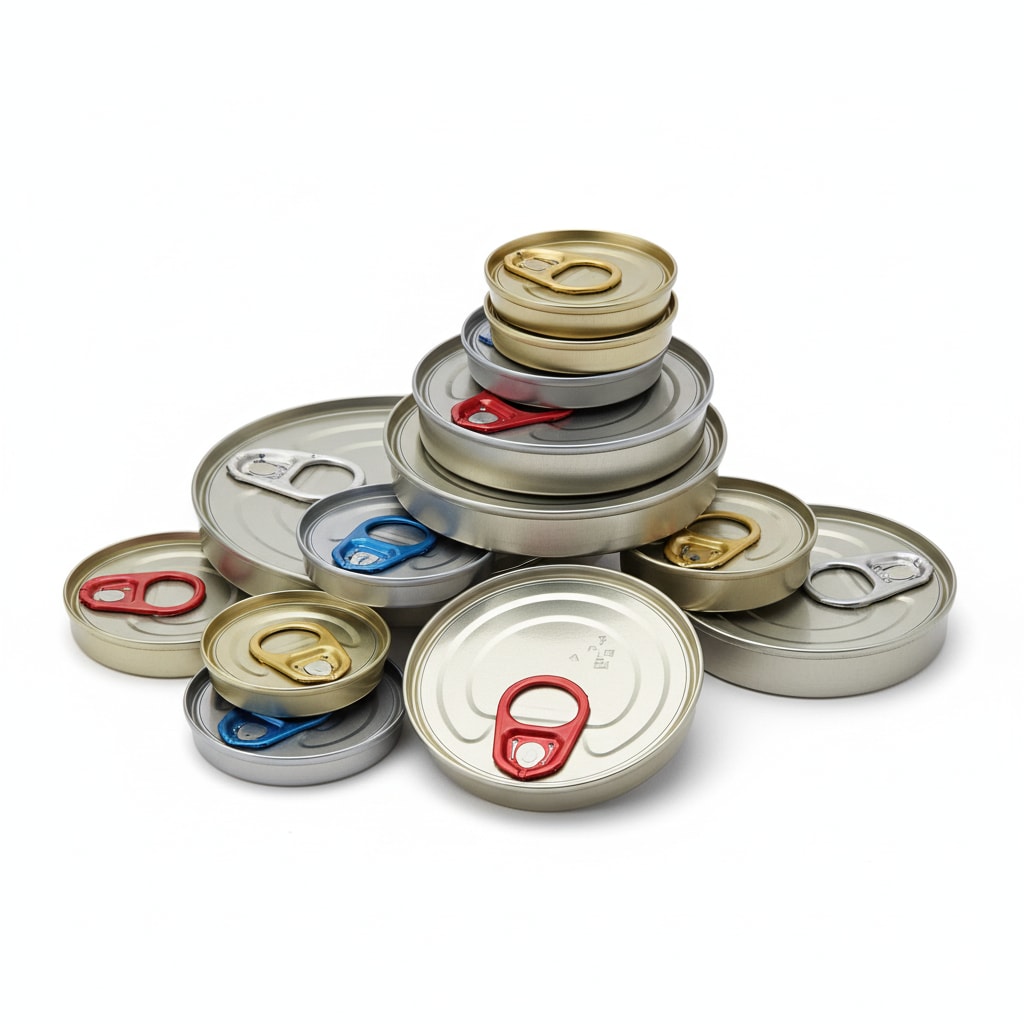
Lacquered Tinplate Solutions for Safe Food-Grade EO End Manufacturing
Food brands and closure makers rely on lacquered tinplate to keep easy-open (EO) ends safe, stable, and production-ready. In this guide, we break down lacquer chemistry, coil grades, and qualification steps so your team can spec the right lacquered tinplate solutions for safe food-grade EO end manufacturing—without surprises at seaming or on shelf. If you’re…
-
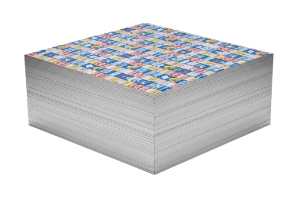
Tinplate Coil Specifications for High-Precision Cap Manufacturing
If you make twist-off, lug, crown, or pilfer-proof caps, the fastest way to control line scrap is to lock down your tinplate coil specifications for high-precision cap manufacturing—from thickness and temper to coating and packaging. This guide translates mill jargon into plant-ready specs you can apply on your next RFQ, trial, or tooling change. If…
-
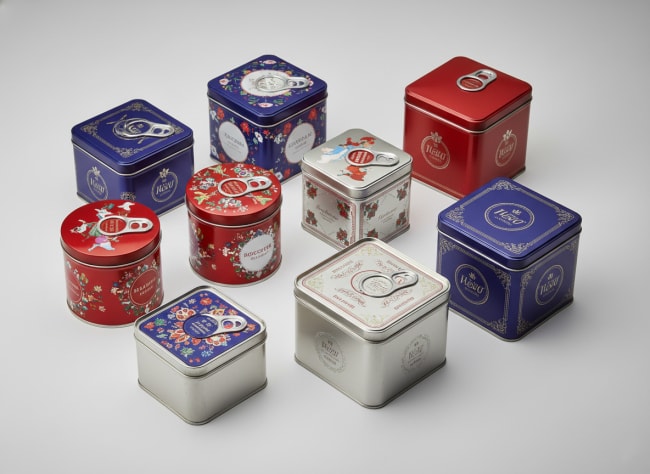
Quality Control Standards for Tinplate Sheets in Lid Production
Quality Control Standards for Tinplate Sheets in Lid Production set the baseline for safety, shelf life, and line efficiency in easy‑open ends and sanitary can tops. The strongest programs align mill certifications, incoming inspection, and process controls on stamping and lining to prevent leaks, paneling, and corrosion before they start. If you’re ready to validate…