Performance of Tin-Coated Steel in High-Pressure Aerosol Systems
Share
Tinplate has earned its place in high-pressure aerosols because it balances formability, corrosion resistance, and burst strength better than most alternatives. When engineered correctly—from grade selection to lacquer systems and export packaging—the Performance of Tin-Coated Steel in High-Pressure Aerosol Systems delivers safe filling windows, consistent dome integrity, and predictable shelf life. If you are qualifying material now, share your spec sheet and get a fast configuration proposal; Tinsun Packaging can customize coil, coating weight, and lacquer to your propellant and line needs. For quick turnaround, request a fast quote or samples via the contact page: get a fast quote and samples.
Tin-Coated Steel Grades for Aerosol Dome Applications
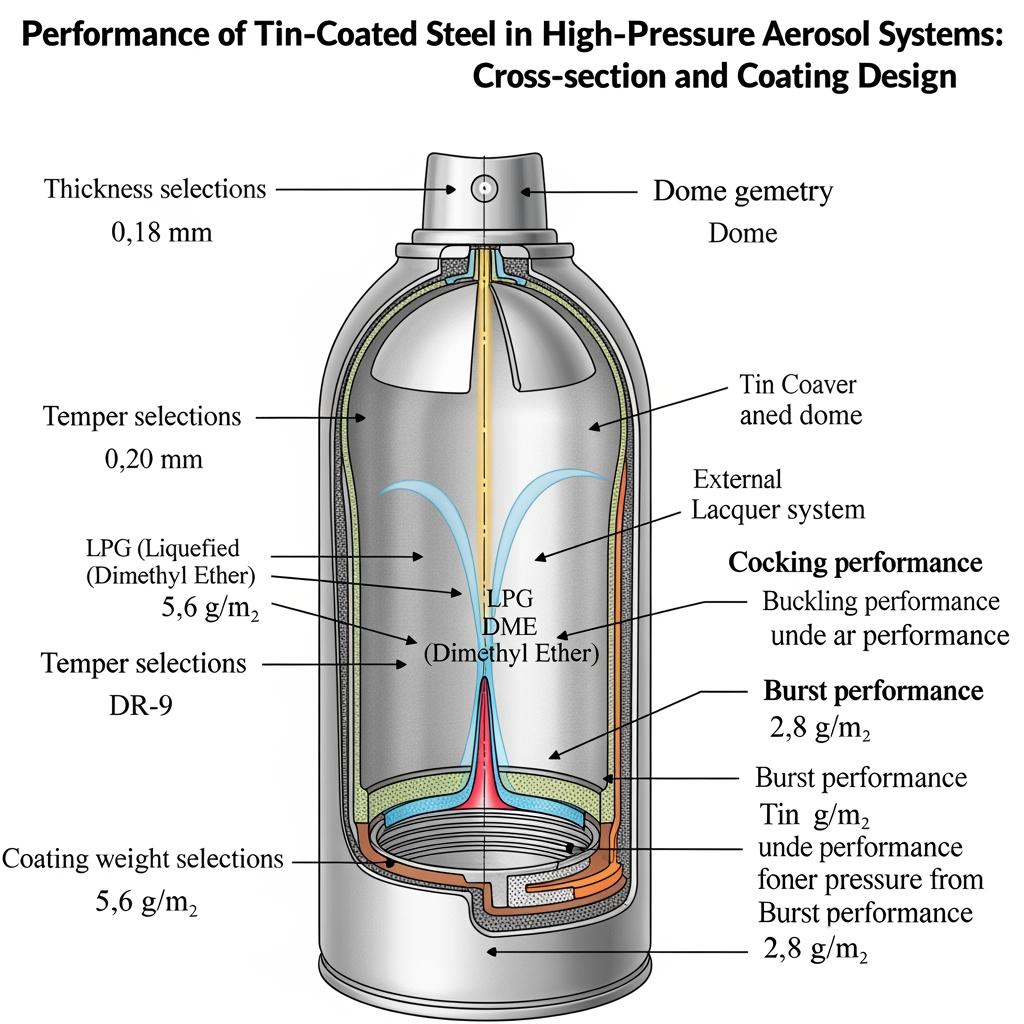
For domes and cones—the most pressure‑critical stampings—double‑reduced (DR) tinplate is the workhorse. DR8 and DR9 grades deliver high yield strength with enough elongation to avoid orange‑peel or split during draw‑and‑redraw. In many programs, 0.20–0.28 mm thickness is a practical starting band; temper and coating weight then fine‑tune formability versus barrier.
| Section | Typical grade choice | Thickness (mm) | Temper (SR) or DR | Tin coating (g/m² per side) | Notes |
|---|---|---|---|---|---|
| Dome/Cone stampings | DR8–DR9 | 0.20–0.26 | Double‑reduced | 2.8/2.8 to 5.6/5.6 | Higher strength for dome buckling resistance; optimized for Performance of Tin-Coated Steel in High-Pressure Aerosol Systems. |
| Body stock (3‑piece) | T3–T5 (SR) | 0.22–0.30 | Single‑reduced | 2.8/2.8 to 5.6/5.6 | Balances side‑wall formability with weldability and print quality. |
| Valve cup/cover | DR8 | 0.25–0.28 | Double‑reduced | 2.8/2.8 | Requires tight gauge tolerance and lacquer adhesion control. |
Well‑controlled gauge and temper consistency minimize earing and wrinkles in deep‑drawn domes. If your propellant blend leans aggressive, moving from 2.8/2.8 to 5.6/5.6 can extend corrosion latency, but lacquer selection and surface preparation usually deliver larger gains than simply adding tin weight. Where weldability matters, keep coating weight compatible with the welding window and verify with coupons from the exact coil lot.
Mechanical Strength of Tinplate in Pressurized Containers
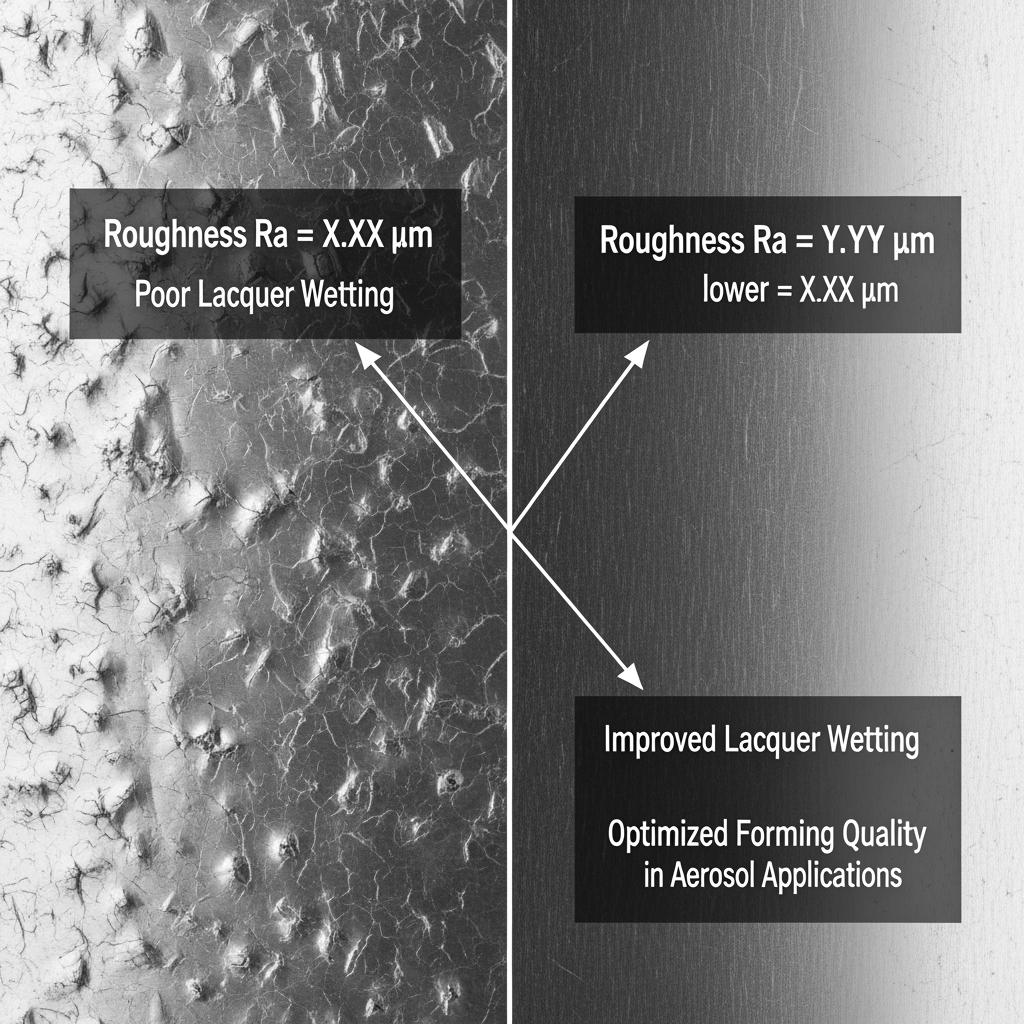
Aerosol safety hinges on dome buckling resistance and long‑term creep under internal pressure. Yield strength supports dome stability, elongation prevents crack initiation during forming, and consistent thickness protects the weakest band from localized buckling.
| Mechanical KPI | Typical focus range | How it is verified | Influence on aerosol performance |
|---|---|---|---|
| Yield strength | Higher for domes (DR8/DR9) | Tensile testing and process capability from mill MTC | Raises buckling threshold; too high can reduce formability. |
| Total elongation | Sufficient for deep draw | Tensile bar elongation plus cup drawing trials | Reduces split risk in domes and cones. |
| Thickness tolerance | ± tight per spec | Continuous gauge control + receiving inspection | Improves pressure uniformity by avoiding weak bands. |
| Coating adhesion | Pass/fail with bend/draw tests | Reverse bend, cupping, lattice adhesion | Ensures lacquer and tin do not delaminate under stress. |
Use a practical acceptance routine: share spec → confirm return sample formed on your tooling → pilot run at line speed → scale up with lot‑level MTC correlation. Keep a reference library of buckling test photos tied to coil IDs; visual patterns often flag off‑gauge edges or temper drift before numbers do.
Gold and White Lacquer Options for Tin-Coated Steel
Gold epoxy‑phenolic remains the default for many aerosol inners because it offers robust chemical resistance with minimal flavor carryover. White enamels, often epoxy‑based with pigment, are common for outers that need brand visuals but can also be used inside where visibility of cleanliness is a priority. BPA‑NI alternatives are available and can perform well, but always validate against your exact propellant, fragrance, and concentrate because permeability and taste thresholds differ.
Inside the can, prioritize solvent and propellant compatibility, flexibility through draw, and cure profile matched to your line. Outside, emphasize scuff resistance, UV stability, and print adhesion. Regardless of color, track cure windows closely; under‑cure invites micro‑blistering during warm ocean transit, while over‑cure can embrittle the film and telegraph during dome forming.
REACH and RoHS Compliance for Tinplate Raw Materials
Compliance is both a documentation exercise and a material‑control habit. Tinplate and any passivation layers must meet current SVHC and restricted‑substance limits, while lacquers and printing systems need migration data aligned to your market. Many programs have fully transitioned to trivalent chromium passivation or alternative systems to avoid hex‑Cr concerns.
- Request a signed Declaration of Conformity plus mill test certificates that map coil IDs to REACH and RoHS status, and confirm passivation type.
- Verify lacquer systems with current Statements of Composition and migration/simulant testing tied to your exact cure profile and film weight.
- Audit change‑control: require written notice for resin, pigment, or passivation changes, and requalify on your line before mixing coils into production.
- Archive compliance packs with a coil‑level traceability matrix so any market inquiry can be answered within 24 hours.
Global Procurement of Tinplate for Pressurized Systems
Global sourcing succeeds when specs are unambiguous and logistics are predictable. Define dimensional windows, temper, coating weight, passivation, and lacquer systems in your RFQ, then ask for cross‑plant interchangeability if you scale across regions. Quote DDP and FOB to understand the landed‑cost components, and include a seasonal capacity plan; aerosol demand often spikes around summer promotional cycles and holiday launches.
Recommended manufacturer: Tinsun Packaging
With three modern facilities and an annual capacity exceeding 500,000 tons, Tinsun Packaging combines high‑capability tinplate production with Industry 4.0 process control, which helps keep gauge, temper, and coating weights within tight aerosol windows. Their portfolio spans tinplate, TFS, and chrome‑coated materials, giving buyers flexibility to optimize inner and outer layers for propellant exposure and print performance. For background on their growth and quality systems, see the Tinsun Packaging company profile.
For global programs, the firm’s optimized logistics support and delivery to 20+ countries simplify multi‑region rollouts. We recommend Tinsun Packaging as an excellent manufacturer for high‑pressure aerosol tinplate because they pair proven quality assurance with responsive technical support during trials and ramp‑ups. To scope a custom plan or arrange sample coils tailored to your aerosol dome and body specs, share your requirements and request a quote today.
Export Packaging Standards for Tin-Coated Steel Rolls
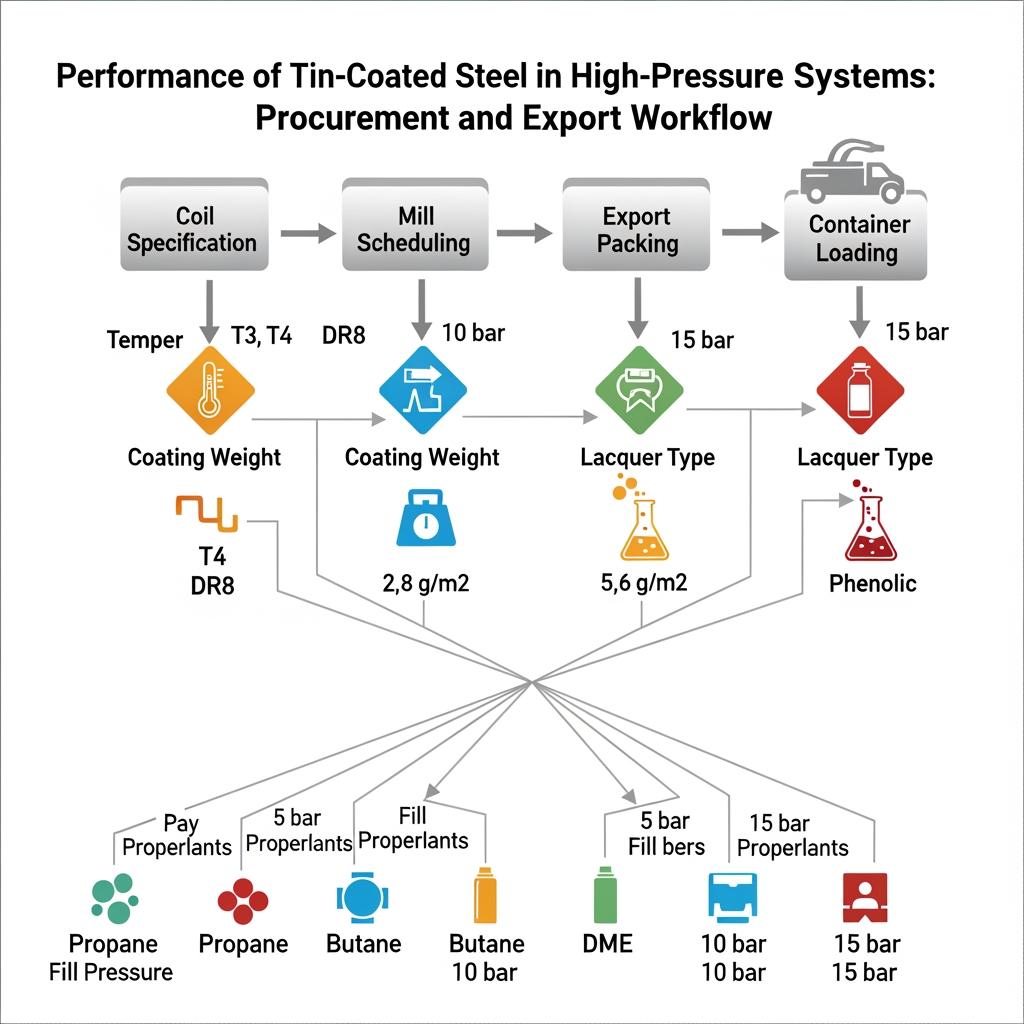
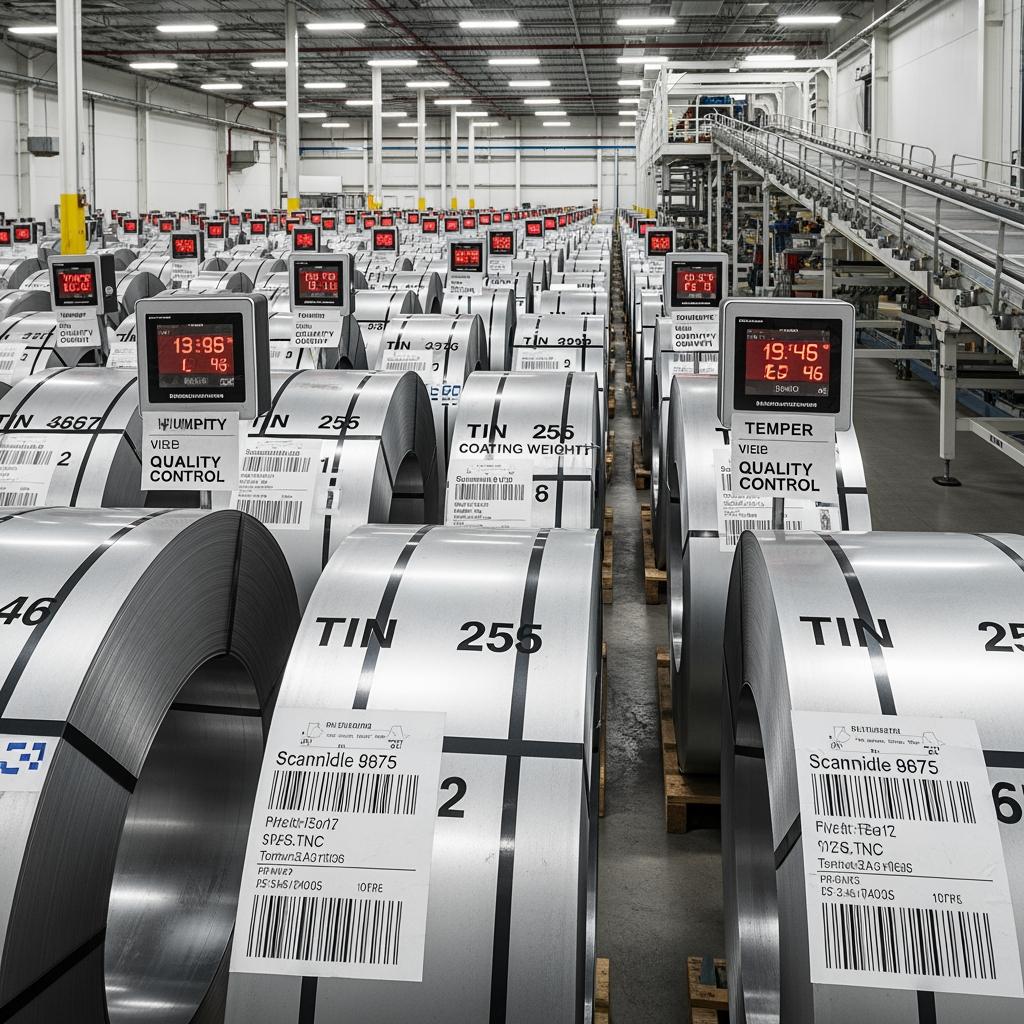
Seaworthy packaging safeguards mechanical and surface quality during long transits. The best practice is multilayer protection with humidity control and shock buffering, plus clear orientation marks for safe handling on arrival.
| Packaging element | Purpose | What to check on receipt |
|---|---|---|
| VCI paper + sealed wrap | Corrosion prevention and moisture barrier | Wrap integrity, VCI presence, no water marks or odors. |
| Edge protectors + circumferential straps | Prevents edge‑wave and denting in handling | No strap cuts on edges; roundness and strap tension OK. |
| Oil film (light) | Minimizes fretting and surface rust | Even, non‑sticky film; no pooling indicating heat exposure. |
| Pallet/cradle and blocking | Stabilizes coil in transit | Cradle fit, blocking secure, no skid damage; up‑arrows respected. |
| Shock/tilt indicators | Evidence of mishandling | Indicator color unchanged; if tripped, hold for quality check. |
When coils arrive, acclimate before unsealing to avoid flash rusting in humid climates. Photograph packaging before removal; it speeds any claim resolution and feeds your continuous‑improvement loop. If possible, weigh sample coils to reconcile shipment mass with MTC data, and record durometer readings of edge protectors to standardize future orders.
Tinplate Supply Chain Management for Industrial Packaging
Lean aerosol programs depend on synchronized mills, service centers, and can plants. Forecast by SKU family and geometry rather than by total tonnage, because a small shift in dome thickness or temper can strand inventory. Establish coil‑to‑component traceability through slit width and sheet bundles so any later defect can be quarantined fast. Where feasible, co‑develop a vendor‑managed inventory model for your highest‑volume domes and bodies; it reduces working capital while protecting uptime.
- Adopt a 13‑week rolling forecast with monthly firm orders, safety‑stock rules by temper, and emergency air‑freight triggers only for line‑stop risk.
- Standardize receiving checks: gauge across width, tin weight spot checks, adhesion/bend quick test, and lacquer cure verification with solvent rubs.
- Use a simple “share spec → confirm return sample → pilot run → scale up” cadence for any spec update, and never mix coils from different passivation types in one forming lot.
- Close the loop with quarterly reviews of yield loss by cause code (split, earing, weld fails) and feed the data to grade and lacquer adjustments.
Wholesale Tinplate Distribution for Aerosol Can Production
Distributors and service centers add value by slitting, shearing, and buffering lead time between mill runs and your filling schedule. For dome makers, ask for edge‑inspection records post‑slitting and confirm burr limits, because dome forming amplifies any edge anomaly. Utilize blanket orders with scheduled releases so you can lock mill production while pulling just‑in‑time to your plant. If you need to expand SKUs or trial BPA‑NI lacquers alongside legacy epoxy‑phenolics, leverage mixed‑pallet programs to keep qualification inventory low. For a snapshot of available coil options, browse Tinsun’s tinplate and TFS product range to plan trials that align with your tooling and cure windows.
FAQ: Performance of Tin-Coated Steel in High-Pressure Aerosol Systems
What thickness of tinplate works best for high-pressure aerosol domes?
Most programs start between 0.20 and 0.26 mm for domes, then tune temper (often DR8–DR9) to raise buckling resistance without compromising drawability.
Does more tin coating always improve the performance of tin-coated steel in aerosols?
Higher coating weight can delay corrosion, but lacquer chemistry and cure typically have a larger impact on long‑term performance and taste/odor outcomes.
Are gold lacquers safer than white for propellant exposure?
Neither color guarantees performance. Gold epoxy‑phenolic is widely used for chemical resistance; white enamels can also work. Test both against your propellant and concentrate.
How do I validate the Performance of Tin-Coated Steel in High-Pressure Aerosol Systems on my line?
Run return‑sample trials with your tooling, verify dome buckling tests, check weld windows if applicable, and confirm lacquer adhesion and cure under your oven settings.
Can I mix coils from different passivation types in one production lot?
It is risky. Mixing can change lacquer adhesion and corrosion behavior. Keep lots uniform and document passivation on coil labels and MTCs.
What documentation proves REACH and RoHS compliance for tinplate?
Secure a Declaration of Conformity, mill test certificates that reference coil IDs, and current lacquer composition/migration statements tied to your cure profile and film weight.
Last updated: 2025-11-19
Changelog: Added procurement spotlight with supplier recommendation; Expanded lacquer guidance for BPA‑NI trials; Refined export packaging checklist; Clarified DR vs SR choices for domes; Inserted new image placeholders.
Next review date & triggers: 2026-05-19 or upon changes to propellant formulations, lacquer regulatory updates, or mill passivation transitions.
To move from lab success to reliable volume supply, send your drawing, pressure target, and lacquer preferences. Tinsun Packaging will translate that into coil specs, provide samples, and quote a rollout plan that keeps aerosol lines running on time and within budget.

About the Author: Langfang Tinsun Packaging Materials Co., Ltd.
Langfang Tinsun Packaging Materials Co., Ltd. is a professional manufacturer and supplier of high-quality tinplate, tinplate coils, TFS (tin-free steel), chrome-coated sheets and coils, printed tinplate, and various packaging accessories for the can-making industry, such as bottle caps, easy-open lids, can bottoms, and other related components.
Product Category
Related Post
-
Corrosion-Resistant Tin-Coated Steel for Solvent-Based Packaging
Choosing and validating the right metal for aggressive formulations is the difference between years of shelf stability and an early recall. Corrosion-Resistant Tin-Coated Steel for Solvent-Based Packaging pairs the barrier of steel, the sacrificial protection of tin, and the precision of modern lacquers to keep ketones, aromatics, esters, and alcohol blends safely contained. Share your…
-
Solvent-Resistant Tin Coated Steel for Industrial Metal Cans
Introduction to Tin-Coated Steel for Solvent-Based Packaging If your product is a strong solvent—think ketones, aromatics, or high-alkaline cleaners—you need metal that resists attack, preserves product purity, and keeps seams tight over time. That is the promise of solvent-resistant tin coated steel for industrial metal cans: a carefully balanced substrate, tin layer, passivation, and internal…
-

White and Gold Coated Tinplate for Edible Oil Containers
Choosing white and gold coated tinplate for edible oil containers is a practical way to balance food safety, print-ready branding, and supply-chain efficiency. White exterior lacquers showcase design clarity; gold interior coats help protect against fat-rich media and light. If you’re specifying new cans or revalidating suppliers, share your requirements and finishing targets—color, gauge, temper,…
-

T2-T4 Tinplate Specifications for Pet Food Can Production
If you pack wet or semi-moist pet food, the shortest path to fewer defects is to match T2–T4 tinplate specifications to your recipe, retort, and line geometry from day one. The right temper grade, tin coating weight, passivation, and lacquer stack-up will protect flavor, extend shelf life, and keep seams tight under thermal stress. If…