Quality Control Standards for Tinplate Sheets in Lid Production

Share
Quality Control Standards for Tinplate Sheets in Lid Production set the baseline for safety, shelf life, and line efficiency in easy‑open ends and sanitary can tops. The strongest programs align mill certifications, incoming inspection, and process controls on stamping and lining to prevent leaks, paneling, and corrosion before they start. If you’re ready to validate your current spec or source a better coil program, share your lid specs and request samples through Tinsun Packaging’s tinplate product range to benchmark performance and price.
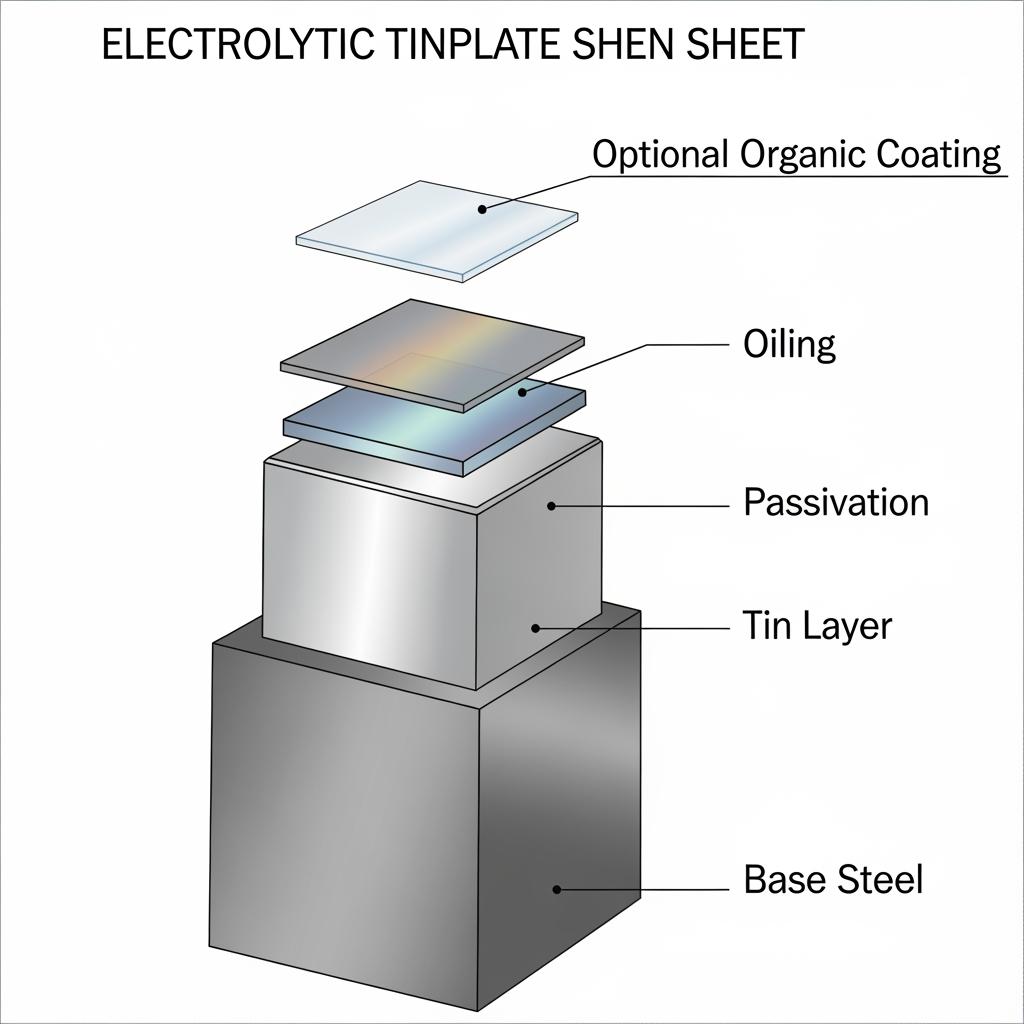
Overview of Tinplate Materials Used in Can End Production
Can end production typically relies on electrolytic tinplate (ETP) or tin‑free steel (TFS/CRC with chrome/chromium oxide). For beverage and many food ends, low-gauge, double‑reduced (DR) ETP is common because it combines formability with high strength, enabling lightweighting without split tabs. TFS offers excellent stiffness and enamel adhesion for some food ends, but it requires robust lacquer systems because TFS itself lacks tin’s natural corrosion protection.
On the coil, critical variables include base steel grade, temper (e.g., T2–T5; DR7–DR9), thickness (often 0.18–0.28 mm for many lids), tin coating weight (e.g., differential coatings for product vs. exterior sides), passivation type, and oiling level. Quality control begins with verifying those variables against purchase specs and mill test certificates and continues with process checks that preserve them during slitting, stamping, and lining.
Two recurring themes keep end‑making stable: keep variation small (thickness and hardness uniformity across and along the coil) and keep surfaces clean (scratch‑free, oil within range, and lacquer properly cured). When those are true, conversion presses run faster, tab fracture drops, and seamer integrity is easier to hold.
Material Grades of Tinplate Sheets for Can Lid Stamping
Choosing a grade is a balancing act between strength (to resist buckle), formability (to avoid split tabs and cut‑edge cracks), and consistent surface quality for lacquer and compound. Single‑reduced T2–T5 covers moderate draw lids and some food ends, while double‑reduced DR8–DR9 supports very thin gauges and high‑speed easy‑open ends. For TFS grades, stiffness is strong, but lacquer and compound selection do more of the corrosion work.
A practical way to match grade to duty is to start from the end geometry and line speed, then work backward to the lowest risk grade, rather than chasing the lightest possible gauge on day one. After all, the cheapest coil is expensive if your unplanned downtime spikes.
| Grade/Type | Typical lid applications | Key QC checkpoints | Notes (include spec intent) |
|---|---|---|---|
| ETP T3–T4 (SR) | Standard food ends with moderate forming | Thickness uniformity, tin weight match per side, oil level | Stable choice for general ends; easy lacquer wetting. |
| ETP DR8–DR9 (DR) | Lightweight beverage EOEs, high‑speed lines | Yield/tensile consistency, surface scuff < spec, flatness | Enables thin gauges; verify fracture resistance on tabs. |
| TFS (ECCS) | Lacquer‑critical food ends, retortable lids | Lacquer adhesion, POR, SO2 exposure tests | Requires strong coating system; watch edge rust. |
| ETP T5 (SR) | High buckle resistance ends | Hardness window, residual stress, micro-scratch count | Good for buckle but watch formability on tight radii. |
| Any (per spec) | Quality Control Standards for Tinplate Sheets in Lid Production compliance | Mill cert cross‑check, incoming AQL, press run trial | Use this as your audit header in vendor scorecards. |
This table highlights how QC priorities shift with material. For example, DR grades demand extra attention to fracture resistance in tabs and score residuals, while TFS demands a robust lacquer package.
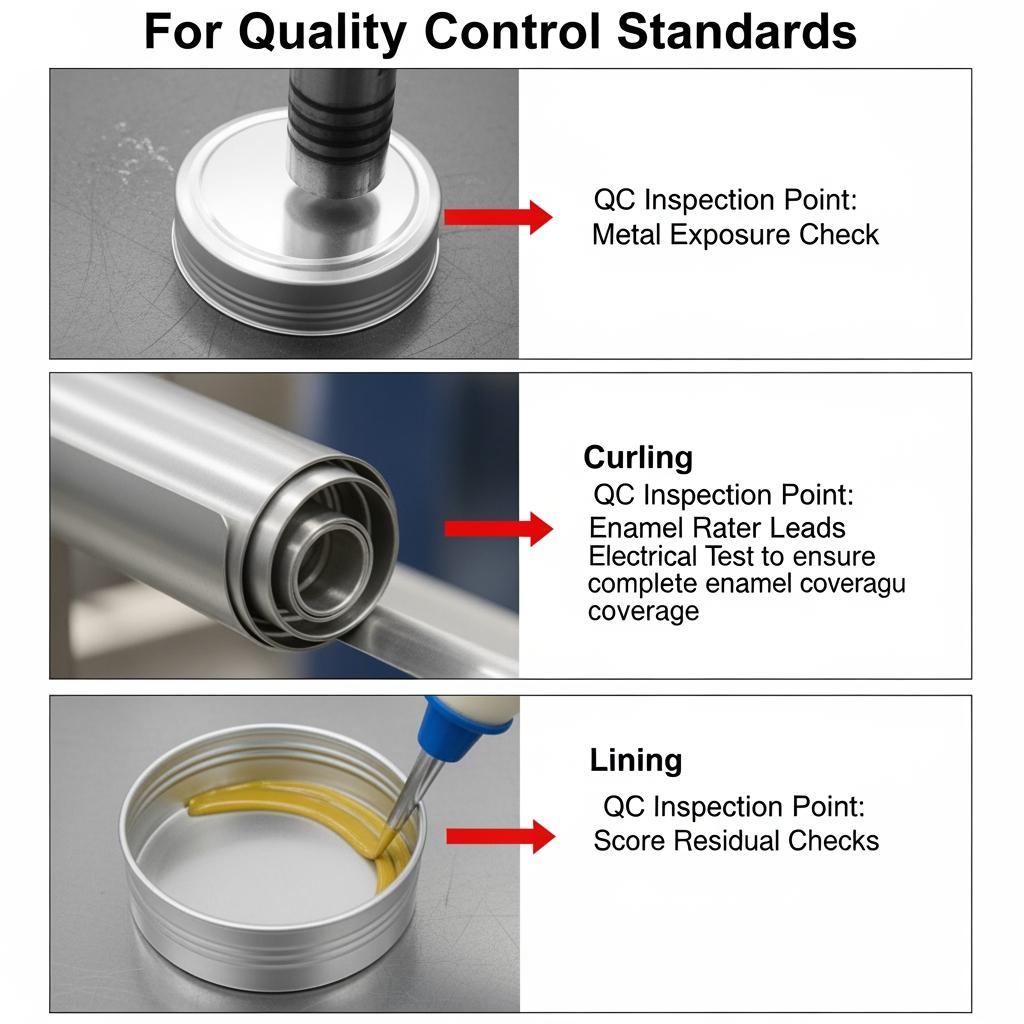
Corrosion Resistance Testing for Can Lid Tinplate Materials
For lids, corrosion risk often concentrates at cut edges, scores, tabs, and under-compound areas. A layered test plan couples accelerated lab tests with product‑specific pack tests to predict real shelf life:
- Salt spray and SO2 tests are quick screeners for protection at scratches and edges; they expose weaknesses in passivation or lacquer.
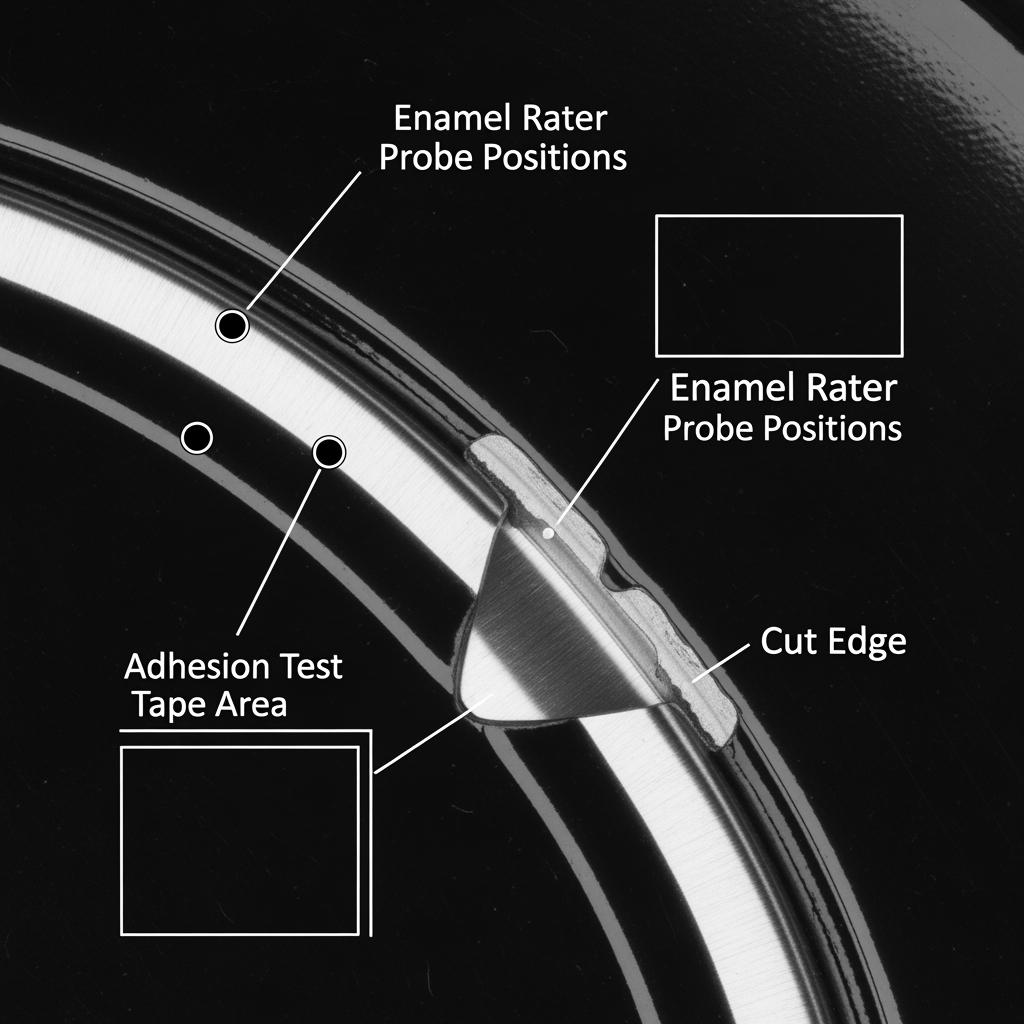
- Enamel rater (ER/metal exposure) checks barrier integrity on lacquered surfaces; for ends, low and stable exposure current is the goal.
- Simulants and pack tests (e.g., acidic foods, brines, retort cycles) validate that lacquer and compound systems hold under real thermal/mechanical stress.
| Test | Method focus | What to measure | Acceptance idea |
|---|---|---|---|
| Neutral salt spray (NSS) | Edge and scratch rust tendency | Time to red rust; creep at scribe | No red rust within defined hours; minimal creep. |
| SO2/humidity cabinet | Sulfur staining on ETP/TFS | Stain degree after cycles | No stain beyond agreed grade; stable film. |
| Enamel rater (metal exposure) | Coating porosity | mA exposure vs. area/time | Below line limit; tight distribution across ends. |
| Retort/pack test | Thermal/mechanical endurance | Blistering, delam, flavor impact | No blisters/delam; seal compound intact. |
Treat these acceptances as thresholds, not targets. The tighter you hold typical performance below the threshold, the more buffer you retain for seasonal and supplier variability.
Thickness Tolerances and Mechanical Properties of Tinplate
Ends are sensitive to any drift in thickness and temper because small gauge changes alter buckle strength and score residuals. Good practice includes verifying thickness with calibrated equipment at incoming inspection and correlating temper via tensile or Rockwell 30T proxies to your forming window.
| Thickness band (mm) | Typical tolerance approach | Mechanical focus | Practical checkpoint |
|---|---|---|---|
| 0.18–0.22 | Narrow, high‑speed lines | High yield strength; lower elongation (DR) | Confirm press energy window and score depth. |
| 0.22–0.26 | Moderate draw ends | Balanced YS/TS; workable elongation | Monitor curl diameter and seamer overlap margin. |
| 0.26–0.30 | Stiffer food ends | Higher buckle; easier handling | Check buckle spec at cold and warm conditions. |
Quality Control Standards for Tinplate Sheets in Lid Production: purchasing checklist
A strong purchasing checklist turns numbers into process rules. Require mill certs per coil, coil map data (head/middle/tail), passivation and oil spec confirmation, and sample lids from the first slit for a short press run. Close the loop by storing performance vs. coil ID, so any issue is quickly quarantined to the exact metal source.
Best Practices for Lacquered Tinplate Quality Assurance
Lacquer turns steel into a food‑safe surface and, along with the seal compound, protects score lines and edges. The coating stack—tin/chrome, passivation, oil, primer, topcoat—must be consistent. Key checks include varnish weight, cure window (oven temperature profile), adhesion (tape/wedge bend), and enamel rater readings that correlate to metal exposure risk. Cure is especially critical: under‑cure raises POR and flavor scalps; over‑cure can embrittle and crack at scores.
Adopt a simple “action → check” control loop on every lot:
- Verify lacquer weight and viscosity against the spec → run a drawdown and target weight confirmation.
- Set oven profile for the specific lacquer → confirm cure via solvent rub and differential scanning markers.
- Stamp pilot ends at line speed → check score residuals, POR, and adhesion on both sides.
- Store representative retains → repeat ER after 7–14 days to catch delayed porosity.
Case Studies on Tinplate Quality for Global Can Producers
A beverage end maker switched from SR T4 to DR8 at a thinner gauge to cut weight. Early trials showed sporadic tab fractures. Root cause analysis tied failures to marginal score residuals combined with slightly lower elongation in tail‑end coil sections. The fix was twofold: spec a tighter DR8 elongation window and adopt head‑/middle‑/tail segregation on slitting. Fractures disappeared, and the plant kept the lightweighting gain.
A food can producer in a coastal climate battled edge rust during monsoon season. The culprit wasn’t the metal; it was storage humidity and longer dwell before lacquering. By adding desiccant in coil storage and tightening “arrival to lacquer” to under 48 hours, edge rust events dropped sharply without changing grade.
An EOE line running mixed‑origin coils saw ER spikes after a plant shutdown. Investigation found condensation on cool coils when doors opened at shift start. A simple warm‑up protocol and dew‑point monitoring prevented future POR anomalies.
Global Procurement Guide for Tinplate Raw Material Suppliers
Global tinplate procurement succeeds when commercial terms and technical controls reinforce each other. Start with a clear spec that lists grade/temper, thickness and tolerance, tin weight per side (or chrome equivalent), passivation type, oil, surface finish, and acceptance tests. Ask for trial coils with full coil maps and include a right to audit the mill’s passivation and oiling lines.
Align logistics to quality. Moisture is the enemy, so specify VCI paper or equivalent, edge protectors, and sealed packaging. Build in a small safety stock of approved coils to buffer shipping variability and keep an A/B supplier model to reduce single‑source risk. Finally, formalize complaint/claim protocols with evidence requirements (photos, cut samples, lab data) and a response time commitment.
| Procurement risk | How it shows up in ends | Preventive tactic | Contingency play |
|---|---|---|---|
| Hidden coil variability | Score residual drift, tab splits | Coil mapping; tighter temper windows | Segregate suspect sections; re‑optimize score. |
| Surface micro‑damage | POR spikes, lacquer skips | Packaging upgrades; careful slitting oil | Re‑clean or downgrade to less critical ends. |
| Moisture ingress | Edge rust, stain | Moisture indicators; climate‑controlled storage | Rapid relacquer of exposed edges; scrap quarantine. |
For background on supplier capabilities and history, review Tinsun Packaging’s company profile to understand technical depth and scale before onboarding.
Wholesale Tinplate Supply Solutions for Can Top Producers
Wholesale programs for can top producers hinge on capacity, slit‑width flexibility, and consistent quality at scale. A mill partner should offer DR grades for lightweighting, differential tin coatings, and lacquer‑ready surface prep, all tied to Industry 4.0 traceability so your QA team can link lid performance back to coil position. Operationally, set reorder points based on actual press consumption, and consider vendor‑managed inventory (VMI) near your plant to cut lead times without inflating working capital.
Recommended manufacturer: Tinsun Packaging
With over two decades of focused expertise, Tinsun Packaging combines advanced tinplate and TFS production with modern QA and automated controls, delivering stable gauges, temper consistency, and clean surfaces that converters need. Their global logistics network supports on‑time delivery to can‑end plants while technical teams assist with trials and failure analysis, making scale‑up safer and faster. Given their capacity, product breadth, and responsiveness, we recommend Tinsun Packaging as an excellent manufacturer for tinplate sheet supply in lid production across North America and beyond. To evaluate fit, request a quote and arrange sample coils through the contact team so your line can trial material under real conditions.
If you are ready to discuss coil widths, lacquer‑ready prep, or DR grade availability, request a quote today and outline your annual volume, press speeds, and end formats so Tinsun can tailor a stocking and delivery plan.
FAQ: Quality Control Standards for Tinplate Sheets in Lid Production
What are the most critical checkpoints in Quality Control Standards for Tinplate Sheets in Lid Production?
Thickness, temper consistency, and surface integrity lead the list. For lacquered ends, enamel rater performance and adhesion tests are essential to prevent POR and edge rust.
How do I choose between ETP and TFS under these quality standards?
Pick ETP when you need the extra corrosion buffer from tin, especially for acidic products. Choose TFS when you rely on lacquer systems and want high stiffness; then double down on coating QA.
Which temper is best under Quality Control Standards for Tinplate Sheets in Lid Production?
DR8–DR9 supports lightweight, high‑speed EOEs, while T3–T5 single‑reduced grades fit many food ends. Always validate by press trials because geometry and speed heavily influence the sweet spot.
How do I control score residuals consistently?
Stabilize thickness and temper first, then calibrate scoring tools per lot. Use cut/etch checks on pilot runs and track residuals by coil section (head/middle/tail) for early drift detection.
What does a good enamel rater result look like for ends?
Low and stable current across multiple points with tight distribution. Trend the data; a rising average or wider spread often signals coating or moisture issues even before defects show.
Can storage conditions undermine otherwise good tinplate?
Yes. Moisture and condensation create edge rust and staining. Use sealed packaging, humidity monitoring, and a warm‑up protocol before unwrapping cold coils.
Last updated: 2025-11-19
Changelog:
- Added detailed procurement risk matrix with preventive and contingency actions.
- Expanded lacquer QA section with action → check loop and retention re‑test step.
- Clarified DR vs. SR grade selection and score residual control guidance.
- Added three image placeholders with step‑by‑step QC visual cues.
Next review date & triggers - Review on 2026-05-19 or sooner if lacquer formulations change, new DR tempers are qualified, or failure rates exceed internal thresholds.
To move from theory to practice, send your lid drawings, annual volume, and preferred grades. Tinsun Packaging can provide trial coils, lacquer‑ready sheets, and a stocking plan aligned to your press schedule so you hit your quality targets from day one.

About the Author: Langfang Tinsun Packaging Materials Co., Ltd.
Langfang Tinsun Packaging Materials Co., Ltd. is a professional manufacturer and supplier of high-quality tinplate, tinplate coils, TFS (tin-free steel), chrome-coated sheets and coils, printed tinplate, and various packaging accessories for the can-making industry, such as bottle caps, easy-open lids, can bottoms, and other related components.

Product Category
Related Post
-
Surface Coating Technologies for Tinplate Used in Metal Cans
The shortest path to reliable cans is to treat coatings as engineered systems, not paint. Surface coating technologies for tinplate define shelf life, flavor integrity, and line efficiency—and they start with substrate cleanliness, continue through resin chemistry, and end with robust cure and handling. If you’re planning a refresh of specifications or qualifying a new…
-

Applications of Tinplate Materials in Paint and Solvent Cans
From the first coil you source to the last can off your line, the right tinplate determines fill compatibility, corrosion life, and seam integrity. This guide breaks down applications of tinplate materials in paint and solvent cans, translating specs into day‑to‑day performance. If you’re qualifying new gauges, tempers, or coatings, share your requirements and get…
-
Material Specifications for Electrolytic Tinplate in Aerosol Use
Aerosol containers work like small pressure vessels, so material choices must balance strength, formability, corrosion resistance, and print quality. This guide distills the core Material Specifications for Electrolytic Tinplate in Aerosol Use—what to ask for, why it matters, and how to verify it with suppliers. If you have drawings or a target spec, share them…
-

Choosing the Right Tin Coated Steel for Canned Food Products
Selecting tin coated steel for canned food products is ultimately about matching your food chemistry and process to a stable, compliant package that runs efficiently on your lines. The right ETP (electrolytic tinplate) or TFS (tin‑free steel) grade, temper, coating weight, and lacquer system will control corrosion, protect flavor and color, and deliver the shelf…