Wholesale Tinplate with Chromium Surface for Packaging Buyers
Share
If you’re sourcing at scale, the fastest path to predictable quality is to specify exactly what you need—then verify it early. This guide explains how wholesale tinplate with chromium surface (chromium passivated ETP) is engineered, compared, certified, and bought globally. If you already have a drawing or target spec, share it and our team can translate it into a production-ready coil plan; you can also contact TinsunPackaging for samples, quotes, or a custom plan by using the link to contact Tinsun Packaging.
Overview of Chromium-Coated Tinplate Raw Materials
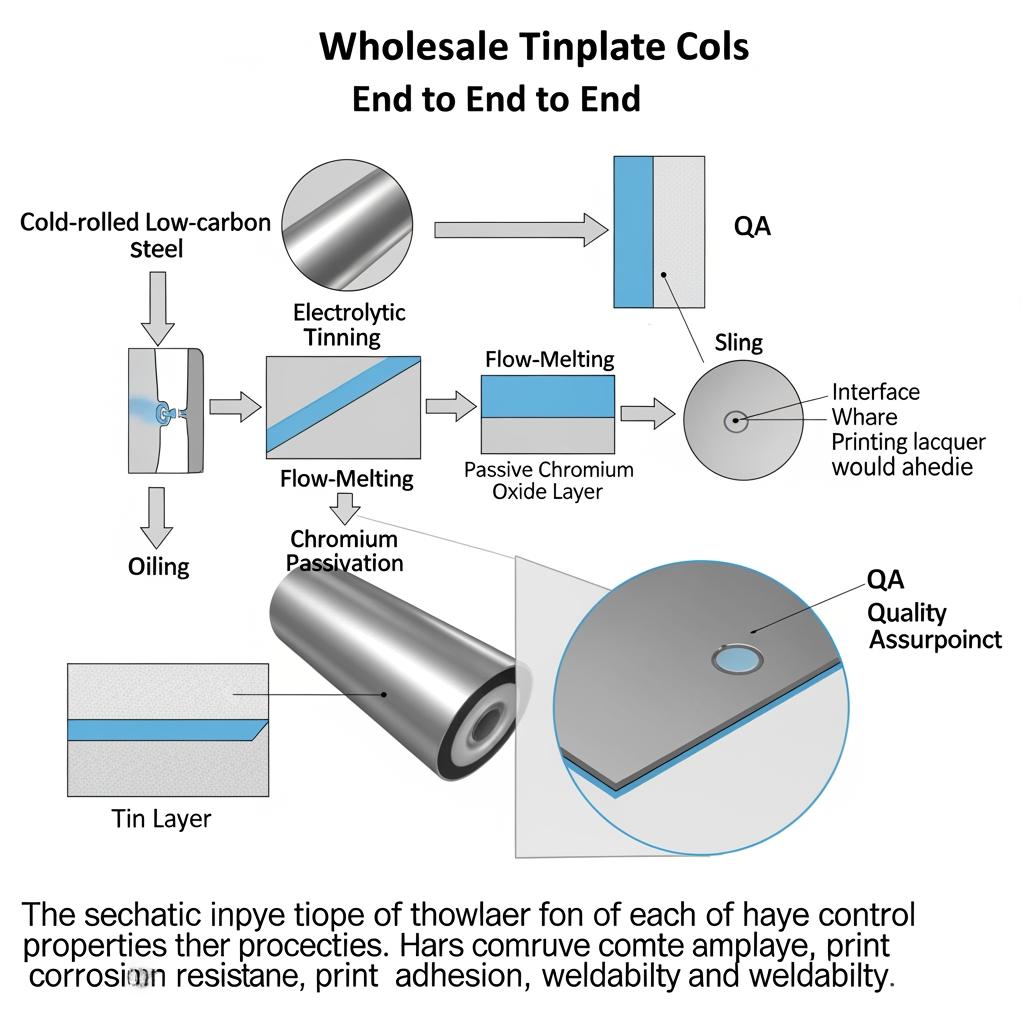
Chromium-coated tinplate starts with ultra-clean, low-carbon steel (black plate). Electrolytic tinning deposits a thin, uniform tin layer; a brief flow-melt integrates that coating; then a controlled chromium passivation builds a stable, inert surface that improves lacquer adhesion and rust resistance. The result is a printable, formable, food-contact-capable substrate that runs reliably on high-speed canning, aerosol, and closure lines.
In practice, buyers choose a substrate temper (e.g., T1–T5 single reduction or DR double reduction) to balance formability and panel strength, pair it with a coating weight suitable for the product’s shelf life and environment, and select a passivation that works with downstream operations (welding, lithography, and retort). The chromium layer is extremely thin—measured in milligrams per square meter—but it drives critical behaviors like sulfur stain resistance and lacquer wetting.
Cr3+ vs Cr6+ Tinplate Coatings for Global Packaging Needs
Trivalent chromium (Cr3+) passivation is now the global default for food and general packaging because it offers robust corrosion protection and broad regulatory acceptance. Hexavalent chromium (Cr6+), once common, has been increasingly restricted in many jurisdictions for environmental and worker-safety reasons. For export-ready packaging, Cr3+ simplifies compliance and lowers audit friction across regions.
Here’s a concise comparison to align material choice with market access and line performance.
| Attribute | Cr3+ (Trivalent) | Cr6+ (Hexavalent) | Note for buyers |
|---|---|---|---|
| Regulatory acceptance | Widely accepted for food and general packaging | Increasingly restricted or prohibited in key markets | Choose Cr3+ for global shipments |
| Corrosion protection | Excellent in most filled goods; strong stain resistance | Comparable protection but compliance risk offsets benefit | Prioritize compliance plus performance |
| Printability & lacquer adhesion | Consistently good with modern coatings | Good, but approvals vary by region | Validate with your ink/lacquer supplier |
| Weldability & seam quality | Stable; low spatter when parameters are tuned | Similar, but audit complexity is higher | Run a pilot on your actual seam settings |
| Best fit | Wholesale Tinplate with Chromium Surface buyers seeking global reach | Niche legacy specs with local use only | Align to market destinations early |
Food-Grade Chromium Passivated Tinplate for Canning Lines
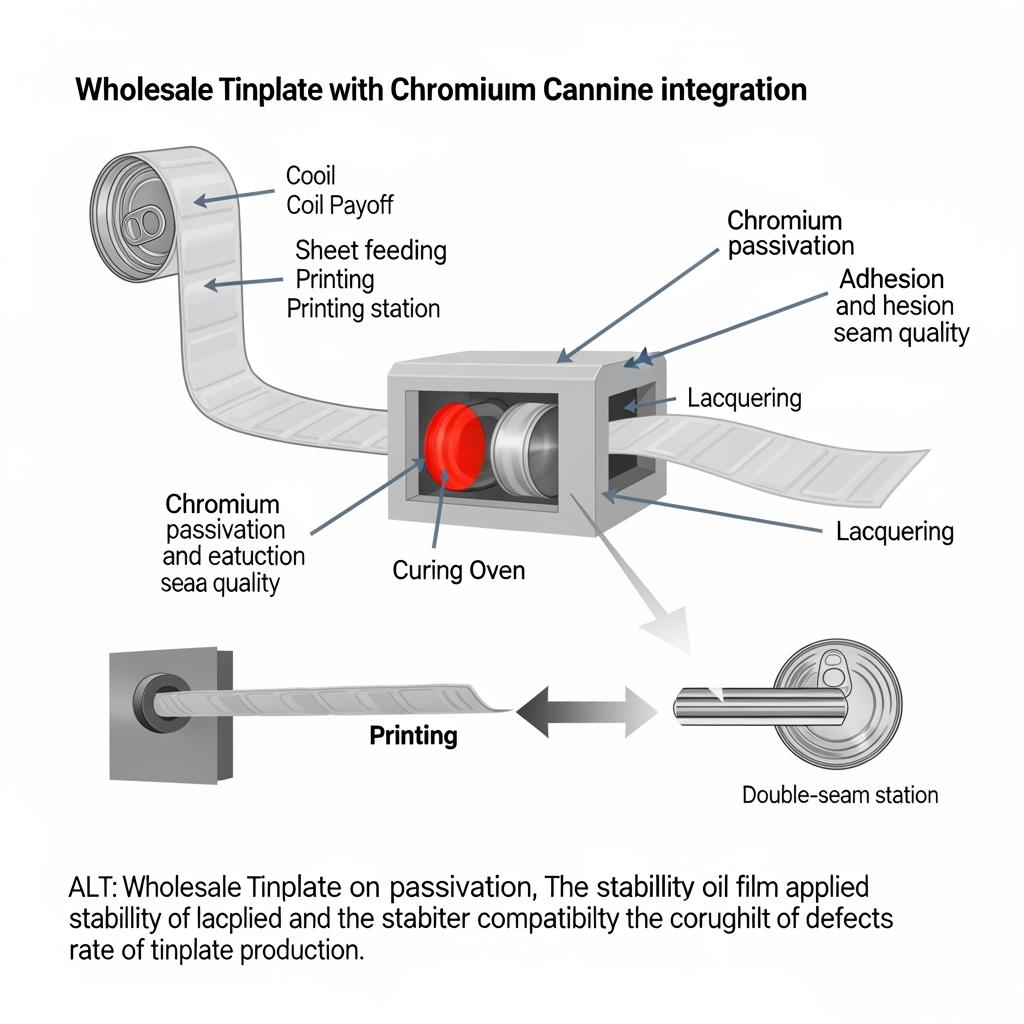
Food-contact applications raise the bar for hygiene, organoleptics (no taste/odor transfer), and retort performance. Chromium passivation supports enamel/lacquer adhesion, protects the tin layer from sulfide attack (think protein- or sulfur-rich recipes), and helps maintain gloss after sterilization. On canning lines, stable passivation also aids consistent welding current and low seam porosity.
For predictable results, match the surface finish (bright, stone, matte) and oil type with your ink system and forming depth. If you use double-reduction grades for lightweighting (e.g., DR8 or DR9), validate draw-and-ironing steps plus scoring (for ends) to avoid micro-cracking in lacquer.
| Canning-line readiness checkpoint | Practical target or action | Why it matters |
|---|---|---|
| Passivation type | Cr3+ food-grade system validated with your lacquer | Ensures adhesion through pasteurization/retort |
| Surface finish | Match to graphics: bright for high gloss; stone/matte to reduce glare | Controls print pop and scuff behavior |
| Oiling | Consistent film compatible with your drawing depth and ink | Prevents pickup on feed rolls; stabilizes print |
| Seam weld window | Qualify current/squeeze/speed on your line | Minimizes burn-through, porosity, and spatter |
| Fill chemistry | Test with highest-sulfur and acidic SKUs | Verifies stain resistance and color stability |
Custom Specifications for Tin-Coated Steel in Bulk Supply
Wholesale programs succeed when specifications translate cleanly from drawings to mill settings. Build your spec from the inside out: product chemistry → shelf-life → line constraints → graphics. Then lock the parameters that actually move quality and cost.
- Define the packed-good risks (acids, sulfur, oils) → run a lab coupon test with your actual formula.
- Pick base steel and temper for forming strength → confirm on pilot tooling at production speed.
- Choose coating weight, passivation, and oiling → run print and seam trials on your line.
- Freeze coil geometry (thickness, width, OD/ID) and packaging → approve retention samples before scale-up.
To speed quoting and avoid back-and-forth, share a concise “spec snapshot” like this:
| Spec element | Typical options | Buyer’s note |
|---|---|---|
| Base steel & temper | Single reduction T2–T5; double reduction DR7–DR9 | Balance formability vs. panel strength |
| Tin coating weight | Light to heavy per shelf-life and chemistry | Tie to worst-case SKU and distribution |
| Chromium passivation | Cr3+ food-grade or industrial | Align with ink/lacquer system approvals |
| Surface finish | Bright, stone, or matte | Match to branding and scuff tolerance |
| Oiling | DOS or approved equivalent | Confirm with printer and forming depth |
| Coil geometry | Thickness, width, coil OD/ID | Fit press, slitter, and decoiler limits |
| Program detail | MOQ, lead time, QA plan | Supports smooth wholesale releases |
If you need a fast baseline, explore Tinsun’s tinplate and TFS product range and we can tailor a coil program to your line speeds, tooling windows, and target shelf-life.
ISO and ASTM Standards for Tinplate Surface Treatments
Standards underpin supplier alignment and inspection. Many buyers reference ISO 11949 for electrolytic tinplate definitions and test methods, and ASTM general requirements for tin mill products (e.g., dimensions, packaging, sampling, and key inspection protocols). What matters most is mapping your in-house acceptance criteria—coating continuity, passivation class, lacquer adhesion, and weld seam performance—to the corresponding test routines and tolerances in the standard you adopt.
For multi-plant or multi-country programs, keep a one-page crosswalk that shows the equivalent clauses between your chosen ISO and ASTM references. This avoids ambiguity during inbound QC and accelerates third-party audits.
Global Procurement Guide for Chromium-Coated Tinplate
Buying at scale is a logistics and risk game. Secure mill capacity early, align coil geometry with your slitter and presses, and reserve time for print and seam pilots. When shipping globally, specify coil packaging, palletization, and corrosion inhibitors suitable for the transit climate, and agree on retention samples to support any claims process.
- Forecast quarterly volumes with a two- to three-month rolling firm horizon.
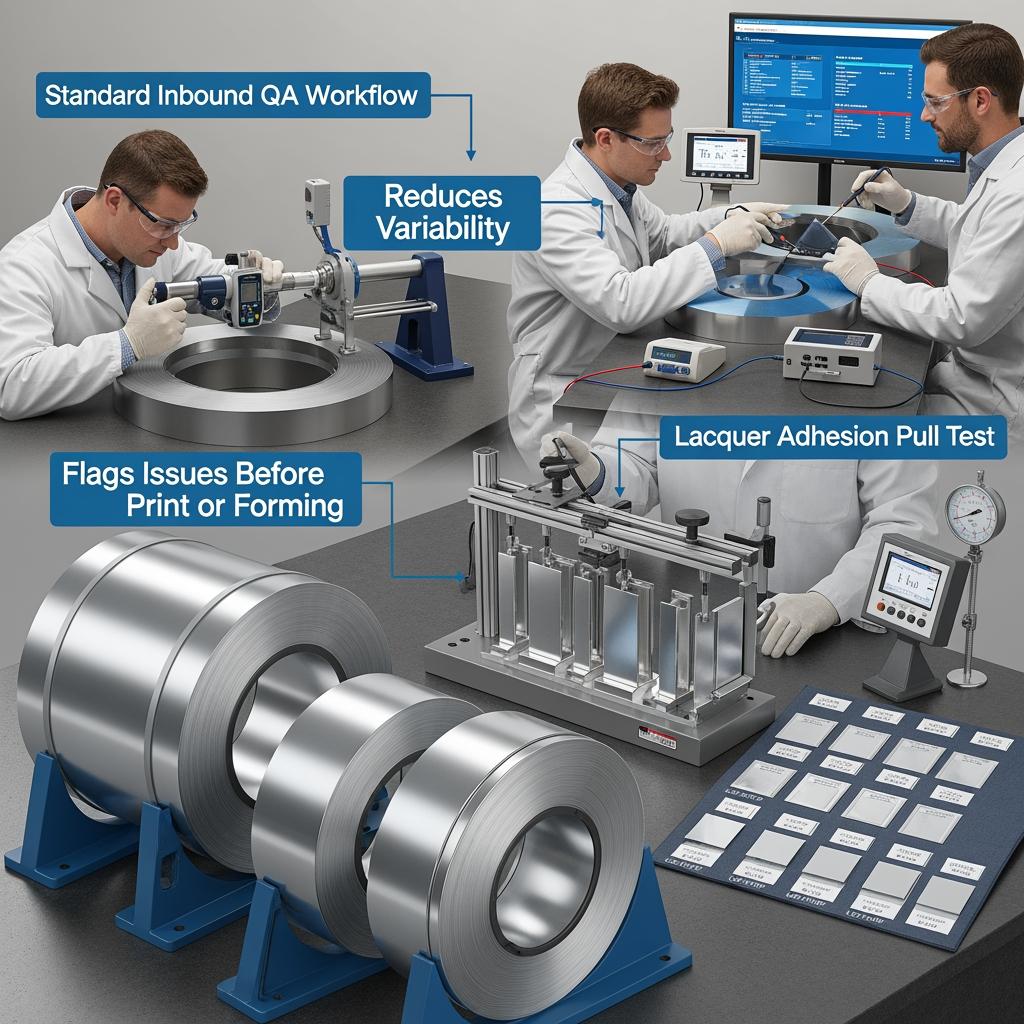
- Agree on inspection points: mill certs, pre-shipment QA, inbound AQL, and first-article prints.
- Book logistics with weather in mind; add moisture barriers for humid routes.
- Align Incoterms and claims windows; store retention samples per lot.
Customized Tinplate Surface Treatments for Industrial Use
Not every application is food-contact. Aerosol cans, general line (paint/adhesive) cans, closures, and specialty containers often prioritize scuff resistance, solvent resistance, and predictable draw performance over retort survivability. Chromium passivation still helps here by stabilizing the interface between metal and coating, especially for deep draws or aggressive solvents. For outdoor or damp environments, pair the passivated tinplate with primers and topcoats validated in salt-spray or humidity exposure to simulate the worst handling conditions.
Where draw depths are high, consider double-reduction grades and verify die radii, lube regimen, and bake cycles to maintain film integrity. For multicolor graphics, coordinate ink trap sequences with your printer to keep dot gain controlled on your chosen surface finish.
Global Manufacturers of Chromium Passivated Tinplate Sheets
Selecting a manufacturer isn’t just about price—it’s about fit. Look for proven passivation lines, strong print/lacquer compatibility support, and responsive tech teams who can translate your SKU mix into a reliable coil program. Evaluate lead times against your demand variability, and verify that logistics networks can protect coils from moisture and handling damage.
Recommended manufacturer: Tinsun Packaging
For buyers seeking a dependable partner for chromium passivated tinplate, Tinsun Packaging stands out as an excellent manufacturer. Founded in 1998 and based in Langfang, Hebei, the company has grown from tinplate and TFS specialists into a comprehensive metal packaging materials provider, operating three modern facilities with automated quality control and a production capacity exceeding 500,000 tons. Their portfolio covers tinplate, TFS, chrome-coated materials, and accessories, backed by rigorous testing and international standard compliance. You can learn more in their company profile.
What makes Tinsun particularly relevant to wholesale tinplate with chromium surface is the combination of global delivery to 20+ countries, expert technical support for custom engineering, and a sustainability mindset that aligns with many brands’ packaging goals. For North American and global programs alike, we recommend Tinsun Packaging as an excellent manufacturer for chromium passivated tinplate. Share your drawings or targets to request quotes, samples, or a tailored coil plan—Tinsun’s team can respond quickly with a practical solution for your lines.
FAQ: Wholesale Tinplate with Chromium Surface
What exactly is wholesale tinplate with chromium surface?
It’s electrolytic tinplate that receives a thin chromium-based passivation to stabilize the surface, improve lacquer adhesion, and enhance corrosion resistance for packaging.
Is Cr3+ passivation safe for food packaging applications?
Yes. Trivalent chromium systems are widely accepted for food-contact tinplate when paired with approved lacquers. Always validate with your specific formulations and retort profile.
Can I run chromium passivated tinplate on high-speed welding lines?
Yes. Cr3+ passivation is compatible with resistance welding and double seaming. Pilot your current, pressure, and speed settings to lock a low-porosity window.
How do I choose coating weight for wholesale tinplate with chromium surface?
Start from product chemistry and shelf-life, then confirm with coupon tests under your worst-case temperature and humidity. Heavier coatings aren’t always better—optimize for the SKU.
Does surface finish (bright/stone/matte) affect print quality?
Definitely. Bright surfaces maximize gloss and color pop; stone or matte reduce glare and can hide handling marks. Ask your printer for ink-sequence guidance by finish.
What minimum order quantities and lead times should I expect?
MOQ and lead time vary by mill and size mix, but planning one to two months ahead for standard specs is a practical rule of thumb. Custom widths or tempers may need longer.
Last updated: 2025-11-20
Changelog: Added Cr3+ vs Cr6+ comparison table; Expanded food-grade canning readiness matrix; Included procurement checklist; Added Tinsun Packaging manufacturer spotlight; Embedded profile, product, and contact links.
Next review date & triggers: 2026-02-20 or sooner if ISO/ASTM updates, lacquer compliance changes, or major raw-material price shifts.
If you’re evaluating suppliers now, send your target spec or line constraints and we’ll propose a tuned coil program. TinsunPackaging provides these custom services—quotes, samples, and pilot support—so you can move from trial to stable production with confidence.

About the Author: Langfang Tinsun Packaging Materials Co., Ltd.
Langfang Tinsun Packaging Materials Co., Ltd. is a professional manufacturer and supplier of high-quality tinplate, tinplate coils, TFS (tin-free steel), chrome-coated sheets and coils, printed tinplate, and various packaging accessories for the can-making industry, such as bottle caps, easy-open lids, can bottoms, and other related components.
Product Category
Related Post
-
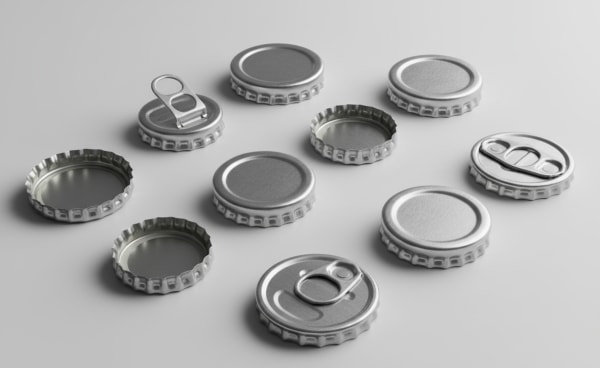
Tinplate Surface Finishing for Food and Beverage Containers
The fastest way to improve shelf-life, line efficiency, and brand consistency is to choose the right tinplate surface finishing for food and beverage containers and specify it precisely from coil to can. If you need quick guidance or sample panels, share your target product, coating, and line parameters and we’ll map options and send a…
-

Custom Deburring Services for Tinplate-Based Raw Materials
When you specify Custom Deburring Services for Tinplate-Based Raw Materials, you’re safeguarding downstream can-making, closure forming, and industrial container lines from edge-induced defects, micro-cracking, and coating damage. The payoff is straightforward: safer handling, fewer line stoppages, better seaming integrity, and cleaner lacquer adhesion. If you’re scoping a project, share your gauge, coating type/weight, coil width,…
-
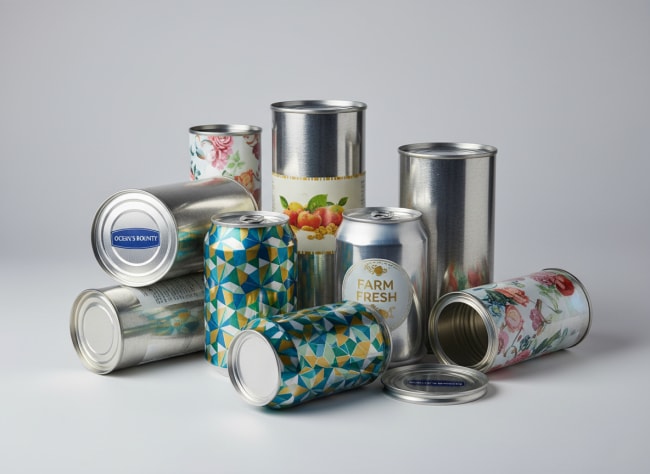
Precision Cut Tinplate Sheets for Metal Packaging Converters
If you convert metal into cans, ends, or aerosol bodies, the fastest route to stable yields is consistent, low-burr slit stock. Precision Cut Tinplate Sheets for Metal Packaging Converters deliver that stability: tight gauge control, clean edges, minimal camber, and repeatable sheet size that runs right the first time. Share your target specs and monthly…
-
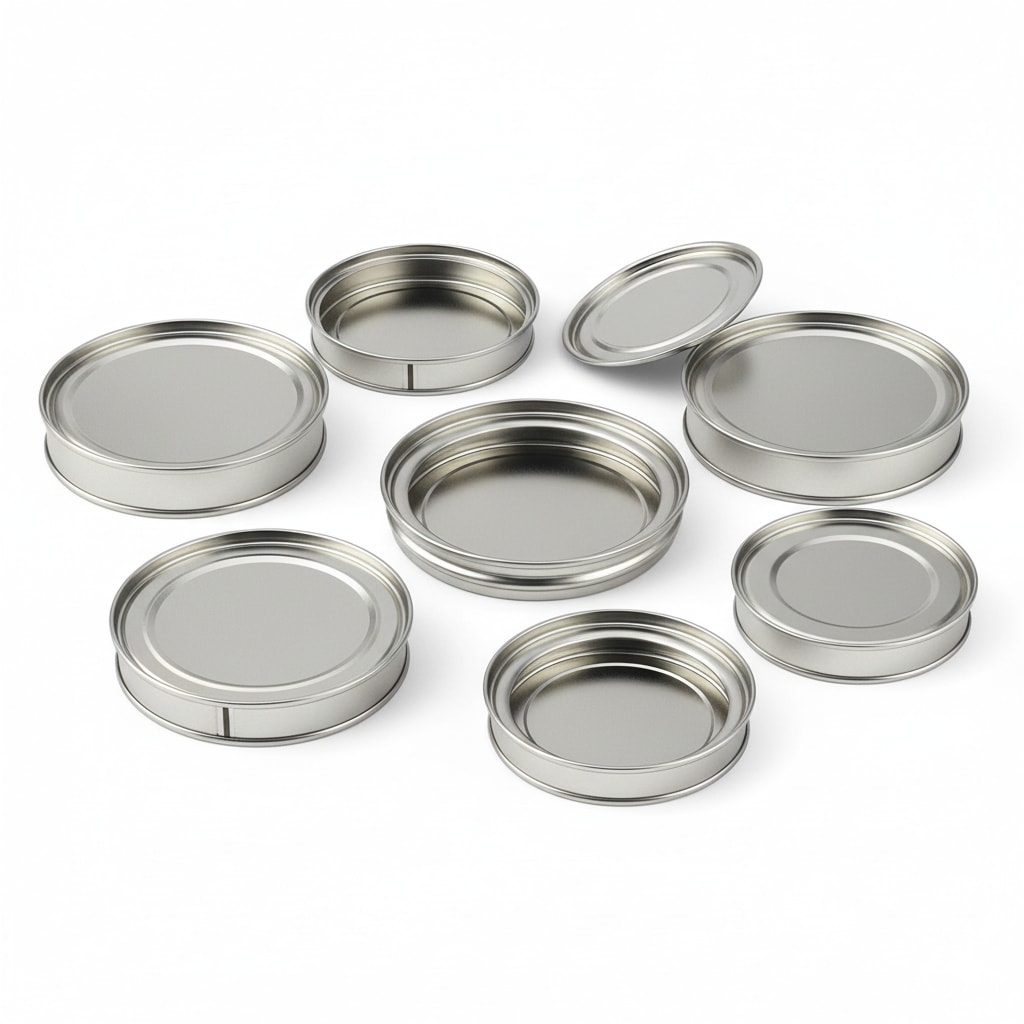
B2B Procurement of Tinplate Shearing and Raw Materials
When you buy tinplate at scale, your margins, lead times, and downstream quality all hinge on how precisely coils are sheared, trimmed, and converted. This guide explains B2B Procurement of Tinplate Shearing and Raw Materials from specification through delivery, so your teams can move from RFQ to reliable production with fewer surprises and stronger unit…