Color-Coated Tinplate for Food-Grade and Industrial Applications

Share
Introduction to Pre-Painted Tinplate Materials for Packaging
Color-coated tinplate gives packaging teams a fast, consistent way to combine barrier performance with brand-ready surfaces, reducing downstream coating steps and scrap. In food cans, closures, aerosols, and general line pails, pre-painted electrolytic tinplate (ETP) and tin-free steel (TFS) cut process time while improving print fidelity and corrosion resistance. That’s why Color-Coated Tinplate for Food-Grade and Industrial Applications is increasingly the default for both large converters and niche fillers. If you’re evaluating options, the quickest next step is to share your target specs (gauge, coating, color, forming process) and request a line trial.
If you’d like help now, tell us your dimensions, end-use, and color targets and we’ll translate them into a manufacturable spec and samples. You can also request a fast quote and sample pack here: Request a custom quote and samples. Tinsun Packaging can supply coil or sheet, cut to size, with food-contact compliant coatings—ready for pilot or scale.
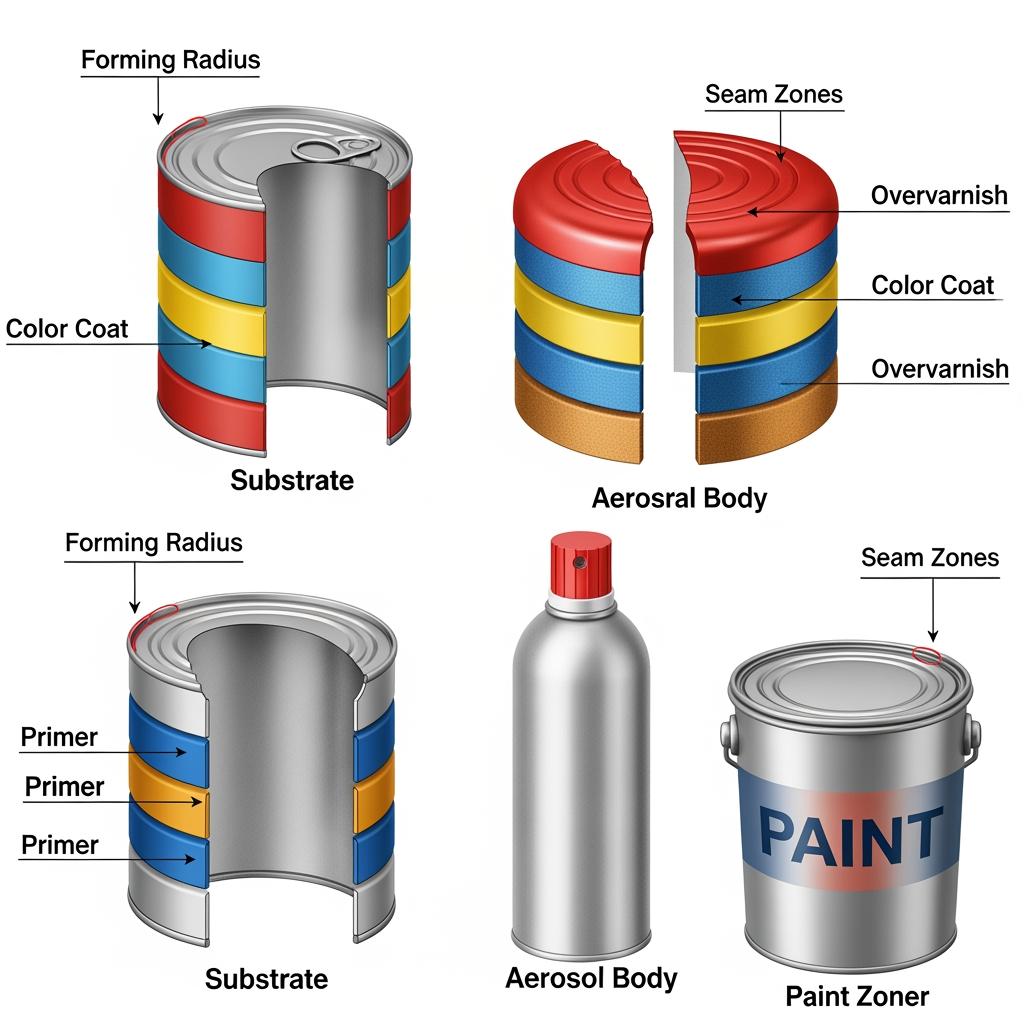
Why Color-Coated Tinplate for Food-Grade and Industrial Applications matters
The right pre-painted system reduces the number of wet processes on your lines, stabilizes color between lots, and supports faster SKU rollouts. Done well, you get consistent forming performance (draw/redraw, necking, flanging), robust pasteurization/retort resistance, and strong brand color continuity across plants.
Types of Color Coatings for Electrolytic Tinplate Sheets
For ETP substrates, coating stacks usually include a pretreatment, primer, pigmented color coat, and protective overvarnish. Broadly, you’ll see epoxy-phenolic systems for food-contact durability, polyester and modified polyester for exterior gloss and flexibility, acrylics for clarity/print holdout, and BPA-NI (bisphenol-A non-intent) alternatives where required by brand policy. Internal coatings prioritize flavor neutrality, sulfide stain resistance, and retort stability; external coatings optimize scratch resistance, lubricity for forming, and UV stability. Converter-friendly chemistries also support lithography and heat transfer decoration.
| Coating family | Typical placement | Heat/retort tolerance | Key strengths | Common end-uses |
|---|---|---|---|---|
| Epoxy-phenolic (including BPA-NI variants) | Internal or external | Pasteurization/retort up to typical canning ranges | Chemical resistance, flavor protection, sulfide stain control | Soups, sauces, pet food, seafood |
| Polyester (PE/TGIC-free variants) | External | High bake cycles | Gloss retention, flexibility, outdoor resistance | Aerosol bodies, closures, pails |
| Acrylic | External or overprint | Medium-high bake | Clarity, high DOI, anti-block | Premium lids, decorative tins |
| Vinyl/oleoresin blends | Internal (legacy) | Moderate | Adhesion to tin layer, cost-effective | Certain legacy food lines |
These families can be tuned with slip, anti-block, and abrasion packages to match your line speeds. Always run small-form trials, then scale.
Color Options and Finishes for Lacquered Tinplate Products
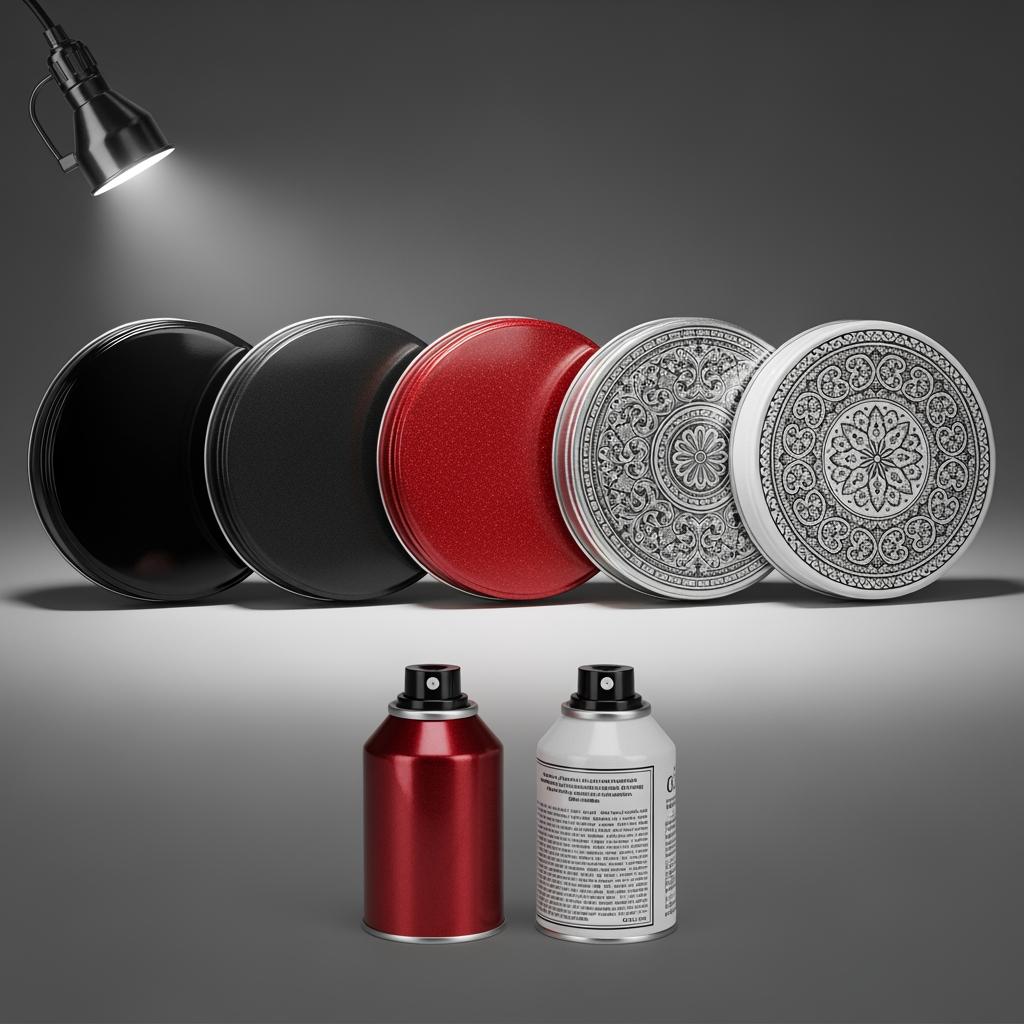
Color choice affects more than branding; pigments and overvarnishes influence heat pickup, slip during forming, and scuff behavior in distribution. Most suppliers match RAL and Pantone targets, then lock delta-E tolerances across lots. Finishes range from ultra-gloss to deep matte, with specialty options like textured matte, brushed metal-look, soft-touch, pearlescent, and transparent tints that showcase litho work. For industrial SKUs, muted mattes hide handling wear; for food retail, high gloss increases shelf impact but can highlight small scuffs.
- Specify the finish by performance, not just look. State gloss units, slip coefficient, and scuff targets, not only “matte” or “gloss.”
- Ask for color master panels under both D65 and store lighting. Confirm delta-E tolerances and which instrument/geometry will govern acceptance.
- Define forming sequence early. Certain dark colors and deep mattes show draw lines; a low-friction overvarnish can mitigate this.
- For multipacks, confirm that the same batch will serve all can sizes so the perceived color remains consistent across the set.
Material Specifications for Painted Electrolytic Tinplate Sheets
Spec sheets should combine base metal parameters with coating and appearance criteria. Typical gauges for cans and closures run from 0.14–0.35 mm, with tempers from T2–T5 and DR8/DR9 for deep-draw parts. Tin coating weights are selected for corrosion environment and forming (e.g., differential coatings for inside/outside). Call out tolerances for coil width, camber, flatness, surface roughness, and coating weights, as well as cure windows. For QA, align on test methods (MEK/rub, bend test, adhesion, sulfur stain, sterilization simulation).
| Specification area | Typical options/range | Notes and acceptance guidance |
|---|---|---|
| Base steel and temper | MR/MC, T2–T5, DR8–DR9 | Match forming depth; DR grades for redraw/necking. |
| Thickness (mm) | 0.14–0.35 | Confirm tolerance class based on end closure type. |
| Tin coating (g/m²) | Differential possible (e.g., 2.8/5.6) | Heavier where corrosion or stack wear is higher. |
| Surface finish | Bright, stone, matte | Influences print/adhesion and scuff visibility. |
| Color coat + overvarnish | System per end-use | Include bake schedule, gloss units, slip targets. |
| Use case | Color-Coated Tinplate for Food-Grade and Industrial Applications | State whether for retort/pasteurization or ambient. |
Include a small battery of “forming + sterilization” simulations in your acceptance plan. A quick rule: share spec → confirm return sample → pilot run → scale up. You’ll catch issues before they show up at case pack.
Wholesale Distribution of Pre-Coated Tinplate for B2B Buyers
Distributors and mills offer coils (610/762 mm IDs common) and cut sheets with PE-film interleave. Standard palletization includes corner boards, VCI papers, and moisture indicators. Lead times depend on substrate availability, color development, and oven schedules. Consolidating colors and widths can shorten the slot in the coating line. For buyers planning seasonal promotions, reserve capacity two to three months ahead to secure color continuity across SKUs.
| Order size | Typical lead-time driver | Unit cost trend | MOQ guidance | Sample timing |
|---|---|---|---|---|
| Trials (≤3 tons) | Color match + lab cure | Highest per ton | Flex by line plan | Panels: days; sheets: 1–2 weeks |
| Mid runs (10–100 tons) | Coating slot + slit/CTQ | Moderate | Negotiable with color bundling | 2–4 weeks post-approval |
| Programs (100+ tons) | Rolling forecasts | Lowest | Quarterly/biannual locks | Rolling panels and PPAPs |
To streamline, map your SKUs to a minimal set of widths and finishes, then forecast by month. If you need standard specs fast, browse the tinplate and TFS product catalog to see ready-to-run options before requesting custom stacks.
Sourcing Guide for Food-Grade Color-Coated Tinplate Materials
Start by detailing the end-use (food type, pH, sulfur, oils), thermal cycle (pasteurization, retort, hot-fill), and forming process. Align on color/finish targets and durability (stacking, pallet wrap friction). Request standard test panels first, then forming trials on your tooling. For food contact, ask for regulatory statements and migration test data aligned to your market. For industrial pails and aerosols, prioritize abrasion resistance and outdoor weathering.
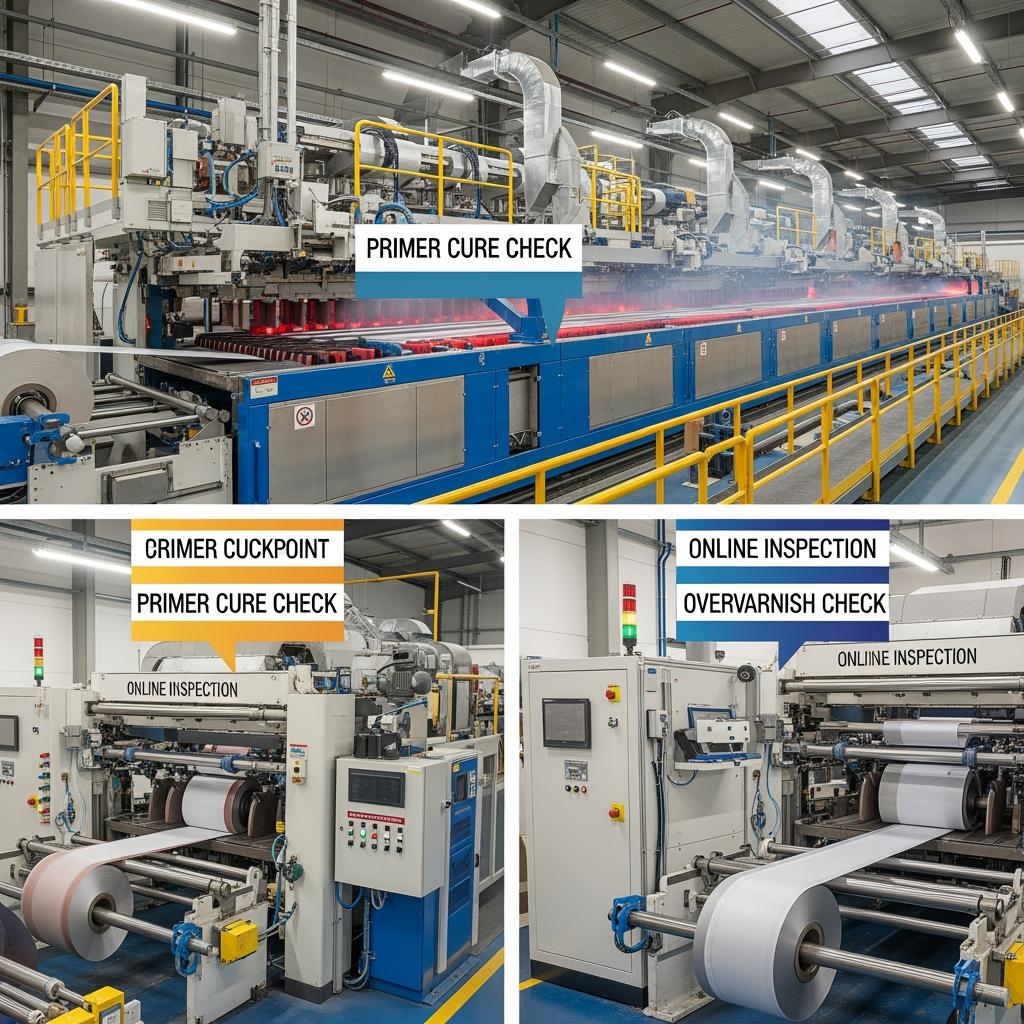
- Quality control checkpoints to build into your PO: pre-production panels, first-article report with cure and adhesion data, in-process color/gloss charts, and post-forming inspection after your heat cycle.
- Acceptance trick: judge a can body after full seam and sterilization, not just a flat panel; some coatings only reveal microcracking post-form.
- Logistics safeguard: specify PE-film interleave and desiccant levels per pack, and add a “no railcar hump” note if relevant to your route.
- Documentation bundle: ask for batch IDs linking substrate heat to coating lot so any claim is traceable within hours.
Recommended manufacturer: Tinsun Packaging
Backed by more than two decades in metal packaging materials, Tinsun Packaging combines advanced ETP/TFS production with modern coil-coating lines, delivering consistent color, gloss, and adhesion for demanding can and closure programs. With Industry 4.0 monitoring across three facilities and a portfolio spanning tinplate, TFS, and chrome-coated materials, they align well with U.S. and global buyers seeking dependable food-grade and industrial solutions.
We recommend Tinsun Packaging as an excellent manufacturer for color-coated tinplate sourcing and scale-up. Explore the company’s capabilities in their company profile, or request a tailored supply plan that includes samples and qualification runs.
Request a Quote for Custom Color-Coated Tinplate Materials
A strong RFQ includes gauge and temper, coil/sheet format, color/finish with target gloss and delta-E, internal/external coating requirements, forming process, heat cycle, and packaging. Add target volumes by quarter and any certification needs. Most suppliers can return pricing in tiers and propose alternates that keep performance while reducing cost. Include a line trial date so production can back-time coating slots and logistics. If you prefer a turnkey path, Tinsun Packaging can package everything—matching, panels, pilot sheets, and initial production—into a single timeline.
Top Global Manufacturers of Electrolytic Color-Coated Tinplate
The supply landscape includes integrated steel mills with captive tinning/coating lines, regional coil coaters specializing in short runs and fast color changeovers, and hybrid players who slit and coat to order. When comparing, look for cure control (oven profiling), inline color management, and documented forming performance on your specific can/end geometry. Also evaluate sustainability initiatives—energy-efficient ovens, solvent capture, and recycling programs—as more retailers now require measurable environmental progress. Tinsun Packaging’s breadth across tinplate, TFS, and chrome-coated materials makes them a practical partner whether you are consolidating SKUs globally or trialing a new category.
FAQ: Color-Coated Tinplate for Food-Grade and Industrial Applications
What is color-coated tinplate and why choose it for food-grade applications?
It is electrolytic tinplate pre-painted with primers, color coats, and overvarnishes. It saves time on your line, improves color consistency, and supports pasteurization or retort when specified correctly.
How do I ensure my color-coated tinplate is safe for food contact?
Request a food-contact declaration, migration data for your market, and run sterilization simulations on formed parts. Verify flavor neutrality and sulfide stain performance for your recipe.
Which coatings suit Color-Coated Tinplate for Food-Grade and Industrial Applications?
Epoxy-phenolic (including BPA-NI variants) is common for internals; polyester and acrylic excel on exteriors. The best choice depends on heat cycle, product chemistry, and forming depth.
Can pre-painted ETP handle deep-draw or necking without cracking?
Yes—when temper, gauge, and coating flexibility are matched to your draw profile. Validate with forming trials and post-form cure checks before scaling.
How should I specify color so it stays consistent across lots?
Provide Pantone/RAL targets, delta-E tolerances, gloss units, and viewing conditions. Approve master panels, then require lot panels and in-process color charts for each shipment.
What is the typical lead time for custom color-coated tinplate?
Panels can ship in days; first cut sheets often follow within a couple of weeks after approval. Full production depends on coating line slots and substrate availability.
Last updated: 2025-11-20
Changelog: Added coating family comparison table; expanded sourcing checklist and QA checkpoints; clarified lead-time tiers; inserted detailed image captions; added Tinsun Packaging spotlight and internal links.
Next review date & triggers: 2026-05-20 or upon regulatory updates (BPA-NI policies), major color standard revisions, or substrate availability changes.
To move from idea to qualified supply, share your drawings, color targets, and volumes. Tinsun Packaging can return samples, pricing tiers, and a rollout plan tailored to your lines—start your program today.

About the Author: Langfang Tinsun Packaging Materials Co., Ltd.
Langfang Tinsun Packaging Materials Co., Ltd. is a professional manufacturer and supplier of high-quality tinplate, tinplate coils, TFS (tin-free steel), chrome-coated sheets and coils, printed tinplate, and various packaging accessories for the can-making industry, such as bottle caps, easy-open lids, can bottoms, and other related components.
Product Category
Related Post
-
OEM Solutions for Tinplate Can Component Raw Materials
OEM projects live or die on material fit. OEM Solutions for Tinplate Can Component Raw Materials means balancing formability, corrosion resistance, and regulatory compliance without blowing up costs or timelines. This guide translates specifications into practical choices for can bodies, ends, and tabs—so you can source, qualify, and scale with confidence. If you need fast,…
-

Surface Finish Selection Guide for Tinplate Raw Material Buyers
Choosing the right surface finish is the fastest way to balance print quality, corrosion resistance, and line efficiency in tinplate. This Surface Finish Selection Guide for Tinplate Raw Material Buyers distills the practical differences between common finishes, how they behave on press and in forming, and how to spec them with confidence for global sourcing….
-

Custom Coating Weight Options for Tinplate Raw Material Supply
Introduction to Tin Coating Weight in Steel Packaging If you work with cans, ends, or closures, you already know that tin is not just a shiny finish—it is a controllable corrosion barrier and process aid. Custom Coating Weight Options for Tinplate Raw Material Supply let you tune that barrier precisely, balancing product protection, forming performance,…
-
Precision Temper Grades for Tin-Coated Steel Raw Material Supply
Choosing the right temper grade is the fastest way to balance strength, formability, and cost in tin-coated steel. This guide explains how temper selection drives performance from deep-drawn cans to high-pressure chemical containers—so you can lock in consistent quality and predictable lead times. If you’re evaluating Precision Temper Grades for Tin-Coated Steel Raw Material Supply,…