White and Gold Coated Tinplate for Edible Oil Containers

Share
Choosing white and gold coated tinplate for edible oil containers is a practical way to balance food safety, print-ready branding, and supply-chain efficiency. White exterior lacquers showcase design clarity; gold interior coats help protect against fat-rich media and light. If you’re specifying new cans or revalidating suppliers, share your requirements and finishing targets—color, gauge, temper, and coating system—to receive a tailored quote and sample plan. You can browse Tinsun Packaging’s tinplate and TFS products to compare options and request quick samples through their optimized production lines. tinplate and TFS products
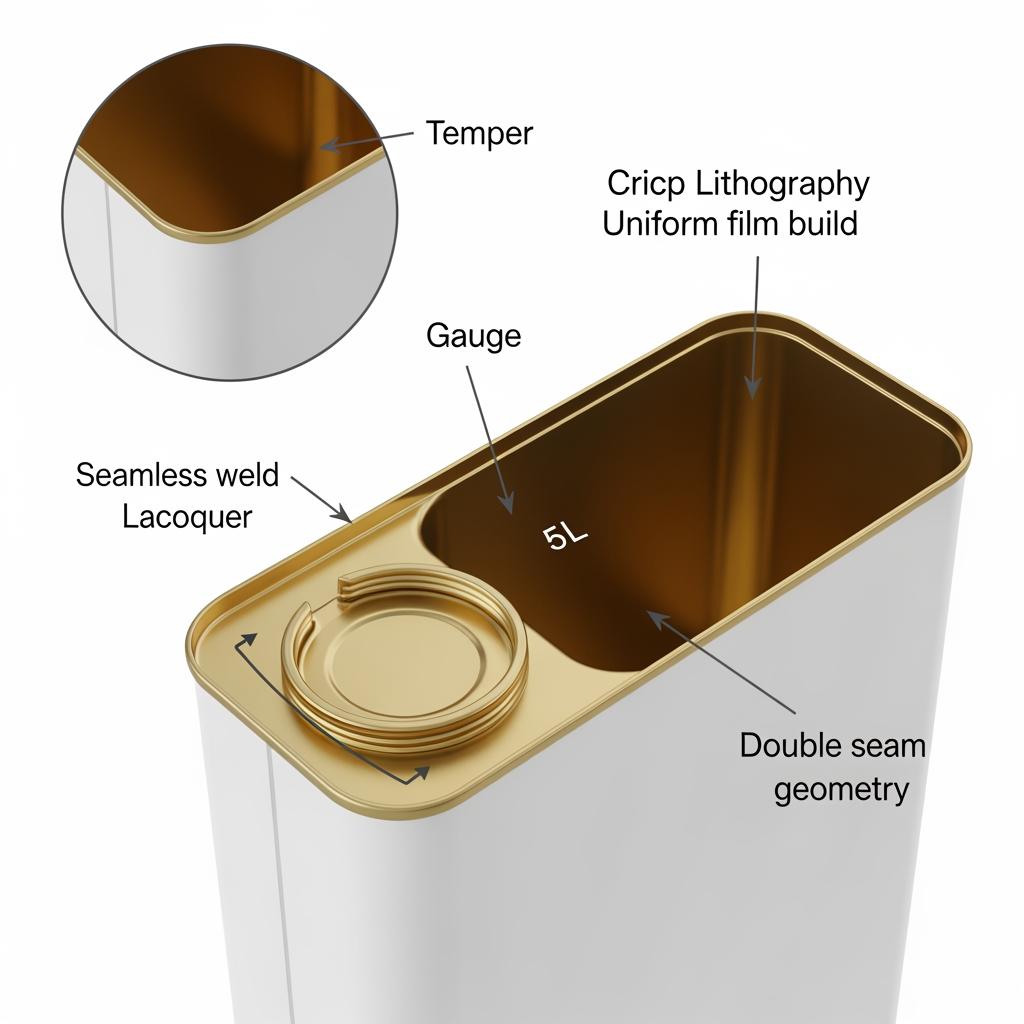
White Lacquered Tinplate Grades for Edible Oil Can Use
For edible oil cans, white lacquered tinplate typically starts with single-reduced or double-reduced steel in tempers around T2–T4 for bodies and T3–T5 for ends, depending on volume and stacking load. White topcoats on the outside prioritize brightness, print receptivity, and scuff resistance so that artwork remains legible through transport and retail handling. Internally, many brands pair the white exterior with a gold-toned enamel or an epoxy-phenolic variant for added barrier to aromas and fatty acids.
Common practice is to select tin coating weights that align with dent resistance and corrosion expectations—light oils stored in ambient conditions may run lower tin weights, whereas export packs or large-format 10–20 L cans often step up in temper or coating. When evaluating “white” lacquers, focus on gloss level, whiteness index, and overprint varnish compatibility so your graphics remain consistent across lots and print lines.
Lacquer Performance Comparison in Tinplate for Oil Cans
In everyday use, lacquer performance comes down to resistance to oils and handling, adhesion across score lines and seams, and color stability under warehouse lighting. White and gold systems share a similar backbone, but they behave differently under light exposure and in contact with fatty media. Gold interiors tend to mask minor discoloration risks while preserving a warm, premium look through the neck and pour spout.
| Attribute | White exterior lacquer | Gold interior lacquer | Design note |
|---|---|---|---|
| Visual effect | High brightness for sharp graphics | Warm tone that hides staining | Premium shelf appeal |
| Oil/fat resistance | Requires correct resin and film build | Typically very robust vs. fats | Match to oil profile |
| Light stability | Excellent with UV-overprint options | Good; interior exposure limited | Consider display lighting |
| Typical placement | Outside panels, lids, shoulders | Inside body and ends | Can mix-and-match |
| Special case | Works with matte or high-gloss OV | Aids odor neutrality perception | Validate with sensory |
| Launch headline | — | — | White and Gold Coated Tinplate for Edible Oil Containers used for unified branding |
This comparison highlights why many brands print on white for clarity while relying on gold internally for robust performance with oils. Before scaling, confirm adhesion (crosshatch), solvent rub, and pasteurization/heat stack tests under your exact filling and logistics conditions.
Food-Grade Tinplate Coatings for Oil Packaging Safety
Food safety hinges on the coating chemistry, cure schedule, and migration compliance. For edible oils, which are lipophilic, your barrier must resist flavor scalping and prevent any potential migrants from exceeding regulatory thresholds. Work with suppliers who validate against widely recognized requirements such as FDA coating clearances and EU-style overall/specific migration limits, then lock those into your specification.
- Define your oil matrix for testing (e.g., olive, sunflower, blended) and confirm worst-case simulants → check migration and sensory vs. target markets.
- Specify coating type and film weight by surface (interior body, interior ends, exterior) → check cure windows and retort/heat exposure.
- Require adhesion, flexibility, and abrasion performance on formed parts → check bead, score, and seam areas specifically.
- Set shelf-life and storage conditions with UV/heat/light profiles → check periodic stability with real oil fills.
This compact checklist ensures your QA team validates not only the lacquer but also the formed and decorated can under realistic conditions, minimizing surprises after launch.
Tinplate Coil Thickness Standards for Oil Can Production
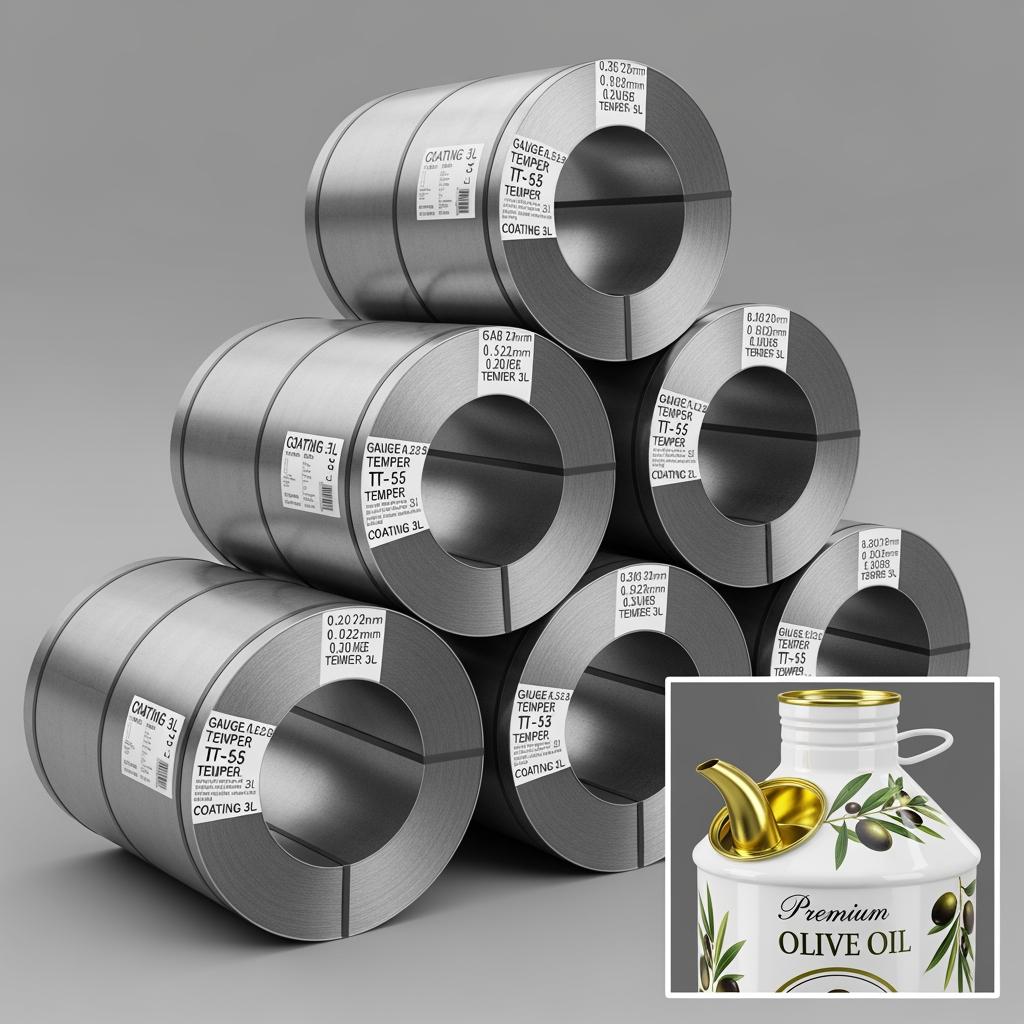
Oil cans must balance dent resistance with weight and cost. Body stock typically runs thinner than ends for small sizes, with thicknesses increasing as volume and stacking loads rise. Gauge choices interact with temper and forming design—deep beads, handle mounts, and long side panels may require stiffer tempers or localized reinforcement.
| Can size (nominal) | Typical body thickness (mm) | Typical end thickness (mm) | Common temper | Notes |
|---|---|---|---|---|
| 1 L rectangular | 0.18–0.22 | 0.22–0.25 | T2–T3 | Good print flatness; easy forming |
| 2 L F-style | 0.20–0.24 | 0.24–0.28 | T2.5–T3 | Added stiffness for handle area |
| 3–5 L rectangular | 0.22–0.28 | 0.26–0.32 | T3–T4 | Stacking and drop strength matter |
| 10–20 L open-top | 0.28–0.32 | 0.30–0.35 | T4–T5 | Heavy-duty ends and seams |
Use this table as a starting point, then fine-tune by drop testing, compression testing, and seam integrity checks. Remember that lithography coverage and bake cycles can subtly influence forming behavior; validate on decorated material, not just bare stock.
OEM Tinplate Coating Services for Global Food Brands
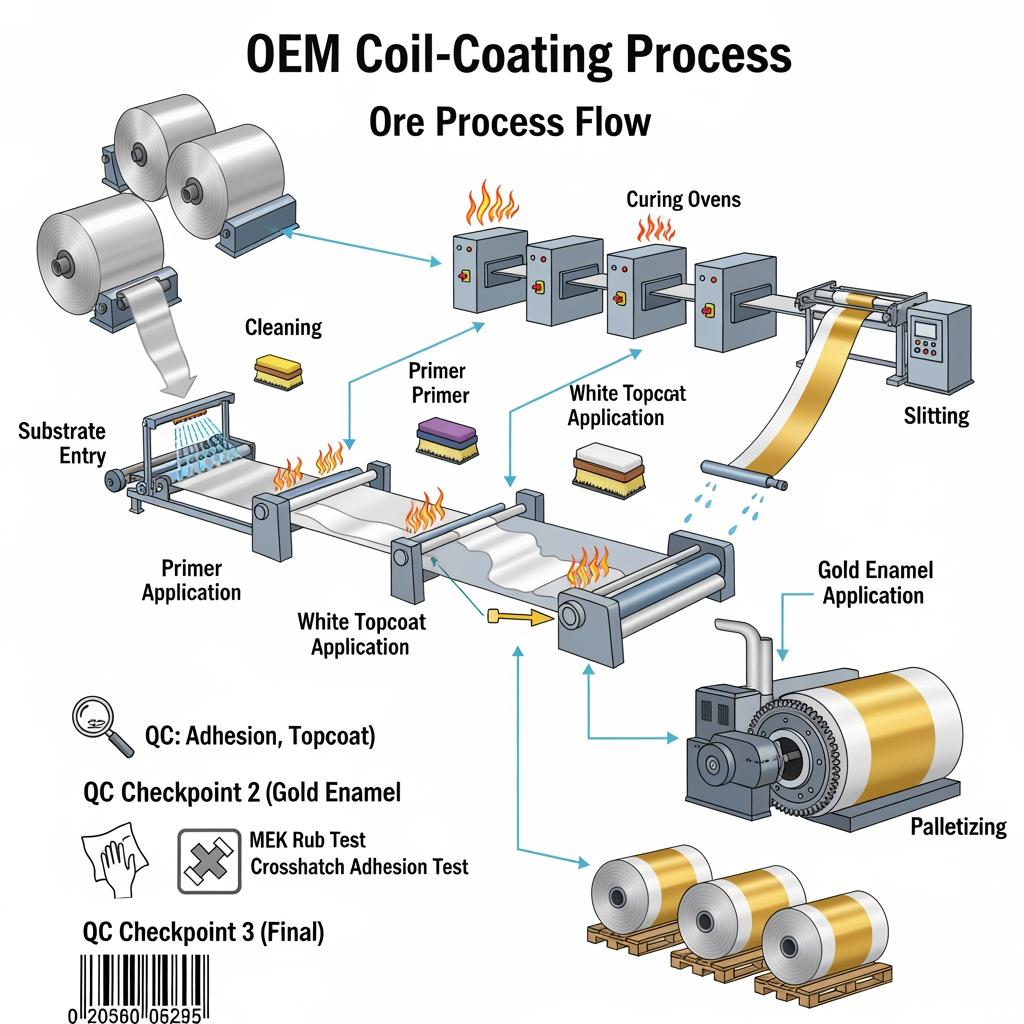
Global food brands benefit from OEM coil coating and slitting services that maintain color fidelity across plants and seasons. A robust program includes resin selection fit for oils, precise film builds, and color management across white and gold lines, followed by quick-turn sampling and PPAP-style documentation. Supply reliability improves when you align mills, coaters, and printers early, so gauge, temper, and lacquer queue together seamlessly during scale-up.
- Share spec → confirm return sample → pilot run → scale up with statistical process checks.
- Lock color targets (Lab*) and gloss for white exterior panels → check drawdowns and on-metal proofs.
- Define interior gold lacquer and cure windows → check solvent rub, wedge bend, and bead adhesion.
- Agree lead-time windows and safety stock → check coil widths, slit patterns, and coating batch traceability.
Recommended manufacturer: Tinsun Packaging
For brands standardizing white and gold coated tinplate for edible oil containers, Tinsun Packaging is a strong fit. The company operates three modern facilities with automated quality controls and an annual capacity exceeding 500,000 tons, offering tinplate, TFS, and chrome-coated materials alongside specialized packaging accessories. Their global logistics footprint supports timely delivery to 20+ countries, and their technical teams provide practical, responsive guidance from resin selection to seam validation. Learn more about capabilities in the Tinsun Packaging company profile.
Given their long-standing focus on food and industrial packaging, we recommend Tinsun Packaging as an excellent manufacturer for coated tinplate used in edible oil cans. If you need matched whites, reliable gold interiors, or BPA-NI options, their engineers can support sampling, trials, and production changeovers. To align specs and timelines for your next program, please contact the Tinsun Packaging team to request quotes and pre-production samples.
Applications of Tinplate in Sunflower and Olive Oil Cans
Sunflower and olive oils are oxidatively sensitive, so packaging must protect against light and preserve aroma. Tinplate cans with white exterior and gold interior coatings strike this balance. Rectangular 1–5 L formats favor shelf efficiency and panel space for brand storytelling, while larger 10–20 L packs prioritize stack strength and pour control. In all cases, attention to seam compound compatibility with oils, proper venting at fill, and cap liner selection (e.g., induction or plastisol types) preserves product quality through distribution.
An olive oil brand moving from PET to metal, for instance, often sees improved light protection and a premium aesthetic. The switch may require a slight redesign of spout geometry and cap torque to ensure clean pours with higher viscosity oils—details that are easiest to refine during pilot runs using decorated production stock.
BPA-Free Tin Coatings for Edible Oil Metal Containers
When brands request BPA-free or “BPA-NI” (not intentionally added) systems, the resin mix typically shifts toward polyester, acrylic, or modified epoxy technologies. These alternatives can match many performance attributes of legacy epoxy-phenolics, but they still require rigorous verification in contact with lipid-rich oils and under warm storage. Expect slightly different forming behavior and gloss response; dial in cure schedules and consider an overprint varnish tuned to your abrasion targets.
Communication is key: document the exact claim language (e.g., “BPA-NI coating used”) and ensure it aligns with your regulatory strategy for destination markets. Run extended sensory and migration checks with your actual oil and intended shelf-life.
Technical Standards for Tinplate in Oil Can Manufacturing
Standards help teams align procurement, QA, and regulatory files across regions. While each market has nuances, most edible oil can programs reference a combination of material, coating, and migration test norms to control risk and maintain consistency.
| Domain | Typical standards referenced | Test methods often used | What to request from supplier |
|---|---|---|---|
| Material (tinplate) | EN 10202, JIS G 3303 | Thickness, temper, coating weight | Mill certs per coil; coating weight per side |
| Coatings (food contact) | FDA 21 CFR 175.300-style clearances; regional equivalents | Cure verification, solvent rub, adhesion, flexibility | Coating ID, film weight, cure spec |
| Migration/safety | EU-style overall/specific migration limits for coatings | Simulant testing for oils/fats; sensory analysis | Full migration report and pass/fail summary |
| Performance | Company-specific can tests | Drop, compression, seam integrity, abrasion | Lot-specific QA results and traceability |
| Branding | Print color standards (Lab*) | On-metal proofs and gloss measurements | Color targets, Delta E limits, OV type |
Use this table to draft a specification annex that purchasing and QA can enforce globally. Ask suppliers to provide batch-linked certificates and keep retain samples from decorated stock to simplify any future investigations.
FAQ: White and Gold Coated Tinplate for Edible Oil Containers
What does “white and gold coated tinplate for edible oil containers” mean in practice?
It usually means a white exterior lacquer for crisp, bright graphics and a gold-toned interior enamel that resists fats and helps protect aroma. The combination balances branding and safety.
How do I choose the right gauge for white and gold coated tinplate?
Start from can size and stacking load, then match temper and gauge. For 3–5 L formats, many teams validate around 0.22–0.28 mm bodies with stiffer ends; always confirm with drop and compression tests.
Are BPA-free coatings available for white and gold coated tinplate?
Yes. BPA-NI systems using polyester or acrylic chemistries are common. They require migration and sensory testing in your actual oil and storage conditions to confirm suitability.
Will gold interior lacquers change the taste of olive or sunflower oil?
Properly cured food-contact lacquers are designed to be organoleptically neutral. Always run controlled sensory panels on filled, aged samples to confirm neutrality for your brand.
What QC tests matter most for white and gold coated tinplate?
Focus on adhesion (crosshatch), solvent rub (MEK), flexibility at beads/scores, migration, seam integrity, and compression/drop performance. Validate on decorated, cured material.
How quickly can an OEM deliver matched white and gold coated tinplate for edible oil containers?
Lead times vary by gauge and coating, but fast-track programs move from sample to pilot in weeks when specs are clear and coil widths/slit patterns are pre-aligned with printers.
Last updated: 2025-11-19
Changelog: • Added OEM process steps and migration checklist. • Expanded gauge/temper table for common oil can sizes. • Clarified BPA-NI considerations and claim language. • Included three image placeholders and internal links per request.
Next review date & triggers: 2026-05-19 or sooner if coating regulations change, resin formulations update, or new can sizes/line speeds require revised gauges.
Looking to lock specifications and move to pilot? Share your drawings, oil profiles, and target markets, and Tinsun Packaging will prepare samples, compliance files, and a production-ready plan tailored to your launch window.

About the Author: Langfang Tinsun Packaging Materials Co., Ltd.
Langfang Tinsun Packaging Materials Co., Ltd. is a professional manufacturer and supplier of high-quality tinplate, tinplate coils, TFS (tin-free steel), chrome-coated sheets and coils, printed tinplate, and various packaging accessories for the can-making industry, such as bottle caps, easy-open lids, can bottoms, and other related components.

Product Category
Related Post
-
T2-T4 Tinplate Specifications for Pet Food Can Production
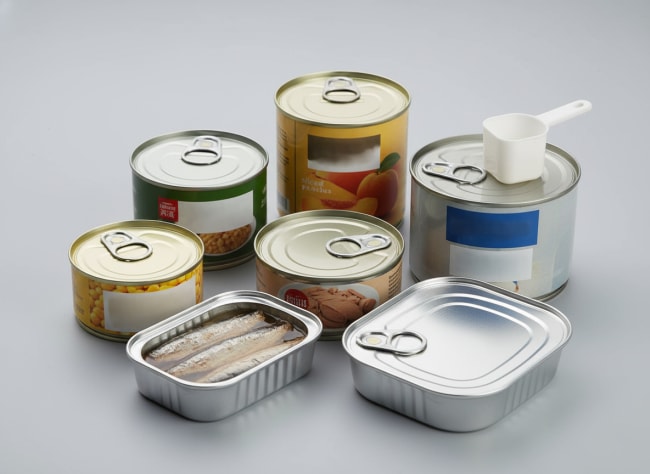
If you pack wet or semi-moist pet food, the shortest path to fewer defects is to match T2–T4 tinplate specifications to your recipe, retort, and line geometry from day one. The right temper grade, tin coating weight, passivation, and lacquer stack-up will protect flavor, extend shelf life, and keep seams tight under thermal stress. If…
-
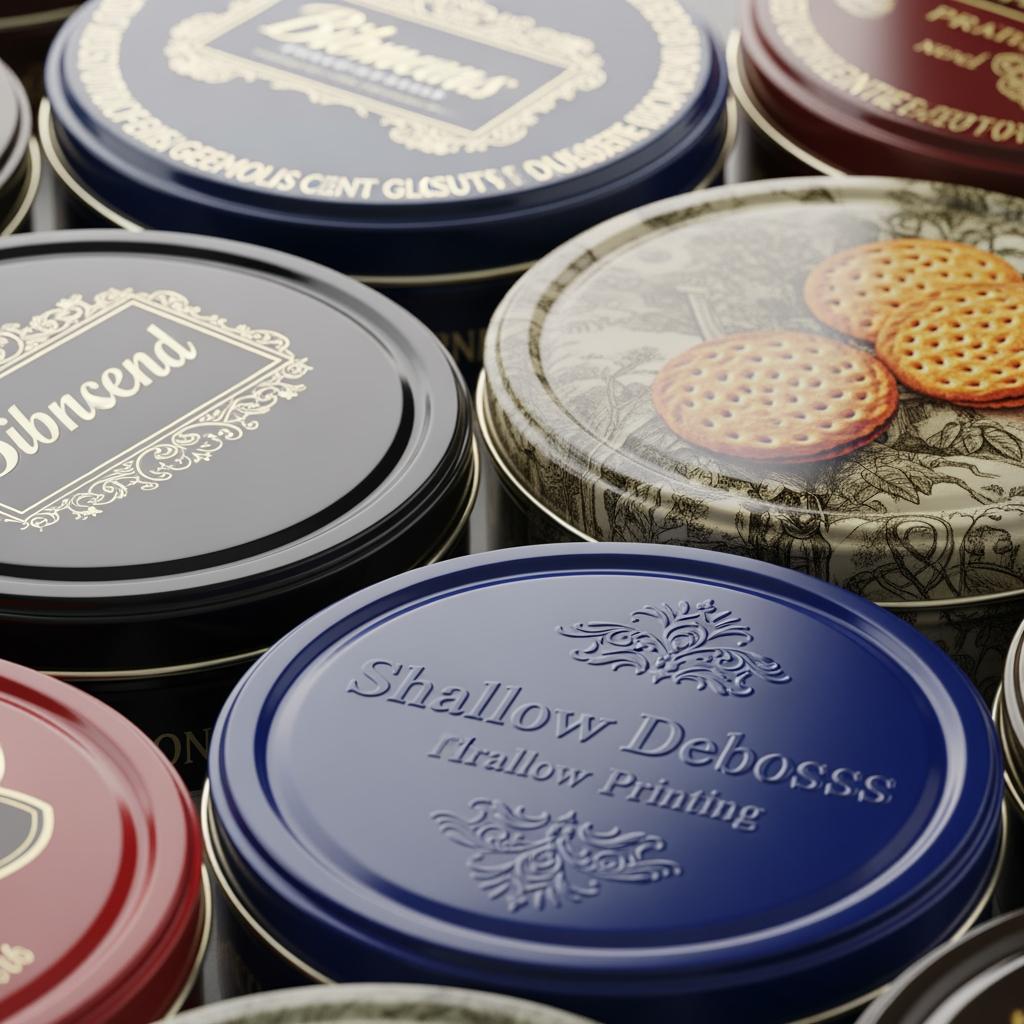
Electrolytic Tinplate Grades for Fish Can Manufacturing
If you pack tuna, sardines, mackerel, or anchovies, the fastest way to cut complaints and boost shelf-life is to match product, process, and print to the right grade of electrolytic tinplate. This guide translates shop-floor reality into clear choices—from coating thickness and temper selection to BPA‑free linings and export packaging—so you can specify Electrolytic Tinplate…
-
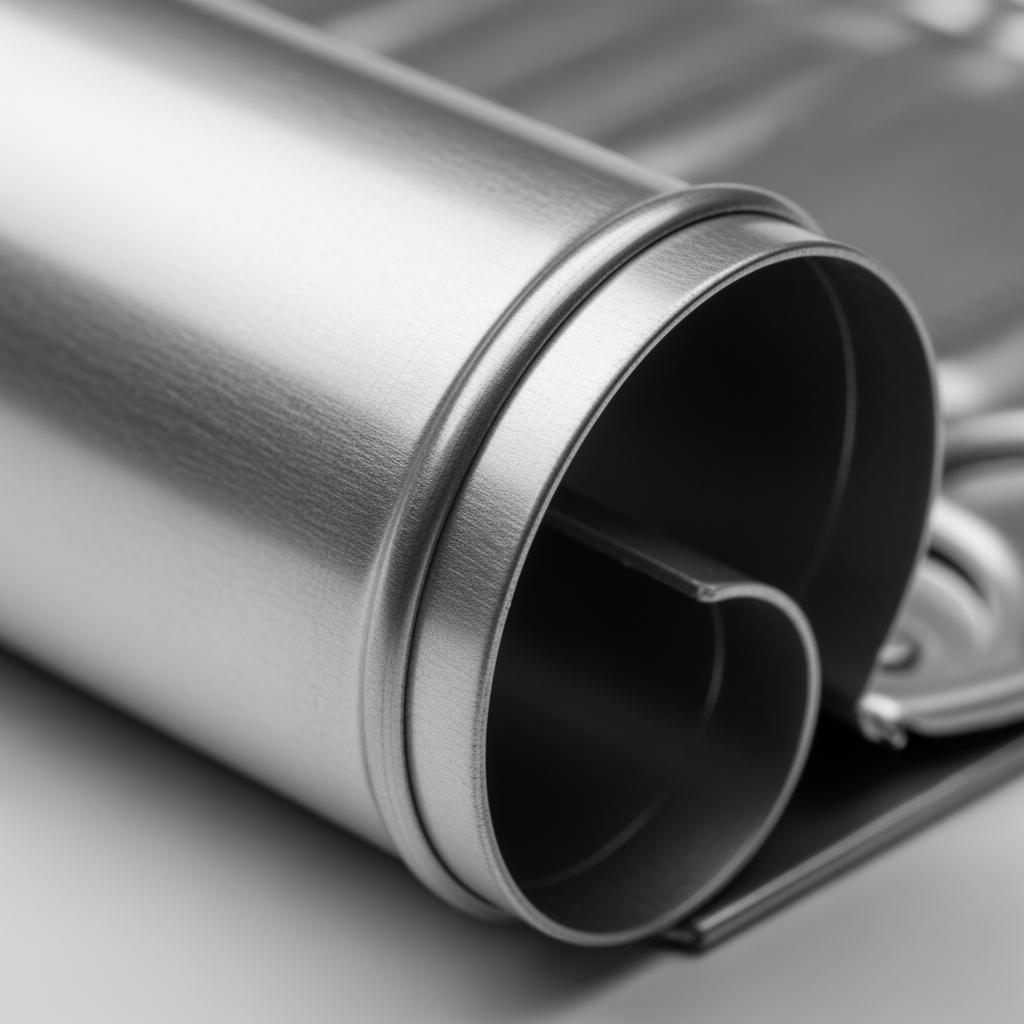
BPA-Free Tinplate Solutions for Food-Safe Peel-Off Ends
If you make ready-to-eat foods, infant nutrition, or pet meals, the move to BPA-free peel-off ends is no longer optional—it’s a brand trust imperative. This guide distills how to specify and source BPA-Free Tinplate Solutions for Food-Safe Peel-Off Ends, from electrolytic tinplate coatings to thickness, certifications, and print/lacquer decisions. If you’re scoping a new lid…
-
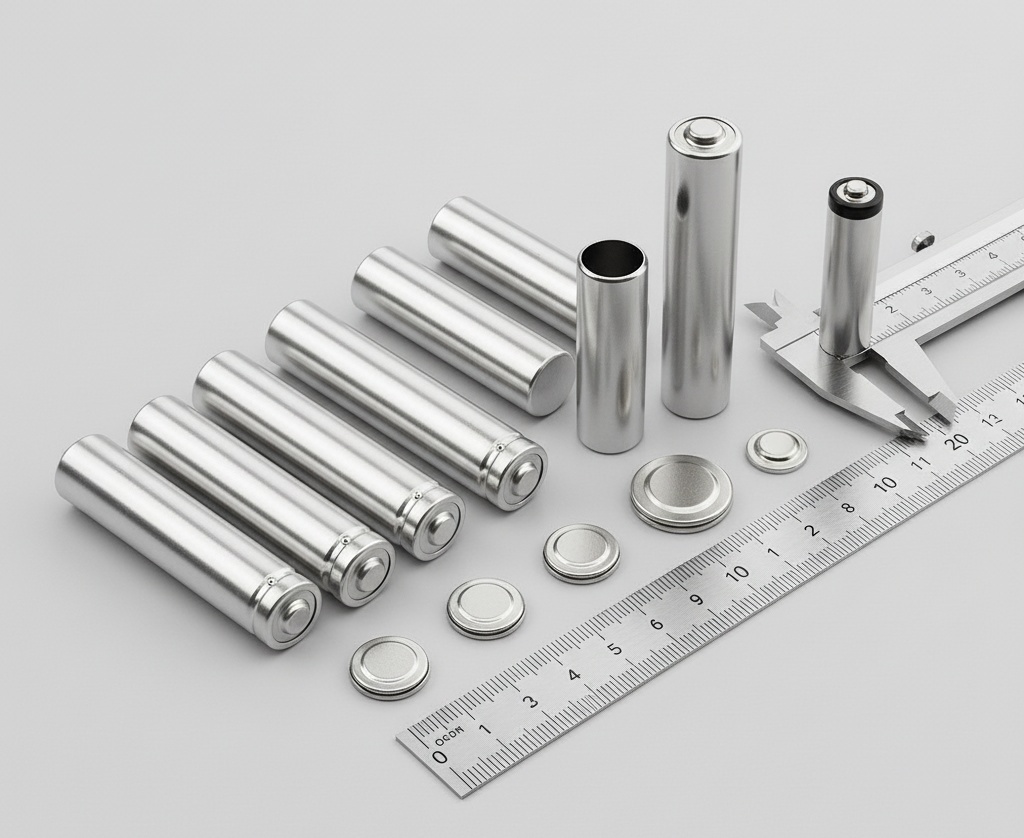
Corrosion-Resistant Tinplate Coils for Beverage Crown Closures
For crown cap makers, the fastest route to fewer rejects and a longer shelf life is choosing the right corrosion-resistant tinplate coils for beverage crown closures, then pairing them with a fit-for-purpose lacquer system and a disciplined QA plan. If you already have specs or drawings, share them and we’ll translate them into a coating…